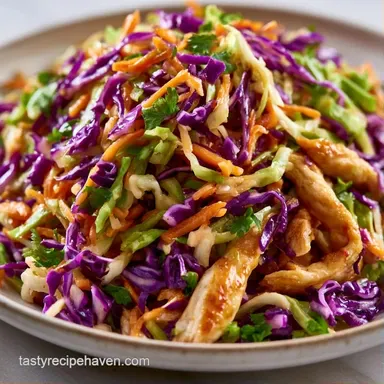
Crunchy Asian Chicken Salad with Sesame Ginger Dressing
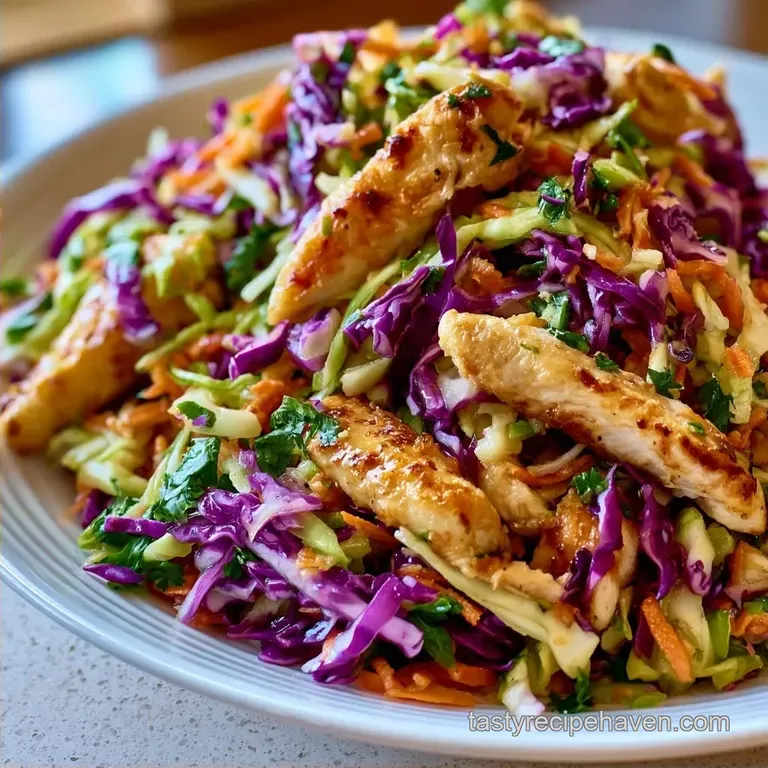
- Time: 15 min active + 10 min cooking
- Flavor/Texture Hook: Shatteringly crisp cabbage with a glossy, tangy glaze
- Perfect for: Nutrient dense weekday lunches or a bright potluck side
The sound of chicken hitting a hot skillet that aggressive sizzle is the only way to start this. I first made this for a spring brunch where everyone brought something "healthy," which usually meant bland. I wanted something that felt satisfying but wouldn't leave everyone wanting a nap an hour later.
The goal was a clash of textures. You get the warmth of the glazed protein hitting the snap of raw Napa cabbage. This Asian Chicken Salad isn't just a pile of greens; it's a balance of salt, acid, and a hit of sweetness from the mandarin oranges.
Expect a bowl that looks as vibrant as it tastes. We're combining deep purples from red cabbage with bright orange carrots and green edamame. It's a nutrient dense dish that feels like a treat.
Crunchy and Fresh Asian Chicken Salad
- Cold Cabbage: Keeping the greens chilled until the last second maintains the cell walls. This prevents the dressing from wilting the salad instantly.
- The Glaze Step: Adding soy sauce in the final 60 seconds of searing creates a concentrated layer of flavor. It sticks to the meat rather than watering it down.
- Acid Balance: Rice vinegar cuts through the richness of the toasted sesame oil. This ensures the dressing tastes bright, not heavy.
Here is how using fresh ingredients compares to taking shortcuts with pre cut kits.
| Component | Fresh Prep | Shortcut Kit | Impact |
|---|---|---|---|
| Cabbage | Hand shredded | Pre bagged mix | Fresh stays crisp 2x longer |
| Ginger | Freshly grated | Powdered ginger | Fresh adds a spicy, floral zing |
| Chicken | Seared strips | Pre cooked strips | Seared adds deep, savory notes |
The flavor map for this dish is a tightrope walk: salty soy and edamame, sweet honey and orange, and the sharp tang of vinegar.
The Core Components
When you build an Asian Chicken Salad, every part has a job. It's not just about filling the bowl; it's about creating a specific mouthfeel.
| Ingredient | Role | If You Don't Have It |
|---|---|---|
| Napa Cabbage | Watery crunch | Savoy cabbage or iceberg |
| Rice Vinegar | Sharp acidity | Apple cider vinegar |
| Toasted Sesame Oil | Nutty depth | Peanut oil with a pinch of salt |
| Honey | Viscosity and sweet | Maple syrup or agave |
The way these elements interact determines the final result. The honey acts as a binder for the dressing, while the cabbage provides the structural base that holds up to the heavier oils.
Ingredients and Swaps
I recommend Kikkoman rice vinegar for its consistent acidity levels. As for the protein, use chicken breast for a cleaner taste or thighs if you prefer a juicier result.
The Base 150g shredded Napa cabbage 100g shredded red cabbage 120g shredded carrots 75g sliced green onions 70g shelled edamame, thawed
The Protein 450g chicken breast, thinly sliced into strips 15ml neutral oil Why this? It stays stable at high heat without burning. 15ml soy sauce 2g black pepper
The Dressing 60ml soy sauce 45ml rice vinegar 30ml honey Why this? It gives the sauce a silky consistency. 30ml toasted sesame oil 15g freshly grated ginger 5g minced garlic
The Toppings 60g sliced toasted almonds 50g crunchy chow mein noodles 15g toasted sesame seeds 60g mandarin orange segments
If you are missing a couple of ingredients, these alternatives preserve the flavor balance.
| Original Ingredient | Substitute | Why It Works |
|---|---|---|
| Honey (30ml) | Maple Syrup (30ml) | Similar sweetness. Note: Adds a hint of woodiness |
| Almonds (60g) | Cashews (60g) | Equally buttery. Note: Slightly softer bite |
| Mandarin Oranges | Pineapple chunks | Comparable tang and sugar. Note: Bolder flavor |
| Napa Cabbage | Romaine hearts | Great crunch. Note: Less sweet than Napa |
Don't overlook the ginger. Using the actual root rather than a powder transforms this Asian Chicken Salad from a simple dish into something restaurant quality.
Kitchen Tools You'll Need
Just a few basic kitchen tools are required for this recipe.
- Large mixing bowl: Perfect for tossing the cabbage mix.
- Heavy skillet: Cast iron or stainless steel works best for searing the chicken.
- Mason jar: The most convenient way to emulsify the dressing.
- Sharp chef's knife: For creating thin, consistent chicken strips.
- Microplane: To grate the ginger into a fine paste.
Putting It All Together
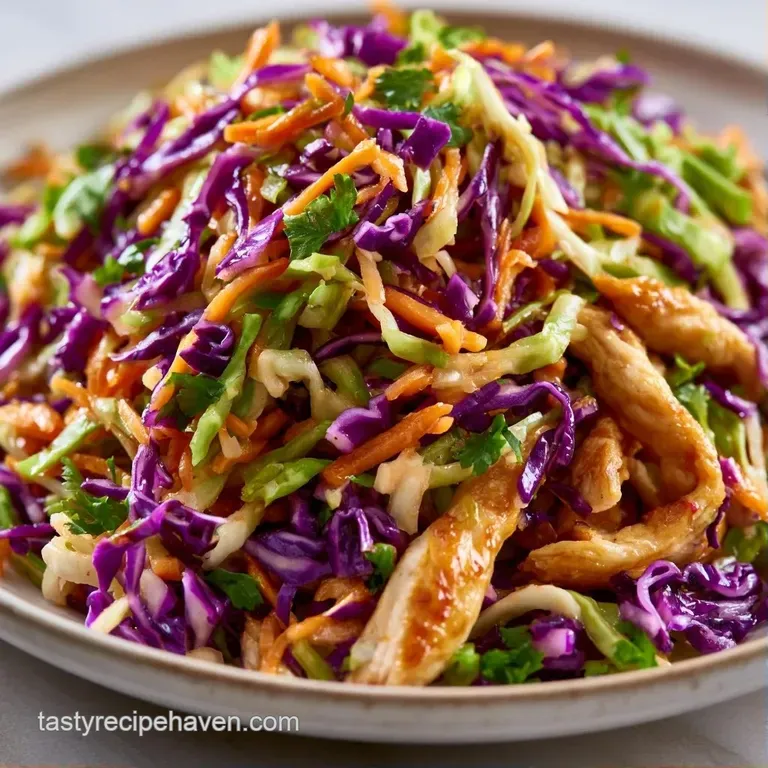
This Asian Chicken Salad is prepared in three distinct steps. The goal is to balance the temperatures so the chicken is hot and the cabbage remains chilled.
Phase 1: Preparing the Base
- Mix the Napa cabbage, red cabbage, carrots, green onions, and edamame in a large bowl. Toss lightly to blend the colors.
- Store the vegetable bowl in the refrigerator. Note: This ensures the greens stay chilled while you are cooking.
Phase 2: Searing the Protein
- Bring 15ml neutral oil to temperature in a pan set to medium high. Arrange the chicken strips in a single layer.
- Brown the chicken for 3-4 minutes per side until cooked through and golden brown.
- During the last 60 seconds, stir in 15ml soy sauce and 2g black pepper until the meat is glazed and the sauce bubbles.
Phase 3: The Dressing and Assembly
- Using a small bowl or mason jar, whisk together 60ml soy sauce, 45ml rice vinegar, 30ml honey, 30ml toasted sesame oil, 15g grated ginger, and 5g minced garlic. Shake until the mixture is glossy.
- Drizzle the dressing over the cold vegetables and toss gently.
- Fold in the seared chicken strips.
- Just before serving, top the Asian Chicken Salad with toasted almonds, chow mein noodles, sesame seeds, and mandarin orange segments.
Chef's Tip: If the chicken strips are different sizes, remove the smaller ones from the pan first. Overcooking breast meat makes it rubbery, which spoils the tender contrast we want.
Fixing Common Salad Issues
Even the best plans can hit a snag. Here are some quick fixes for typical issues that arise when preparing this Asian Chicken Salad.
Soggy Greens
Cabbage becomes limp when the salt in the soy sauce pulls water from the vegetables via osmosis. To prevent this, avoid tossing the salad with dressing more than 5 minutes before serving. If you're prepping this for a work lunch, store the dressing in a separate container. For more advice on preserving crunch, visit my homemade egg rolls guide where texture is key.
Separated Dressing
Since oil and vinegar naturally split, don't be alarmed. Just give your mason jar a vigorous shake right before you pour. If the honey is too thick to mix well, microwave it for 5 seconds to thin it out.
Tough Chicken
Rubbery meat is usually the result of a crowded pan. When the chicken strips overlap, they steam instead of searing, which toughens the fibers. If your skillet is on the smaller side, cook the meat in two batches.
Serving Suggestions
This Asian Chicken Salad is a complete meal, but you can tweak the presentation depending on the vibe. For a casual lunch, serve it in a wide bowl to show off the colors. For a party, you can serve it as Asian Chicken Salad wraps using large butter lettuce leaves as the vessel.
The contrast is what makes this work. The heat from the chicken slightly warms the cabbage it touches, creating a dynamic eating experience.
Depending on how many people you're feeding, adjust your quantities using this guide.
| Servings | Chicken | Total Cabbage | Dressing (ml) |
|---|---|---|---|
| 2 | 225g | 250g | 120ml |
| 4 | 450g | 500g | 240ml |
| 8 | 900g | 1kg | 480ml |
Saving and Reheating
If you have leftovers, store the components separately. Put the dressed cabbage in a sealed jar in the cooler for 2 days. Keep the seared chicken in its own container. The noodles and almonds must stay in a dry bag or container, or they will lose their snap.
To reheat the chicken, use a pan over medium heat for 2 minutes. Don't microwave it on high, or it will turn into rubber. Toss the warm chicken back into the cold Asian Chicken Salad just before eating.
For a zero waste approach, use the leftover cabbage stems. Finely dice them and toss them into a stir fry. If you have extra dressing, it works as a great marinade for tofu or shrimp.
Different Flavor Twists
After you've mastered the basic Asian Chicken Salad, feel free to experiment with the flavors.
- For a nuttier flavor: Swap the sesame oil for one tablespoon of creamy peanut butter to create an Asian Chicken Salad with Peanut Dressing.
- For extra heat: Mix one teaspoon of chili garlic sauce or Sriracha into the dressing.
- For a grain based meal: Serve the salad over brown rice or quinoa to make it more filling.
- For a different protein: Use seared shrimp or smoked tofu instead of chicken.
If you enjoy this dressing base, it is quite similar to my honey garlic sauce, which works great for quick stir fries.
- For a firmer crunch
- Soak the cabbage in ice water for 10 mins, then spin dry.
- For a sweeter profile
- Increase honey to 40ml and add more mandarin oranges.
- For lower sodium
- Use coconut aminos instead of soy sauce.
Critical Sodium Level
1850 mg 1,850 mg of sodium per serving (80% 80% of daily value)
The American Heart Association recommends a daily sodium limit of no more than 2,300 mg, with an ideal limit of 1,500 mg for most adults.
Tips to Reduce Sodium in Your Asian Chicken Salad
-
Swap Soy Sauce-30%
Replace the regular soy sauce with low-sodium soy sauce or coconut aminos to drastically reduce the salt in the dressing.
-
Ditch Processed Noodles-15%
Replace the crunchy chow mein noodles with extra toasted almonds or fresh thinly sliced cabbage for a sodium free crunch.
-
Rinse Edamame-10%
Use unsalted shelled edamame or rinse thawed edamame thoroughly under cold water to remove surface salt.
-
Boost Aromatics
Increase the freshly grated ginger, garlic, and acidity from the rice vinegar to enhance flavor without needing extra salt.
Recipe FAQs
How to prep the chicken for the best sear?
Slice the chicken breast into thin strips. This ensures the meat cooks quickly and evenly during the 3-4 minute searing process.
Can I use rotisserie chicken instead of fresh breast?
Yes, shredded rotisserie chicken works well. Skip the searing steps and simply toss the pre-cooked meat with the soy sauce and black pepper before folding it into the salad.
Is it true that boiling chicken is the best method for this salad?
No, this is a common misconception. Searing in neutral oil over medium high heat creates a golden brown crust and deeper flavor that boiling cannot achieve.
What prevents the cabbage from getting soggy?
Keep the vegetables chilled. Storing the mix in the refrigerator until the moment of serving maintains the cell walls and prevents the dressing from wilting the greens.
Which technique creates the smoothest dressing?
Vigorously whisk the ingredients together in a mason jar. Since you've mastered this emulsion, try applying a similar technique to our copycat spread.
When can components be prepared in advance?
Prep the cabbage mixture and dressing up to 24 hours early. Keep them separate in the fridge and combine them just before adding the warm chicken.
Do the edamame need to be cooked?
No, just thaw them. The recipe uses shelled edamame that are thawed, providing a fresh pop of color and texture without additional cooking.
Why stir in the glaze at the very end?
It prevents the sauce from watering down. Adding the soy sauce during the final 60 seconds of cooking creates a concentrated glaze that clings to the meat.
Crunchy Asian Chicken Salad