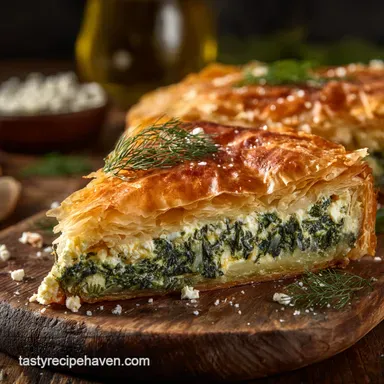
Greek Recipes: Proper Spanakopita, Flaky Spinach Feta Pie

- Spanakopita: The Ultimate Savory Greek Pie Recipe
- Essential Ingredients for Authentic Greek Spanakopita
- Achieving the Perfect Texture: Why Our Spanakopita Excels
- Step-by-Step Guide: How to Assemble and Bake Flaky Spanakopita
- Mastering Filo and Filling: Expert Spanakopita Tips
- Make-Ahead Strategy: Storing and Reheating Spanakopita
- Completing the Feast: What to Serve with Spanakopita
- Recipe FAQs
- 📝 Recipe Card
Spanakopita: The Ultimate Savory Greek Pie Recipe
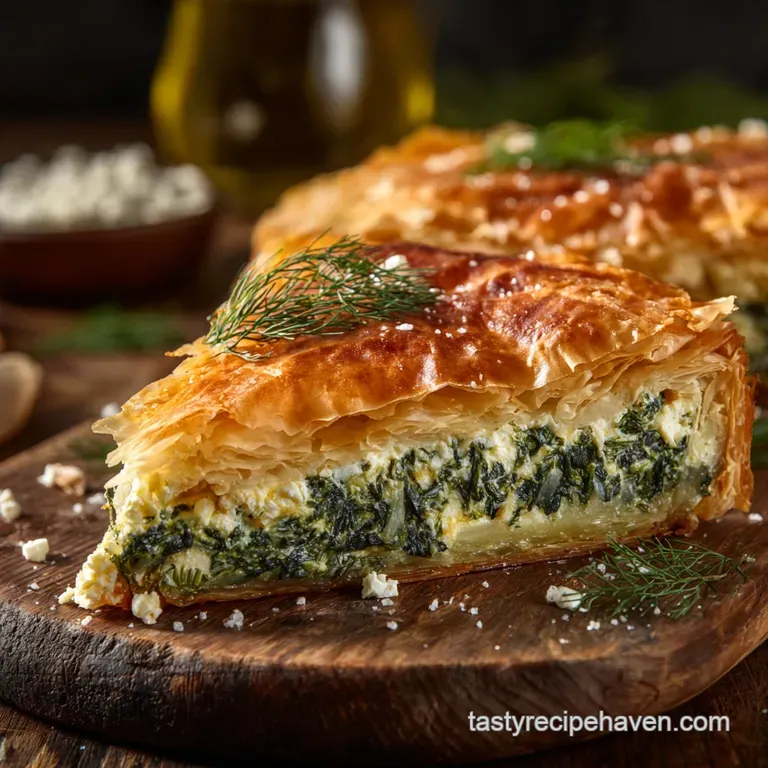
You know that feeling when the aroma of something baking hits you? This Spanakopita is pure comfort and absolute sunshine, smelling richly of melted butter, fresh dill, and salty, sharp feta. The layers should literally shatter when you press on them.
Trust me, the flaky crunch gives way to the most incredible, creamy green filling.
Honestly, this pie is my secret weapon for quick weeknight Greek recipes dinner. It’s a fantastic way to handle all those healthy meal prep recipes dinner demands, holding up beautifully in the fridge or freezer. It looks super fancy, but it’s actually a brilliant, cheap way to feed a crowd.
Ready to stop fearing delicate filo pastry? We are going to nail this authentic Greek recipe together, ensuring you get a crisp bottom layer every single time. Let's crack on and create the kind of savory meal prep you’ll actually look forward to eating.
Why This Recipe Works
The science here is simple: moisture control is everything. The key to successful Spanakopita is mercilessly squeezing the water out of your cooked spinach, which prevents that dreaded soggy bottom crust.
We are also layering butter like it's going out of style, which ensures the filo pastry puffs up into a truly golden, crisp shell.
What Makes Spanakopita a Staple of Traditional Greek Cuisine?
Spanakopita, literally meaning "spinach pie," is the quintessential example of Greek vegetarian cooking. It speaks to the Mediterranean focus on fresh greens, high-quality olive oil, and sharp cheeses. It’s rustic, filling, and incredibly satisfying.
It’s found everywhere, from fancy restaurants to small village bakeries. This savory pie is often seen at celebrations, but it’s easy enough to whip up on a Sunday afternoon for lunches all week. It’s one of those classic Greek recipes easy enough for anyone to master.
A Deep Dive into Greek Phyllo Pastry
Filo (or phyllo) is paper thin dough, the backbone of many incredible Greek desserts and savory creations. It is essential because its low fat and high water content means it becomes extraordinarily crisp when brushed with melted fat.
We stack these delicate sheets, which creates hundreds of air pockets that puff and separate during baking. Always keep your unused filo covered with a damp towel to prevent it from drying out.
Regional Variations of the Classic Spinach Pie
While the basic ingredients remain the same, different regions of Greece offer their own creative healthy dinners based on this recipe. In the north, specifically Epirus, they sometimes add rice to the filling to bulk it up.
Further south, you might find the use of different wild greens alongside the spinach, giving it a slightly bitter complexity.
Essential Ingredients for Authentic Greek Spanakopita
We’re keeping this filling simple and pure: spinach, feta, and the absolute non-negotiable herb, dill. I made the mistake once of substituting frozen chopped spinach straight from the freezer bag and ended up with a soup inside my pie. Never again.
| Ingredient | Why it Matters | Viable Substitute |
|---|---|---|
| Fresh or Frozen Spinach | Provides the bulk; must be completely dry. | Substitute half with blanched kale or Swiss chard. |
| Feta Cheese | Provides the necessary salt and tang. | Crumbled goat cheese or firm, seasoned ricotta. |
| Fresh Dill | The signature flavour of Greek savory pies. | A mix of mint and extra parsley, or dried dill (use less!). |
| Filo Pastry | The structure; needs to be thin and cold. | store-bought puff pastry for a simpler (but less authentic) crust. |
Achieving the Perfect Texture: Why Our Spanakopita Excels
This recipe focuses intensely on the crispness of the pastry and the creaminess of the filling. We use specific layering techniques and select ingredients that ensure structural integrity.
Selecting the Right Type of Feta Cheese for Filling
Look for feta stored in brine, if possible. It has a richer, tangier flavor and a softer texture. Pre-crumbled feta is convenient, but it can sometimes be drier and excessively salty. I always opt for a block and crumble it myself; it mixes so much better.
Preparing the Fresh Spinach and Leeks
If you’re using fresh spinach, sauté it first until wilted, then let it cool. If you use frozen (which I usually do because it’s so much easier), thaw it completely. The real secret? You must squeeze every drop of liquid out.
Use a clean tea towel and put your back into it until no more water drips out. This is the single biggest difference between a great pie and a soggy mess.
Ingredient Substitutions for Dairy or Gluten Needs
Look, dietary restrictions don't mean you can't enjoy amazing Greek recipes. For dairy-free versions, use a high-quality vegan butter for brushing the filo. Instead of feta, try firm, pressed tofu seasoned aggressively with lemon juice, oregano, and salt.
If you need gluten-free, look for pre-made rice or corn based filo, though it can be harder to source.
The Science of Flakiness: Layering Filo Dough
The flakiness comes from fat, not rising agents. Melt your butter, and try to skim off the white milk solids (clarifying it slightly). This pure fat brushes on evenly and doesn't introduce extra water, resulting in a crispier finish.
We use multiple sheets for the base to create structural support against the moist filling.
Balancing the Tang: Feta vs. Herbs
Feta brings a salty, pungent tang, and the eggs act as a binder to hold it all together. To stop the cheese from dominating, we load the filling with fresh herbs, especially dill and parsley. The nutmeg is optional, but it adds a warmth and depth that grounds the strong, salty flavors.
The Importance of Moisture Control in the Spinach Filling
I learned this the hard way: if the filling is wet, the bottom layer of filo steams instead of baking. This leads to gumminess. After squeezing the spinach bone dry, make sure the spring onions are cooled down before mixing everything. Heat causes the feta to weep, and we want to avoid that entirely.
Step-by-step Guide: How to Assemble and Bake Flaky Spanakopita
Preparing the Herb and Cheese Mixture
In a large bowl, combine your dry spinach, crumbled feta, the sautéed and cooled spring onions, eggs, and all your chopped herbs. Season with pepper and maybe a tiny pinch of salt (remember the feta is already salty!). Mix gently with your hands until everything is just combined.
Chef’s Note: Do not overmix the filling. If you mush it too much, the feta will break down completely and become paste like instead of retaining some of its lovely, crumbly texture.
The Art of Brushing: Ensuring Golden, Crisp Layers
Preheat the oven to 375°F (190°C). Lay out your first sheet of filo and brush it completely with melted butter. Don't be shy! We are aiming for golden layers, not translucent ones. Continue this process, layering about eight to ten sheets for the strong base layer. Always brush edge-to-edge.
Baking Time and Temperature for the Ideal Crust
Once the pie is assembled and scored, start baking it at 375°F (190°C) for 30 minutes. This high initial heat encourages the butter to bubble and the filo to puff up quickly. Then, reduce the heat to 350°F (175°C) for the remaining 25– 30 minutes.
This lower temperature prevents the top from burning before the internal layers are fully cooked and stable. It should look gorgeously deep golden brown.
Mastering Filo and Filling: Expert Spanakopita Tips
Troubleshooting Wet Filling: A Common Spanakopita Mistake
If you find that your filling mixture looks damp even after squeezing the spinach, you have a few options. Stir in a tablespoon of fine breadcrumbs or semolina before baking. This will absorb any residual moisture as the pie cooks, effectively saving your crust.
Handling Delicate Filo Without Tearing
Filo should be thawed slowly overnight in the refrigerator do not try to rush it in the microwave or at room temperature. When unrolling it, lift it gently. If a sheet tears, it's fine! Just patch it up with another piece and brush liberally with butter. The butter is the glue.
Achieving the Signature Scored Top
Before it goes into the oven, take a sharp knife and gently score the top 4 5 layers of the filo into serving portions. Don't cut through to the filling; you just want guides. This prevents the baked, crunchy layers from shattering when you go to serve the pie, giving you clean, beautiful slices.
Make-ahead Strategy: Storing and Reheating Spanakopita
This pie is incredible for savory meal prep. You can prepare it completely and hold it before baking, or cook it entirely and enjoy leftovers.
Freezing Spanakopita Unbaked vs. Baked
Unbaked is best: Assemble the entire pie, score the top, cover it tightly with plastic wrap and foil, and freeze for up to 3 months. When ready to bake, remove the wrap, brush the top again with butter, and bake from frozen (this will add about 20– 30 minutes to the baking time).
Best Practices for Refrigerated Leftovers
Once fully baked, Spanakopita keeps beautifully in the fridge for 3 to 4 days. Make sure it is completely cooled before covering it loosely with foil or a kitchen towel; airtight containers can trap moisture and make the pastry soggy.
How to Reheat While Maintaining Crispness
Never, ever microwave Spanakopita. It will turn instantly into a rubbery disappointment. Reheat slices in a preheated oven or, even better, in a toaster oven at 350°F (175°C) for 8– 10 minutes. The dry heat reactivates the butter and returns that incredible, flaky crunch.
Completing the Feast: What to Serve with Spanakopita
Spanakopita is rich and satisfying, so it pairs perfectly with simple, bright sides. You are creating the whole Greek recipes experience here!
- Tzatziki: A cool, garlicky cucumber and yogurt dip is the perfect counterpoint to the savory filling.
- Horiatiki Salata: A huge bowl of simple Greek village salad with ripe tomatoes, cucumbers, and massive slabs of good olive oil.
- Lemon Potatoes: A side of tangy, roasted Greek lemon potatoes gives you a hearty carbohydrate that soaks up any leftover butter on the plate.
This is truly one of those authentic Greek recipes that feels like home. Enjoy every buttery, herby bite!
Recipe FAQs
Why does my filo dough keep tearing, and how can I prevent it?
Filo is extremely delicate and dries out rapidly when exposed to air, making it brittle and prone to tearing. Always keep the stack of filo sheets you aren't currently working with covered tightly under a slightly damp, clean kitchen towel.
If a tear occurs, layering with melted butter usually patches the defect sufficiently as the pie bakes.
My Spanakopita turned out soggy on the bottom. What went wrong?
A soggy bottom is almost always caused by excessive moisture remaining in the spinach filling before assembly. After cooking or thawing the spinach, you must squeeze it thoroughly using a cheesecloth or thick paper towels until it is as dry as possible.
Additionally, ensure your oven is fully preheated, as starting in a cool oven prolongs the bake time and increases the risk of moisture absorption.
Can I freeze Spanakopita, and should I freeze it baked or raw?
Spanakopita freezes exceptionally well, and the preferred method is usually raw (unbaked). Assemble the pie completely, cool it down if the filling was warm, then wrap it tightly in plastic wrap and a layer of aluminum foil.
To cook, bake straight from the freezer, adding 20 30 minutes to the total baking time until the internal temperature is safe and the crust is golden brown.
What is the best type of Feta to use for the most authentic flavor?
For true authenticity and superior texture, always choose Greek Feta made from sheep's milk or a blend of sheep's and goat's milk, which is sold stored in brine. Avoid pre-crumbled feta, as it often contains starches or anti caking agents that compromise the creamy texture and rich, tangy flavor necessary for this dish.
How can I make this traditional Spanakopita recipe completely vegan?
To convert the recipe to vegan, substitute the melted butter used for brushing the layers with high-quality olive oil or a plant based margarine spread. For the filling, replace the dairy feta with a firm, crumbled block of marinated tofu or a commercial vegan feta substitute to replicate the required salty tang and crumbly texture.
Are there other traditional herbs I can add besides dill and parsley?
Absolutely; traditional Greek cooking often adapts based on regional availability and preference. Many cooks incorporate fresh mint, especially spearmint, which adds a wonderful brightness that complements the feta and spinach beautifully.
Alternatively, adding thinly sliced sautéed leeks (making it more akin to prasopita) deepens the savory base flavor.
How should I store leftover baked Spanakopita and reheat it properly?
Store leftover slices tightly covered in the refrigerator for up to 4 days. Crucially, avoid reheating Spanakopita in the microwave, which turns the delicate filo chewy and rubbery.
For best results, reheat slices in a toaster oven or conventional oven at 350°F (175°C) until the pastry is thoroughly crisp and the filling is warmed through.
Authentic Greek Spanakopita Recipe