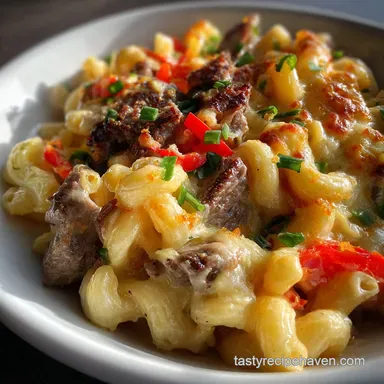
Philly Cheesesteak Pasta: Rich One-Pan Comfort
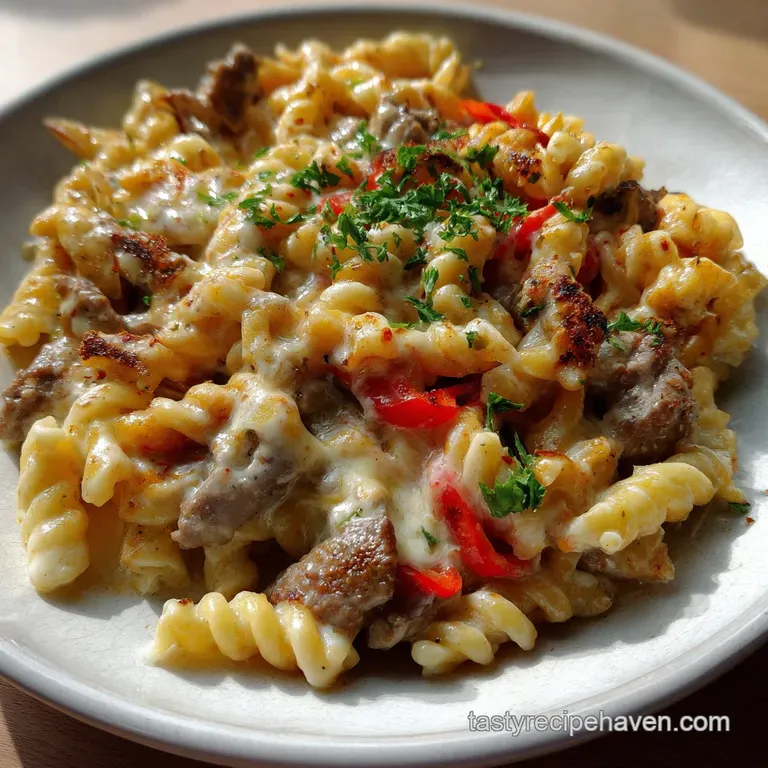
- The Ultimate Comfort Fusion: Introducing Philly Cheesesteak Pasta
- Essential Components for Authentic Philly Cheesesteak Pasta
- The Kitchen Blueprint: How to Construct This One-Pan Wonder
- Mastering the Creaminess: The Science Behind the Silky Sauce
- Elevating Your Dish: Expert Tips and Troubleshooting for Cheesesteak Pasta
- Practical Prep: Storage, Reheating, and Make-Ahead Notes
- Completing the Meal: Perfect Side Dishes for Your Cheesy Pasta
- Recipe FAQs
- 📝 Recipe Card
The Ultimate Comfort Fusion: Introducing Philly Cheesesteak Pasta
Stop what you are doing, because this dish is about to become your new weeknight obsession. Imagine that glorious aroma hitting you the minute the steak and onions start to caramelize in the pan sweet, savory, rich, and utterly irresistible.
When that cheesy, luxurious sauce hits the hot skillet, the whole kitchen transforms into a comforting heaven.
This is the ultimate, easy Philly Cheesesteak Pasta recipe, translating that iconic sandwich magic into a deeply satisfying bowl of cheesy noodles. It’s faster, less messy than balancing a foot long hoagie, and surprisingly simple to pull off after a hectic Monday.
Seriously, it’s a total lifesaver when you need maximum flavour for minimum effort.
So forget the fuss of bread rolls and messy toppings. We’re swapping the traditional bun for sturdy rigatoni, marrying that signature shaved beef and onion mixture with a silky, rich Provolone cream sauce. Let’s crack on and make this spectacular cheesesteak pasta recipe right now.
From Sandwich Legend to Weeknight Hero
The genius of this dish lies in the mash-up. It takes the best parts of classic Philadelphia street food the thinly sliced, seared steak, the sweet peppers, and the gooey, sharp Provolone and blends them with the heartiness of an Italian pasta bake.
This fusion delivers intense flavor in every single bite, eliminating the textural issues some classic baked pasta dishes suffer from.
The Defining Flavor Components of This Dish
The defining flavor components are non-negotiable if you want real authenticity. First, you must have that high-quality, thinly shaved beef (we’re talking Ribeye or Sirloin here, nothing else cuts it). Second, the creamy base needs that distinctive, slightly tangy melt that only Provolone can provide.
Finally, the aromatic sautéed onions and peppers create the necessary sweetness to balance the salty, fatty cheese and beef. Without those three, it’s just meat and noodles, not proper Philly Cheesesteak Pasta .
Why We Chose Rigatoni for the Perfect Bite
When making a dish this hearty, you need a pasta shape that stands up to the sauce. Rigatoni is the absolute champion here. Its large, ridged, tubular shape perfectly captures the thick Provolone sauce and those tiny, delicious bits of seared steak and caramelized onion.
You get a perfect meat-to-sauce-to-noodle ratio every time you lift your fork.
Essential Components for Authentic Philly Cheesesteak Pasta
Getting the ingredients right is half the battle. If you skimp on quality here, the whole vibe of this amazing easy philly cheesesteak pasta recipe falls flat.
Selecting the Right Cut of Beef for Shaved Slices
This is where many home cooks mess up: using cubed steak. Shaved Ribeye or Sirloin is essential because it sears rapidly and remains tender. It ensures that iconic salty, crumbly texture that melts into the sauce.
Chef’s Note: If you can’t get your butcher to shave the steak for you, use my freezer trick! Pop the steak in the freezer for 30 minutes before slicing it paper thin against the grain yourself.
| Ingredient | Why We Use It | Substitution/Variation |
|---|---|---|
| Ribeye/Sirloin | High fat content ensures flavor and tenderness. | Use flank steak but slice it meticulously thin, or opt for a pre-shaved blend. |
| Rigatoni | Sturdy, ridged tube catches thick sauce beautifully. | Use large shells (Conchiglie) or Cavatappi. Avoid thin spaghetti! |
| Provolone | Delivers the required sharpness and melt factor. | A mix of Monterey Jack and Smoked Gouda works in a pinch for depth and creaminess. |
| Beef Stock | Crucial for depth and deglazing the pan. | Quality vegetable stock can be substituted, especially if you prefer a milder overall flavor. |
Provolone vs. Cheese Whiz: Making the Creamy Compromise
Okay, real Philly purists might demand Whiz, but for this ultra creamy pasta dish, Provolone is the undeniable star. Aged Provolone offers a sharper, more sophisticated flavour and, crucially, melts into the sauce without becoming grainy.
We stabilize that melt by adding cream cheese this gives the whole sauce that luscious, luxurious texture we crave in philly cheesesteak pasta with cream cheese .
The Non-Negotiable Aromatic Base: Onions and Garlic
You simply cannot skip the onions and garlic! Sautéing the yellow onion until it is soft and lightly caramelised builds the essential sweet foundation that cuts through the richness of the beef and cheese. Green bell pepper is optional, but I think it brings necessary freshness.
Substituting Pasta Shapes Without Compromising Texture
As I mentioned, we love rigatoni for our Philly Cheesesteak Pasta . If you can’t find it, look for another strong, substantial shape that can hold up to a thick roux based sauce. Think large penne, cavatappi, or even jumbo shells.
The goal is to avoid thin, weak noodles that would just be overwhelmed by the creamy sauce.
The Kitchen Blueprint: How to Construct This One-Pan Wonder
This whole Philly Cheesesteak Pasta skillet comes together in one pan after you boil the pasta it’s brilliant. Focus on building flavor in layers.
Building the Flavor Foundation: Sautéing the Vegetables
Start by melting the butter and oil. You need both the butter for flavor and the oil for a higher smoke point. Add those sliced onions and peppers and sauté them until they are softened and slightly sweet, smelling amazing.
Don’t rush this step; good caramelization takes about 6- 8 minutes. Remove them and save them for the grand finale.
Deglazing for Depth: Capturing Beef Drippings in the Sauce
Now for the beef. High heat is mandatory. Add the remaining butter and sear the shaved steak in small batches until it’s perfectly browned, maybe 60 90 seconds per batch. You should hear that high heat roar! Remove the beef, and leave those beautiful brown drippings (the fond ) in the pan.
We’ll add the garlic quickly (30 seconds!) and then deglaze later with the stock. Those drippings are pure flavor gold for your cheesesteak pasta recipe .
Combining Components: The Critical Toss for Even Coating
Once your sauce is silky smooth, it’s time for the magic moment. Return the al dente rigatoni, the seared beef, and the sautéed veggies to the skillet. Gently toss everything together. The goal is to fully coat every noodle without smashing the delicate beef slices.
If the sauce looks a little tight at this stage, reach for that reserved pasta water.
Mastering the Creaminess: The Science Behind the Silky Sauce
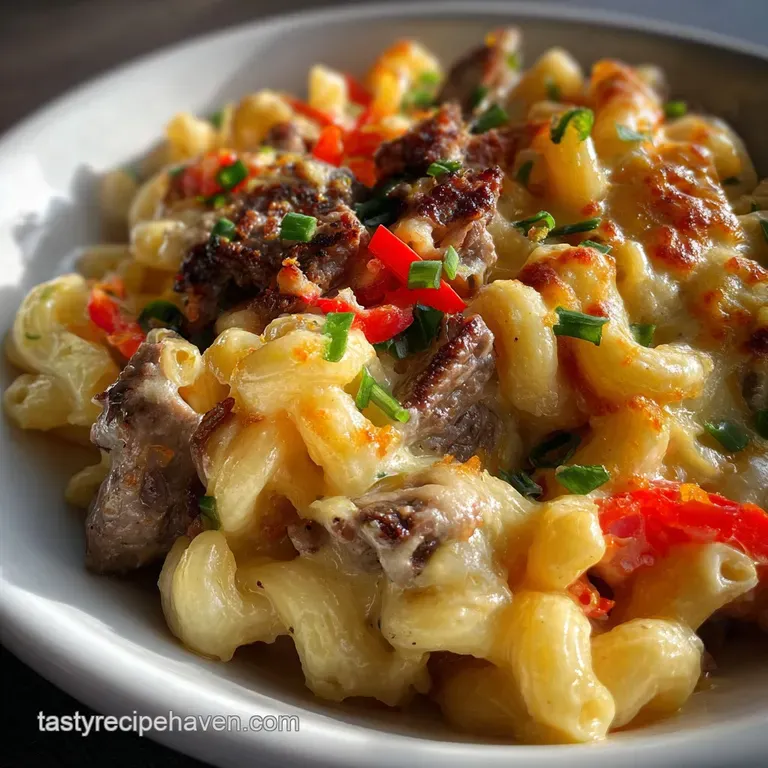
The key to preventing a grainy or separated sauce is mastering the roux. Melt the butter, whisk in the flour, and cook for about 90 seconds until it smells faintly nutty. This cooked flour mixture, the roux, is your thickening base. Next, slowly, I mean slowly , whisk in the cold beef stock and milk.
If you dump it all in at once, you’ll get lumps, and nobody wants lumpy Philly Cheesesteak Pasta . Keep whisking as it simmers and thickens slightly before you add the cheeses off the direct heat.
Elevating Your Dish: Expert Tips and Troubleshooting for Cheesesteak Pasta
I’ve made all the mistakes so you don’t have to. Pay attention to these tips for the perfect outcome every time.
Achieving the Authentic Provolone Pull
The trick is using quality, aged Provolone and ensuring the heat is off or very low when the cheese goes in. If the sauce is boiling when you add the cheese, the dairy solids can separate and create a grainy mess.
Start with the cream cheese cubes first, stir until dissolved, and then add the Provolone and Cheddar gradually, stirring until you have that perfect, melty pull.
The Maillard Reaction: Searing Your Beef to Perfection
This comes back to high heat and batch cooking. The Maillard reaction is that beautiful browning that gives the beef maximum flavor. If you crowd the pan, the temperature drops, the beef steams instead of sears, and you lose that crucial depth. Sear quickly, season as you go, and get it out of the pan.
Preventing Pasta from Clumping or Sticking
Make sure you cook the rigatoni until just under done ( al dente ). That 1 minute less than package time is essential because the pasta will finish cooking and absorb sauce in the skillet.
Once drained (remember to save that water!), toss the pasta with a teaspoon of oil to prevent major clumping while you finish the sauce.
Dealing with an Overly Thick or Broken Sauce
If your sauce is too thick (maybe you simmered it too long) or looks slightly split (broken), the solution is the same: the reserved pasta water. That starchy, salty liquid is a miracle worker. Whisk in a tablespoon or two at a time.
The starch acts as an emulsifier, binding the fat and liquid back together and thinning the consistency perfectly.
The Importance of Using Pasta Water Reserve
I preach this endlessly: pasta water is liquid gold. The starchy remnants help the cheese sauce cling beautifully to the noodles, giving this Philly Cheesesteak Pasta that signature, velvety mouthfeel. Don't throw it out!
Practical Prep: Storage, Reheating, and make-ahead Notes
This is a great dish for batch cooking, provided you follow a few simple rules.
Storage: Leftover Philly Cheesesteak Pasta keeps beautifully in an airtight container in the fridge for up to 3 days.
Freezing: Freezing is possible, but be warned: cream sauces can sometimes change texture after thawing. If you plan to freeze it, I suggest preparing and freezing the seared beef and sautéed veggies before adding them to the sauce.
Then, make a fresh sauce when ready to eat.
Reheating: Never microwave this unless you want a dry brick of noodles! The best way to reheat is gently on the stovetop over low heat. Add a splash of milk or, preferably, beef stock to loosen the sauce as it warms. Stir constantly until creamy again.
Completing the Meal: Perfect Side Dishes for Your Cheesy Pasta
Because this Philly Cheesesteak Pasta is so rich and decadent, you need sharp, fresh contrast. Think crisp textures and vinegary tang.
A simple mixed green salad dressed with a very sharp Dijon vinaigrette cuts through the creaminess perfectly. Alternatively, a bowl of crunchy, briny gherkins or pickled onions on the side offers a fantastic textural counterpoint. Grab a crisp Pale Ale or even a hearty glass of Chianti, and you’re set.
You just made the best darn philly cheesesteak pasta recipe out there. Enjoy!
Recipe FAQs
What is the best cut of beef to use, and how thinly should it be sliced?
Traditionally, ribeye steak is preferred for its high fat content and intense flavor, although sirloin or flank steak can be used if they are prepared properly. For the classic cheesesteak texture, partially freeze the steak for about 30 minutes before slicing it thinly against the grain into strips approximately 1/8 inch thick.
Can I substitute the Provolone cheese for something else?
Yes, while sharp Provolone offers the signature taste and melts smoothly into the sauce, you have other authentic options. American cheese or even a processed cheese sauce (like Cheez Whiz) are Philadelphia staples and will provide a very gooey texture.
If using a harder cheese like cheddar, grate it fresh and ensure your sauce is simmering gently to avoid graininess.
My cheese sauce turned out grainy or separated. What went wrong?
Graininess typically occurs if the heat is too high when incorporating the cheese or if you used pre-shredded cheese containing anti caking agents. To fix this, remove the sauce from the heat, slowly stir in a tablespoon of cold milk, and whisk vigorously until the emulsion returns.
Always use freshly shredded cheese and ensure the sauce is barely simmering when adding it.
How should I store and reheat leftover Philly Cheesesteak Pasta?
Store leftovers in an airtight container in the refrigerator for up to three days; freezing is not recommended as the dairy sauce will likely split upon thawing. When reheating, the pasta tends to absorb moisture, so add a splash of milk or beef stock and warm gently on the stovetop to restore creaminess.
Can I add more vegetables, such as mushrooms or bell peppers?
Absolutely; while onions are mandatory, sautéed green bell peppers and sliced cremini mushrooms are classic additions that provide excellent flavor and bulk. Ensure you sauté these ingredients completely until tender before adding the stock or roux to avoid excess moisture thinning the final sauce.
Is it possible to use different types of pasta instead of Rigatoni?
Yes, any sturdy, short pasta shape that can hold the thick, creamy sauce will work beautifully. Good alternatives include large tubes like ziti or penne, or even shell shapes like medium conchiglie. Avoid long, thin pastas as they tend to break down and become overwhelmed by the heavy sauce ingredients.
Cheesy Philly Cheesesteak Pasta