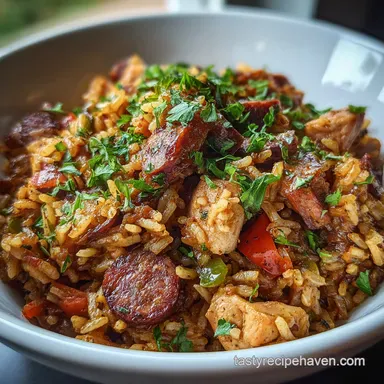
Chicken and Sausage Jambalaya Recipe
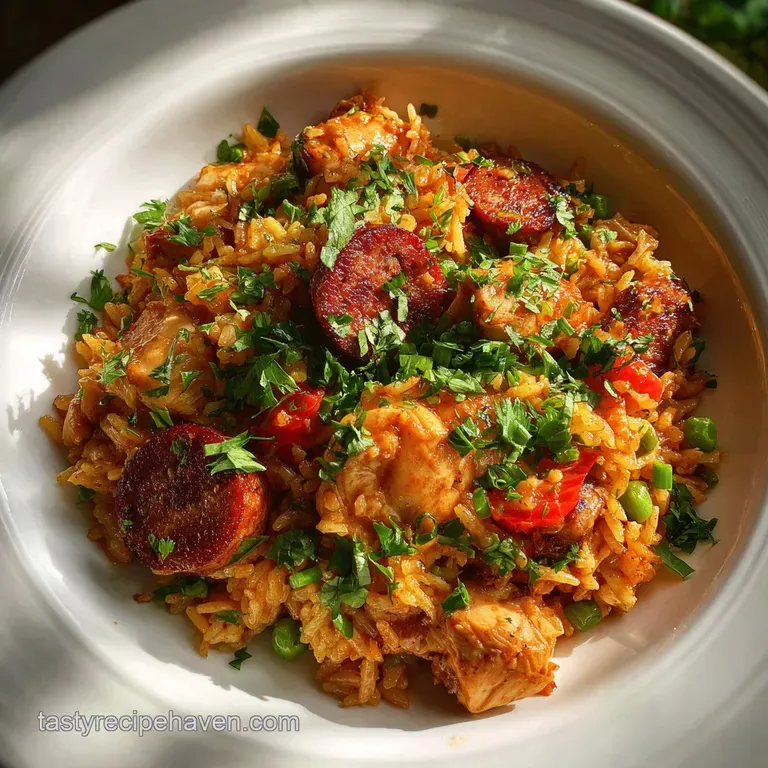
- Time: Active 20 minutes, Passive 40 minutes, Total 1 hour
- Flavor/Texture Hook: Smoky, savory, and perfectly tender
- Perfect for: Sunday family dinners or casual meal prep
- Scientific Secrets for a Better Jambalaya
- Official Metrics for the Perfect Pot
- Deep Dive into Our Recipe Components
- Ingredients & Substitutes
- Best Tools for One Pot Cooking
- Perfecting the Step by Step Process
- Solving Common Jambalaya Cooking Issues
- Creative Variations for Every Single Palate
- Scaling for Large Groups or Couples
- Debunking Common Jambalaya Myths
- Storing and Reusing Your Tasty Leftovers
- Choosing Sides for the Ultimate Feast
- Recipe FAQs
- 📝 Recipe Card
Imagine the smell of spicy andouille sausage hitting a hot cast iron pot, releasing all that gorgeous red oil that coats every single grain of rice. That's the moment you know this chicken and sausage jambalaya recipe is going to be a winner.
I remember the first time I tried making this, I didn't get the rice to liquid ratio quite right and ended up with something closer to a porridge. It tasted okay, but it wasn't the "shatter on-the tongue" individual grain texture I was craving.
Since then, I've obsessed over the small details that make a jambalaya feel like it came straight out of a French Quarter kitchen. We aren't just boiling rice here; we are building a foundation of flavor that starts with the fat and ends with a perfectly fluffed pot.
Whether it's a rainy Tuesday or you've got friends coming over for a big game, this dish brings the heat and the comfort in equal measure.
I've learned that the secret isn't just in the spices, though they matter a lot. It’s about how you treat the rice and how much patience you have when browning the meat. Trust me on this, if you rush the searing process, you lose out on the deep, mahogany color that defines a truly authentic chicken and sausage jambalaya recipe.
Let’s get into the nitty gritty of why this pot of gold actually works.
Scientific Secrets for a Better Jambalaya
Maillard Reaction: Searing the chicken and sausage at high heat creates new flavor compounds through the interaction of amino acids and reducing sugars. This "browned" layer on the bottom of the pot, known as fond, provides the deep base for the entire dish.
Starch Gelatinization: As the rice grains absorb the stock and tomato liquid, the starch granules swell and burst, creating a tender texture. Controlling the heat ensures this happens evenly without the rice becoming a gummy mess.
Fat Soluble Extraction: Capsaicin in the Creole seasoning and essential oils in the thyme dissolve better in fat than water. Sautéing your spices with the vegetables before adding liquid unlocks far more aromatic punch.
Hygroscopic Balancing: The salt in the low sodium chicken stock and Creole seasoning draws moisture into the chicken fibers while seasoning the rice from the inside out. This prevents the protein from drying out during the long simmer.
Chef's Note: Freeze your andouille sausage for 10 minutes before slicing. This makes it much easier to get those perfect, uniform 1/4 inch rounds that sear evenly without tearing.
Official Metrics for the Perfect Pot
| Metric | Measurement | Why It Matters |
|---|---|---|
| Active Prep Time | 20 minutes | Ensures all veggies are "Trinity" sized for even softening. |
| Total Cook Time | 40 minutes | Allows rice to absorb 3.5 cups of liquid without burning. |
| Target Temp | 165°F (Chicken) | Guarantees the 1.5 lbs of thighs are safe but still juicy. |
When you are looking at these numbers, remember that the "passive" time is where the magic happens. Once that lid goes on, your job is mostly done, but those 40 minutes are when the rice grains are doing the heavy lifting.
If you open the lid too often, you'll lose the steam needed for that velvety finish.
Deep Dive into Our Recipe Components
Selecting the right ingredients is half the battle. I always tell my friends that if they can't find real andouille, a good quality smoked kielbasa is a decent backup, though you'll miss that specific Louisiana kick.
For the chicken, don't even think about using breasts; they'll turn into wood chips by the time the rice is done. Stick to 1.5 lbs of boneless skinless thighs for that moisture rich bite.
| Ingredient | Science Role | Pro Secret |
|---|---|---|
| Long Grain Rice | High amylose content | Rinse twice to remove excess surface starch for fluffier grains. |
| Yellow Onions | Sulfuric sweetness | Dice them small so they melt into the sauce base. |
| Green Bell Pepper | Aromatic bitterness | Provides the "backbone" flavor that balances the spicy sausage. |
| Chicken Stock | Liquid medium | Use low sodium to control the saltiness of the final reduction. |
The "Holy Trinity" onions, bell pepper, and celery is non negotiable. It's the aromatic base of almost every Creole dish. When these three sweat together, they create a flavor profile that is distinctively Southern. If you find yourself out of celery, you can use a pinch of celery seed, but the texture won't be quite the same. It's a similar balance to what I use in my Fried Cabbage and recipe, where the vegetable base carries the weight of the protein.
Ingredients & Substitutes
Here is everything you'll need to gather before you start the stove. Make sure your 4 cloves of garlic are fresh the jarred stuff just doesn't have the same bite.
- 1.5 lbs chicken thighs: Cut into 1 inch pieces. Why this? Thighs stay tender during the 40 minute simmer.
- Substitute: Chicken drumsticks (skin removed) for a bone in flavor.
- 12 oz andouille or smoked sausage: Sliced 1/4 inch thick. Why this? Adds the essential smoky and spicy fat base.
- Substitute: Chorizo for a different kind of heat and extra oil.
- 2 medium yellow onions: Diced. Why this? Provides the fundamental sweetness for the base.
- Substitute: White onions, which are slightly sharper but work well.
- 1 large green bell pepper: Diced. Why this? Essential for the earthy "Trinity" flavor profile.
- Substitute: Poblano pepper for a deeper, slightly smokier green note.
- 3 stalks celery: Diced. Why this? Adds a subtle salty, herbal note to the aromatics.
- Substitute: Fennel bulb for a very slight anise twist.
- 4 cloves garlic: Minced. Why this? Provides the pungent aromatic punch in the middle layer.
- Substitute: 1 tsp garlic powder in a pinch (but use fresh if possible).
- 1 tbsp Creole seasoning: Low sodium preferred. Why this? The primary source of heat and complex spice.
- Substitute: Cajun seasoning (usually saltier, so adjust accordingly).
- 1 tsp dried thyme: Why this? Adds a woody, floral layer to the spices.
- Substitute: 1 tbsp fresh thyme leaves for a brighter flavor.
- 2 dried bay leaves: Why this? Infuses a tea like depth into the cooking liquid.
- Substitute: One fresh bay leaf, though it is much stronger.
- 14.5 oz canned crushed tomatoes: Why this? Provides the "Red" Creole style and necessary acidity.
- Substitute: Diced tomatoes for more texture and less sauciness.
- 2 cups long grain white rice: Why this? Stays separate and fluffy when cooked properly.
- Substitute: Jasmine rice (reduce stock by 1/4 cup) for a floral aroma.
- 3.5 cups low sodium chicken stock: Why this? The flavorful hydration for the rice grains.
- Substitute: Vegetable stock if you want a lighter finish.
- 1/2 cup green onions: Sliced. Why this? The final fresh, sharp crunch to finish the dish.
- Substitute: Chives or fresh parsley for a similar green pop.
Best Tools for One Pot Cooking
You really want a heavy bottomed pot for this. A 5 quart or 6 quart Dutch oven (like a Lodge or Le Creuset) is the gold standard because it distributes heat evenly. If your pot is too thin, the rice at the bottom will burn before the rice in the middle is even soft.
I’ve made that mistake before, and scraping burnt rice out of a stainless steel pan is not how I want to spend my Friday night.
You'll also want a sturdy wooden spoon. You need to be able to scrape the fond (those brown bits) off the bottom of the pot once you add the stock. If you use a plastic spatula, you won't get that leverage.
A sharp chef's knife is also key for getting the 2 medium yellow onions and 1 large green bell pepper into uniform pieces. Consistency in your dice means consistency in your cook!
Perfecting the step by step Process
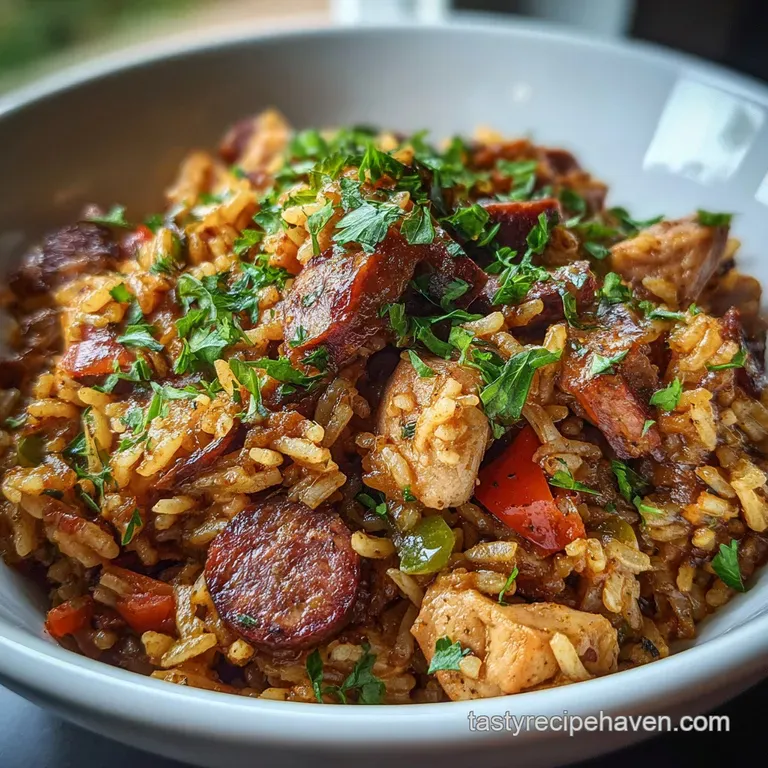
1. Searing the Flavor Base
Brown the 12 oz of sliced andouille sausage in your heavy pot over medium high heat. Cook 5 minutes until the edges are crispy and the fat has rendered into a pool of orange oil. Remove the sausage but leave that liquid gold in the pan.
2. Searing the Protein
Add the 1.5 lbs of chicken thighs to the sausage fat. Cook 6-8 minutes until golden brown on all sides.Note: Don't crowd the pan; work in batches if necessary to ensure you get a good sear rather than steaming the meat.
3. Sweating the Holy Trinity
Toss in the 2 diced onions, 1 green bell pepper, and 3 stalks of celery into the remaining fat. Sauté 7 minutes until the onions are translucent and the pepper has softened. This is where that classic Creole aroma starts to take over your house.
4. Developing the Mahogany Base
Stir in the 4 minced garlic cloves, 1 tbsp Creole seasoning, 1 tsp dried thyme, and 2 bay leaves. Cook 2 minutes until the garlic is fragrant and the spices have bloomed in the oil.
5. Toasting the Grains
Add the 2 cups of long grain white rice directly to the vegetables. Stir for 3 minutes until the rice edges look slightly translucent. Note: This coats the rice in fat, which helps keep the grains separate and adds a nutty flavor.
6. Incorporating the Liquids
Pour in the 14.5 oz of crushed tomatoes and the 3.5 cups of chicken stock. Stir well, scraping the bottom of the pot to release any browned bits. Return the sausage and chicken (and any juices) back into the pot.
7. Simmering to Perfection
Bring the mixture to a rolling boil, then immediately turn the heat down to low. Cover tightly and simmer 25-30 minutes until the liquid is absorbed and the rice is tender. Do not peek! You need that steam to stay inside.
8. Finishing and Fluffing
Turn off the heat and let the pot sit, covered, for 10 minutes. Remove the lid and fluff the rice with a fork. Fold in the 1/2 cup of sliced green onions just before serving.
Solving Common Jambalaya Cooking Issues
Why Your Rice is Gummy
The most common heartbreak in a sausage jambalaya recipe is rice that sticks together. This usually happens if there's too much starch on the outside of the grain or if you stirred it too much while it was simmering. Stirring releases starch, which turns the liquid into a paste.
Once you put that lid on, leave it alone!
Why Your Chicken is Dry
If you use chicken breasts, they simply cannot handle the 30 minute simmer time required for the rice. They’ll be chalky by the time the dish is done. Always use 1.5 lbs of chicken thighs. Their higher fat and connective tissue content mean they actually get more tender as they braise in the stock.
| Problem | Root Cause | Solution |
|---|---|---|
| Burnt Bottom | Heat too high or thin pot | Use a Dutch oven and keep the simmer at the lowest possible setting. |
| Crunchy Rice | Not enough liquid or lid leak | Add 1/4 cup extra stock and ensure the lid fits tightly; check seal. |
| Lack of Depth | Didn't brown meat enough | Spend the extra 5 minutes getting a dark sear on the sausage and chicken. |
If you realize your rice is still crunchy after 30 minutes, don't panic. Just splash in a little more warm stock, put the lid back on, and give it another 5-10 minutes. It's much easier to fix undercooked rice than overcooked mush. For another recipe that requires careful moisture management, you might want to look at our King Ranch Chicken Casserole recipe, which also deals with layering flavors and textures.
Creative Variations for Every Single Palate
Adapting for the Slow Cooker
To make a crockpot chicken and sausage jambalaya recipe, you still need to brown your meats and veggies first. If you just dump everything in raw, the texture will be quite different. After browning, throw everything except the rice into the slow cooker for 4 hours on high.
Add the rice in the last hour, but reduce the chicken stock by about half a cup since there's less evaporation.
Making it "Cajun Style"
Wait, isn't this Cajun? Not quite! This is a Creole version because it uses tomatoes (the "Red" jambalaya). If you want a chicken and sausage jambalaya without tomatoes, simply leave them out and increase the chicken stock to 4 cups.
You'll get a brown, meatier flavor profile that is more common in the rural parts of Louisiana.
Elevating with Gulf Shrimp
A shrimp chicken sausage jambalaya recipe is the ultimate feast. To do this, add 1 lb of peeled and deveined shrimp on top of the rice in the last 5-7 minutes of cooking. They only need a few minutes of steam to turn pink and opaque. Don't add them at the beginning, or they'll turn into rubber erasers.
- If you want it spicier: Add 1/2 tsp of cayenne pepper or a few dashes of Tabasco.
- If you want it healthier: Use brown rice (increase stock to 4.5 cups and cook for 50 minutes).
- If you want it smoky: Add 1/2 tsp of liquid smoke or use double the andouille.
Scaling for Large Groups or Couples
Downsizing for Two
If you're only cooking for a small household, you can easily halve this. Use a smaller pot, like a 3 quart saucepan. Reduce the cook time by about 5 minutes, but keep the rice to liquid ratio the same.
Since you'll only need half an egg or half a can of tomatoes, you can freeze the leftover crushed tomatoes in an ice cube tray for later use.
Doubling for a Crowd
When doubling for a party, use a massive 10 quart pot. You don't need to double the spices exactly; I suggest starting with 1.5x the Creole seasoning and tasting the liquid before the simmer. If you use 2x the salt, it can become overwhelming.
Also, work in batches when browning the meat so you don't drop the pan temperature too much, which leads to gray, boiled looking chicken.
Debunking Common Jambalaya Myths
Myth: You must stir the rice constantly. Actually, the opposite is true. Stirring rice while it simmers breaks the grains and releases excess starch, leading to a gummy texture. Once the lid is on, don't touch it until the timer goes off.
Myth: Searing meat "seals in" the juices. Science tells us this isn't true; moisture still escapes. However, searing creates the Maillard reaction, which provides the complex, savory flavor that defines the dish. It's about taste, not moisture retention.
Myth: Authentic jambalaya is always spicy. While it has a kick, it should be balanced. The "Holy Trinity" and the tomatoes are there to provide sweetness and acidity to counter the heat. It shouldn't just be a burn; it should be a symphony of flavors.
Storing and Reusing Your Tasty Leftovers
This dish is one of those rare things that actually tastes better the next day. As it sits in the fridge, the spices continue to permeate the rice grains. You can keep it in an airtight container for up to 4 days.
When reheating, add a tablespoon of water or stock to the bowl before microwaving to help "steam" the rice back to life.
For zero waste cooking, don't throw away your vegetable scraps! Save the onion skins, celery ends, and bell pepper cores in a bag in the freezer. Once you have enough, boil them with some water to make a quick vegetable stock for your next meal. If you have leftover chicken thighs, you could even use them in an Instant Pot Whole recipe for another night.
Freezing jambalaya works surprisingly well. Place it in freezer safe bags, press out the air, and it will stay good for up to 3 months. To reheat from frozen, let it thaw in the fridge overnight and then warm it up in a skillet with a splash of liquid to prevent sticking.
Choosing Sides for the Ultimate Feast
While this is a complete meal in one pot, I love serving it with something that provides a fresh contrast. A simple green salad with a sharp vinaigrette helps cut through the richness of the sausage fat.
Or, if you're feeling extra Southern, a slice of honey buttered cornbread is the perfect tool for wiping your bowl clean.
Another great option is braised collard greens. The bitterness of the greens balances the savory, spicy notes of the Creole seasoning beautifully. If you're hosting a big dinner, I've found that people love a side of hushpuppies or even a quick coleslaw.
The goal is to have something crunchy or acidic to reset your palate between bites of that flavorful, velvety rice. Honestly, a cold beer or a crisp iced tea is the only other thing you really need to call it a perfect evening.
Recipe FAQs
Can I substitute chicken thighs with breasts in jambalaya?
No, stick with thighs. Chicken breasts dry out too easily during the long simmer required for jambalaya, becoming chalky. Thighs, with their higher fat content, stay moist and tender throughout the cooking process.
Why is my jambalaya rice gummy or mushy?
You likely stirred the rice too much. Stirring releases excess starch from the grains, turning the liquid into a paste. For fluffy, separate grains, avoid stirring after the lid is on and allow the steam to do its work.
What is the "Holy Trinity" in jambalaya?
It's a flavor base of onions, bell pepper, and celery. This essential aromatic trio is fundamental to Creole and Cajun cooking, providing a foundational sweetness and herbaceous depth that complements the spicy sausage and rice.
How do I make jambalaya spicier?
Add extra cayenne pepper or hot sauce. While the Creole seasoning provides a good kick, you can increase the heat by adding 1/2 teaspoon of cayenne pepper or a few dashes of your favorite hot sauce directly into the pot.
Can I use brown rice instead of white rice for jambalaya?
Yes, but adjust the liquid and cooking time. If you opt for brown rice, use about 4.5 cups of chicken stock and simmer for approximately 50 minutes to ensure it cooks through properly. It will offer a slightly chewier texture and nutty flavor.
How do I adapt jambalaya for a slow cooker?
Brown all ingredients first, then add to the slow cooker. Sear the meats and sauté the vegetables as usual, then combine everything except the rice in the slow cooker for 4 hours on high. Add the rice and reduce the stock by about 1/2 cup in the last hour of cooking.
What are the best sides to serve with jambalaya?
Opt for something fresh or absorbent. A simple green salad with a vinaigrette offers a nice contrast, or cornbread is perfect for soaking up any extra sauce. You might also enjoy Southern Black Eyed Peas: Velvety, Smoke Infused Masterpiece as a hearty, complementary side.
Chicken Sausage Jambalaya