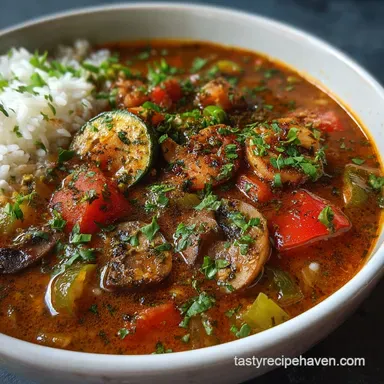
Vegetarian Gumbo Recipe

- Time: Active 20 minutes, Passive 50 minutes, Total 1 hour 10 minutes
- Flavor/Texture Hook: Smoky, velvety broth with a nutty, complex finish
- Perfect for: Sunday family dinners or meal prepping a cozy winter staple
- The Secret Chemistry Behind This Vegetarian Gumbo Recipe
- Detailed Specifications for Your Next Flavor Packed Kitchen Session
- Essential Elements for a Robust Plant Based Creole Base
- Professional Tools Needed for a Seamless Stew Success
- Mastering the Stages of Deep Flavor Development
- Solving Common Texture and Balance Roadblocks Effortlessly
- Customizing Your Pot with Regional and Dietary Alternatives
- Safe Storage Practices for Longevity and Zero Waste
- Assembling the Ultimate Bowl with Traditional Accompaniments
- Answering Your Top Queries About Meatless Cajun Cooking
- Recipe FAQs
- 📝 Recipe Card
You know that specific, nutty aroma that fills the kitchen when you're toasting flour? It's that warm, almost chocolatey scent that lets you know something serious is happening on the stove.
This vegetarian gumbo recipe started as a personal challenge because I was tired of meatless versions tasting like watery vegetable soup. Gumbo needs weight, it needs soul, and most importantly, it needs a roux dark enough to make a New Orleans grandmother nod in approval.
I remember my first attempt at a dark roux, I got impatient, cranked the heat, and ended up with a pot of burnt black specks that smelled like a tire fire. Total disaster. But once I learned the "low and slow" secret, everything changed.
We aren't just making a stew here; we're performing a bit of kitchen alchemy that transforms humble oil and flour into a thick, shimmering liquid gold.
Trust me on this, the mushrooms and the vegan Andouille provide all the "chew" you need, but the real magic is in the broth. It's velvety, rich, and has a slight kick that lingers just long enough. If you've been searching for a plant based version that doesn't feel like a compromise, you've found it.
Let's get the pot heating.
The Secret Chemistry Behind This Vegetarian Gumbo Recipe
Maillard Reaction: The slow toasting of the flour in oil creates complex flavor molecules that provide the deep, nutty base. Starch Gelatinization: As the roux cooks darker, the starch molecules break down, meaning a dark roux thickens less than a light one but offers significantly more flavor.
| Component | Science Role | Pro Secret |
|---|---|---|
| All Purpose Flour (65g) | Primary thickener and flavor base | Use a heavy bottomed pot to prevent hot spots and scorching. |
| Neutral Oil (120ml) | Fat medium for the roux | High smoke point oils allow for a darker, more stable roux. |
| Okra (200g) | Natural mucilage thickener | Sauté before adding liquid to control the "ropey" texture. |
The transition from a "blonde" roux to a "mahogany" one is where the flavor lives. As the flour cooks, the proteins and sugars react, losing their ability to thicken but gaining a massive amount of savory depth. It's a trade off that defines the entire dish.
Chef's Note: If you're nervous about burning the roux, do it in the oven at 175°C (350°F) for about 90 minutes, stirring every 15, until it reaches a dark penny color.
Detailed Specifications for Your Next Flavor Packed Kitchen Session
Before we start, let's look at how the choice of ingredients impacts the final result. Using fresh vegetables is always the goal, but sometimes a shortcut is necessary for a weeknight.
| Feature | Fresh Method | Shortcut Version |
|---|---|---|
| Roux Base | Hand stirred for 20-30 minutes | Jarred roux or oven toasted flour |
| Vegetable Base | Hand chopped Holy Trinity | Pre diced frozen seasoning blend |
| Mushroom Prep | Thickly sliced cremini | Canned or pre sliced mushrooms |
Using fresh onions and peppers provides a certain brightness that frozen blends lack, as the sulfur compounds in the onions are more potent when freshly cut. However, if you're in a rush, a high-quality frozen seasoning blend can save you 15 minutes of prep without a total loss of quality.
This recipe is similar to the layering of flavors I use in my Southern Black Eyed recipe, where the pot likker becomes the star of the show. Much like that dish, the success of this gumbo depends on the patience you show during the early stages of cooking.
Essential Elements for a Robust Plant Based Creole Base
To make this, you'll need a specific set of ingredients that work together to mimic the traditional meaty profile.
- 1/2 cup neutral oil (120ml): Use grapeseed or vegetable oil. Why this? It has a high smoke point and a clean flavor profile.
- Substitute: Melted vegan butter (adds richness but burns faster).
- 1/2 cup all purpose flour (65g): The foundation of your roux. Why this? Provides the necessary starch for thickening and browning.
- Substitute: gluten-free all purpose flour (use a brand with xanthan gum).
- 1 large yellow onion: Finely diced. Why this? Provides the sweet, aromatic base of the Holy Trinity.
- Substitute: White onion or two large shallots.
- 2 green bell peppers: Diced. Why this? Offers a grassy, bitter contrast to the rich roux.
- Substitute: Red bell peppers (though it'll be sweeter).
- 3 stalks celery: Diced. Why this? Adds an earthy, salty depth that rounds out the aromatics.
- Substitute: Fennel bulb for a subtle anise note.
- 4 cloves garlic: Minced. Why this? Essential for that pungent, savory backbone.
- Substitute: 1 teaspoon garlic powder (add with the spices).
- 1 lb cremini mushrooms (450g): Sliced thick. Why this? Their dense texture provides a meat like "chew."
- Substitute: Portobello mushrooms or oyster mushrooms.
- 2 cups okra (200g): Sliced into rounds. Why this? Acts as a secondary thickener and classic gumbo ingredient.
- Substitute: Sautéed green beans (note: won't thicken the stew).
- 12 oz vegan Andouille style sausage (340g): Sliced. Why this? Adds smoky heat and fat to the broth.
- Substitute: Smoked tofu cubes tossed in extra Cajun seasoning.
- 6 cups vegetable broth (1.4L): Use a low sodium version. Why this? Controls the salt while providing the liquid volume.
- Substitute: Mushroom stock for extra umami depth.
Other pantry staples include 1 tbsp Cajun seasoning, 1 tsp smoked paprika, 15 oz diced tomatoes, 1 tbsp soy sauce, 2 bay leaves, and 1/2 tsp cayenne pepper.
Professional Tools Needed for a Seamless Stew Success
The most critical tool is a heavy bottomed pot. I highly recommend a cast iron Dutch oven, like a Lodge or Le Creuset. The thick walls hold heat evenly, which is non negotiable when you're whisking a roux for 20 minutes straight.
If you use a thin stainless steel pot, you're much more likely to end up with hot spots that scorch your flour.
You'll also want a long handled wooden spoon or a over high heat whisk. I prefer the wooden spoon because it allows you to scrape the "corners" of the pot where the roux likes to hide and burn. A sharp chef's knife is also a must for the "Holy Trinity" prep work.
Consistency in dicing ensures that the onions, peppers, and celery all soften at the same rate, preventing crunchy onions in your final bowl.
Finally,, have a ladle ready. You'll be adding the vegetable broth slowly, and a ladle helps you incorporate the liquid without splashing hot oil or creating lumps. Organization is key here; have all your vegetables chopped before the oil even hits the pan.
Mastering the Stages of Deep Flavor Development
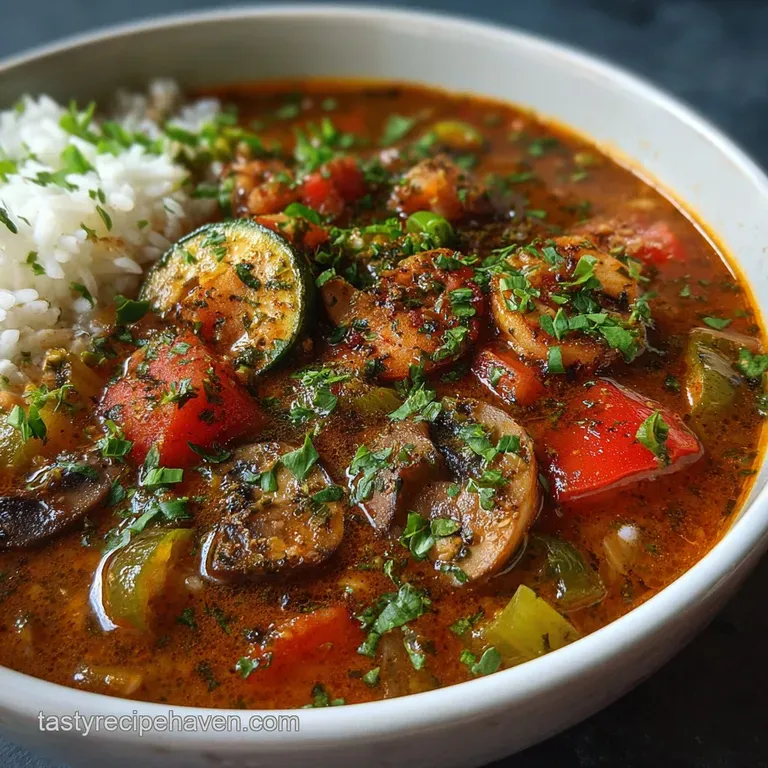
1. The Foundation: Achieving the Dark Roux
Heat the oil in your Dutch oven over medium low heat. Sprinkle in the flour and begin whisking constantly. You’ll see it move from a pale sand color to a peanut butter shade around the 10 minute mark.
Keep going until it reaches a dark mahogany or "old penny" color, which usually takes about 20 to 25 minutes. Watch for the nutty aroma and a slight shimmer on the surface.
2. The Sauté: Softening the Trinity
Immediately add the onion, bell pepper, and celery to the dark roux. The temperature of the vegetables will stop the roux from cooking further. Stir for 5 minutes until the onions are translucent and the peppers have softened slightly. Add the garlic and sauté for another 60 seconds until fragrant.
3. Sizzling the Sausage and Mushrooms
Push the vegetables to the side and add the sliced vegan sausage and cremini mushrooms. Let them sit undisturbed for 2 minutes to get a bit of a sear. Sizzle the mushrooms until they release their moisture and start to brown on the edges. This adds a layer of umami that replaces the traditional meat drippings.
4. Spicing and Seasoning
Stir in the Cajun seasoning, smoked paprika, and cayenne pepper. Let the spices toast in the oil for 1 minute. Toast the spices until the oil turns a deep reddish brown and smells intense. This "blooming" process wakes up the dried herbs and peppers.
5. Incorporating the Liquids
Slowly pour in one cup of vegetable broth, whisking vigorously to prevent lumps. Once smooth, add the remaining broth, diced tomatoes (with their juices), and soy sauce. The soy sauce is a secret trick that adds a fermented saltiness often missing in vegetarian gumbo recipes.
6. The Thickening Agent
Add the sliced okra and the bay leaves to the pot. Stir well to combine. Simmer the mixture over low heat for 30 minutes. You'll notice the broth begin to thicken and take on a glossy appearance as the okra releases its natural starches.
7. Texture Check and Balancing
After 30 minutes, check the consistency. If it's too thin, simmer for another 10 minutes uncovered. If it's too thick, add a splash more broth. Taste the broth for salt and heat. Adjust with more Cajun seasoning or a dash of hot sauce if you like a bigger punch.
8. The Final Rest
Remove the bay leaves and turn off the heat. Let the gumbo sit for 5 to 10 minutes before serving. Resting allows the flavors to settle and the texture to become truly velvety. Serve it over a big scoop of white rice with plenty of fresh green onions on top.
Solving Common Texture and Balance Roadblocks Effortlessly
Gumbo is a living thing, and sometimes it doesn't behave. If your roux breaks or your okra is a bit too adventurous with its texture, don't panic. Most issues are easily fixed with a little heat adjustment or a splash of acid.
Why Your Gumbo Might Have Texture Issues
The most common complaint with any vegetarian gumbo recipe is the "slime" factor from the okra. This happens when the okra is boiled too aggressively without being sautéed first or if it's overcooked.
To minimize this, ensure your okra is fresh and firm, and try to keep the simmer at a gentle "smile" rather than a rolling boil.
| Problem | Root Cause | Solution |
|---|---|---|
| Bitter Aftertaste | Roux was scorched | Add a pinch of sugar and more salt to mask; if it tastes like charcoal, start over. |
| Greasy Surface | Oil separated from roux | Whisk in a splash of warm broth or use a piece of bread to skim the top. |
| Watery Broth | Roux was too dark | Mix 1 tsp file powder into the individual bowls at the end (never boil file). |
If you're looking for a different texture profile, you might enjoy my Fried Gyoza Recipe, which offers a completely different "crispy vs soft" experience. Sometimes, if my gumbo feels too heavy, I'll pair it with a light side to balance the richness of the roux.
How to Fix a Thin Gumbo
If your gumbo hasn't thickened enough after the simmer, you have two options. You can continue to simmer it uncovered to reduce the liquid, which concentrates the flavor. Alternatively, you can use "Beurre Manie" a small ball of equal parts flour and vegan butter.
Whisk it in at the end to provide a final thickening boost without the raw flour taste.
Customizing Your Pot with Regional and Dietary Alternatives
You can easily adapt this vegetarian gumbo recipe to fit different diets or what you happen to have in your pantry. The soul of the dish is the roux and the trinity; everything else is flexible.
| Original Ingredient | Substitute | Why It Works |
|---|---|---|
| All Purpose Flour | Almond Flour | Adds a nutty flavor but won't thicken as well use with okra/file. |
| Vegan Sausage | Smoked Tempeh | Provides a fermented, earthy protein with a firm bite. |
| Vegetable Broth | Beer (1 cup) + Water | Adds a malty, deep complexity to the base liquid. |
If you are following a specific dietary plan, such as a Natural Zepboundrelated recipe, you might want to increase the mushroom count and decrease the flour to lower the carbohydrate load while keeping the satiety high.
Adaptations for Modern Kitchens
For those wondering about a vegetarian gumbo recipe instant pot version: you still have to make the roux on the "Sauté" setting. Once the roux and trinity are done, add everything else and cook on High Pressure for 5 minutes with a natural release.
It's faster, but you do lose some of the flavor development that comes from a long, slow simmer.
Creating a gluten-free Version
To make a gluten-free vegetarian gumbo recipe, use a high-quality gluten-free flour blend for the roux. Be aware that GF flour browns much faster than wheat flour, so keep a very close eye on it.
You may also need to add a bit more okra or a file powder finish to get the thickness right, as GF flour doesn't always have the same structural integrity.
Safe Storage Practices for Longevity and Zero Waste
Gumbo is one of those rare dishes that actually tastes better the next day. The spices have time to permeate the mushrooms and the roux stabilizes into a rich, cohesive sauce.
Storage: Store leftovers in an airtight container in the fridge for up to 4 days. When reheating, do it slowly on the stove. You might need to add a splash of water or broth, as the roux will continue to thicken the liquid as it cools.
Freezing: This recipe freezes beautifully for up to 3 months. However, the okra can get a bit soft after thawing. I recommend freezing the gumbo without the rice. To serve, thaw overnight in the fridge and reheat gently.
- Vegetable Scraps
- Save the ends of your onions, celery, and peppers to make your own vegetable stock for the next batch.
- Mushroom Stems
- If you're using mushrooms with tough stems, don't toss them! Finely mince them and sauté them into the trinity for extra flavor.
- Leftover Rice
- Use leftover rice to make a quick breakfast congee or add it to a soup later in the week.
Assembling the Ultimate Bowl with Traditional Accompaniments
The traditional way to serve a vegetarian gumbo recipe is over a mound of fluffy white rice. But don't stop there. The contrast between the hot, spicy stew and cold toppings is part of the magic.
- Green Onions: Slice them thin and use plenty of the green parts for a fresh, sharp crunch.
- Hot Sauce: I always keep a bottle of Crystal or Tabasco on the table. A dash of vinegar heavy hot sauce cuts through the richness of the roux.
- Potato Salad: It might sound strange if you aren't from the Gulf Coast, but a scoop of cold potato salad right in the middle of the gumbo bowl is a classic move. The creaminess is incredible against the dark broth.
- Crusty Bread: A toasted French baguette is perfect for swiping up every last drop of that mahogany liquid.
If you’re hosting a larger gathering, you could even serve this alongside an American Chop Suey Recipe for a diverse "comfort food" spread. While they are from different regional traditions, both offer that one pot, deep flavor satisfaction that guests love.
Answering Your Top Queries About Meatless Cajun Cooking
The Role of Dark Roux in Flavor vs Thickness
A dark roux provides a deep, smoky flavor but loses much of its thickening power compared to a blonde roux. This is because the heat breaks down the starch chains in the flour. This is why we use okra as a secondary thickener to ensure the gumbo has the proper body without tasting like a thick gravy.
Achieving a Meaty Texture Without Animal Products
The secret to the "meatiness" in this dish lies in the mushrooms and the vegan sausage. Cremini mushrooms have a high density and hold their shape during the long simmer. Plus,, the inclusion of soy sauce adds "Glutamates," which are the chemical compounds responsible for the savory umami flavor we usually associate with meat.
Managing the Texture of Okra
Okra contains mucilage, which can become "slimy" when boiled. By sautéing the okra briefly before adding the liquid, or simply by simmering it in an acidic environment (like the diced tomatoes in this recipe), you can control that texture.
The acid helps break down the mucilage, resulting in a thick broth rather than a ropey one.
Essential Spices for Authenticity
A good Cajun seasoning is non negotiable. It usually contains a mix of garlic powder, onion powder, dried oregano, thyme, and varying levels of cayenne and black pepper. If you find your gumbo is lacking "depth," it’s often a lack of salt or acid.
Try a squeeze of lemon or a teaspoon of apple cider vinegar right before serving to brighten the whole pot.
Enhancing Protein Content for a Healthy Stew
If you want to make a healthy vegetarian gumbo recipe with more protein, consider adding a can of kidney beans or chickpeas during the last 15 minutes of simmering.
They won't alter the flavor profile significantly but will add extra fiber and plant based protein to make the meal even more filling.
Recipe FAQs
Is there such a thing as vegetarian gumbo?
Yes, absolutely. A well made vegetarian gumbo relies on a deeply flavored roux and hearty vegetables like mushrooms and okra to create a rich, satisfying stew that rivals any traditional version.
What veggie goes in gumbo?
The "Holy Trinity" of onion, bell pepper, and celery is essential. Okra is also a classic ingredient, acting as a natural thickener, and mushrooms provide a meaty texture. Garlic and tomatoes add further depth of flavor.
What are common gumbo mistakes?
The most common mistake is rushing the roux. It needs to be cooked slowly to a deep mahogany color for proper flavor and can easily scorch if the heat is too high. Another mistake is boiling the okra aggressively, which can lead to a slimy texture; a gentle simmer is better.
What are the ingredients in vegan gumbo?
Key ingredients include a dark roux made with oil and flour, the "Holy Trinity" (onion, bell pepper, celery), garlic, mushrooms, okra, and vegetable broth. Vegan Andouille style sausage or smoked tofu often replaces meat for smoky flavor and texture, along with Cajun spices and bay leaves.
How do I make my vegetarian gumbo taste "meaty"?
Focus on building deep umami flavors. Using a very dark, slow cooked roux is crucial, and cremini or portobello mushrooms add a substantial, dense texture. Smoked vegan sausage or even a touch of soy sauce can also contribute savory depth.
Can I make a gluten-free vegetarian gumbo?
Yes, you can adapt it for gluten-free. Use a high-quality gluten-free flour blend for the roux, but be aware it browns faster. You may need to rely more on okra or file powder for thickening as GF flours can behave differently.
What's the best way to thicken vegetarian gumbo if it's too thin?
Simmer uncovered to reduce the liquid naturally. Alternatively, whisk in a small amount of "beurre manie" (equal parts softened vegan butter and gluten-free flour mixed into a paste) at the end, or stir in a bit of file powder just before serving for thickening. If you enjoyed mastering the thickening techniques here, see how the principle of starch gelatinization applies in our Nasi Lemak: Fragrant Coconut Rice Recipe Made Easy.
Vegetarian Gumbo Recipe