Grilled Chicken Breast: Juicy and Tender
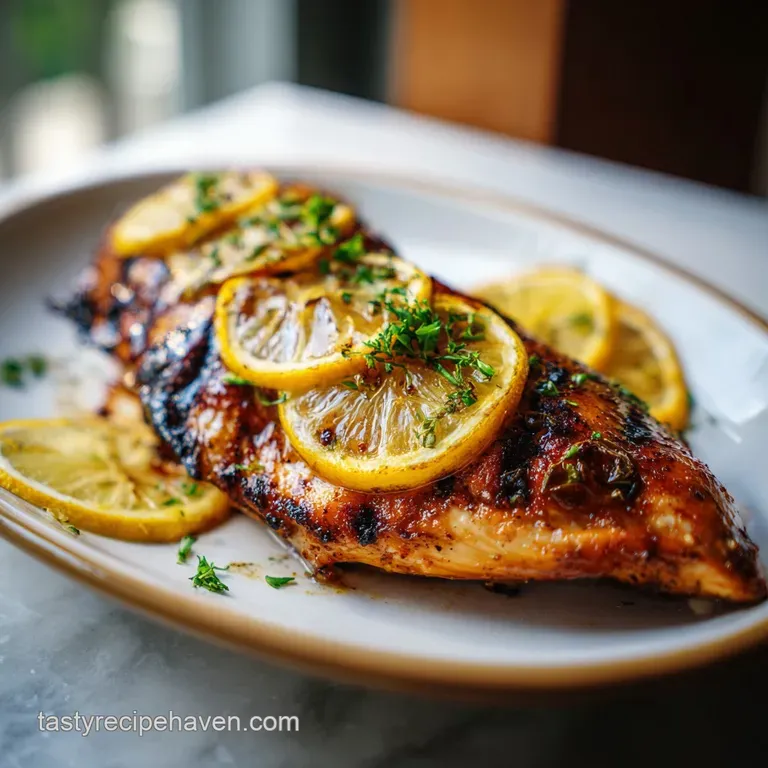
- Time: 10 min active + 30 min chilling = Total 52 mins
- Flavor/Texture Hook: Charred, smoky exterior with a velvety, tender center
- Perfect for: Nutrient dense weeknight dinners or sustainable meal prep
- Pounding the Meat for Success
- Flavor Component Analysis
- Ingredients and Substitutes
- The Essential Grilling Kit
- Full Cooking Process
- Troubleshooting Grilling Mishaps
- Adjusting Portion Sizes
- Debunking Grilling Myths
- Storage and Zero Waste
- Serving and Pairing Ideas
- Critical in Sodium
- Recipe FAQs
- 📝 Recipe Card
That sudden, loud sizzle when the meat hits the scorching grill is the sound of success. But for years, I struggled with a common problem. I would throw thick, uneven chicken breasts onto the fire, and by the time the center was safe to eat, the outside was as dry as a piece of cardboard.
I remember serving a dinner party where the chicken was so tough we practically needed a saw to get through it. It was a total disaster, and I felt terrible.
The trick isn't in a fancy tool or an expensive cut of meat. It's about physics and patience. Once I started treating the meat with a bit more intention, everything changed. You get that beautiful brown crust and a center that actually holds onto its juices.
This Grilled Chicken Breast recipe is all about building flavor in layers. We start with a mechanical change to the meat, move to a chemical infusion with the marinade, and finish with a over high heat sear. It's a sustainable way to eat that focuses on nutrient density without sacrificing the flavors we crave.
Pounding the Meat for Success
The secret to a juicy result isn't actually the marinade, but the shape of the meat. When a breast is thick at one end and thin at the other, the thin part overcooks while the thick part stays raw.
- Uniform Thickness
- Pounding the meat to a consistent 3/4 inch allows heat to penetrate evenly, preventing the "dry edge" syndrome.
- Protein Relaxation
- Gently breaking down the muscle fibers with a mallet makes the meat more receptive to the marinade.
- Faster Cooking
- Thinner, even pieces reduce the total time on the grill, which minimizes moisture loss.
- Better Contact
- A flat piece of meat makes full contact with the grill grates, creating a more consistent char.
| Feature | Fresh Prep Method | Shortcut Method | Impact |
|---|---|---|---|
| Meat Shape | Pounded Flat | Left Natural | Pounded is significantly juicier |
| Garlic | Freshly Minced | Garlic Powder | Fresh adds a punchy, zesty bite |
| Lemon | Freshly Squeezed | Bottled Juice | Fresh has a brighter, cleaner acidity |
Flavor Component Analysis
Every ingredient in this Grilled Chicken Breast mix serves a specific purpose. We aren't just adding things for the sake of it, we're building a flavor profile that balances acidity, salt, and earthiness.
| Ingredient | Science Role | Pro Secret |
|---|---|---|
| Olive Oil | Heat Conductor | Use a high-quality extra virgin for better flavor |
| Lemon Juice | Fiber Tenderizer | Don't marinate over 4 hours or it gets mushy |
| Smoked Paprika | Color and Depth | Adds a wood fired taste even on a gas grill |
| Sea Salt | Moisture Draw | Salt helps the other flavors penetrate deeper |
Ingredients and Substitutes
I keep these staples in my pantry because they create a nutrient dense base that works every time. Trust me on this, don't bother with low-fat substitutes for the oil, as you'll just end up with meat that sticks to the grill.
- 1.5 lbs boneless skinless chicken breasts Why this? Lean protein base that absorbs marinades well
- 3 tbsp olive oil Why this? Prevents sticking and carries flavor
- 2 tbsp fresh lemon juice Why this? Brightens the flavor and tenderizes
- 3 cloves minced garlic Why this? Adds a savory, aromatic punch
- 1 tsp dried oregano Why this? Provides a classic earthy, herbal note
- 1 tsp smoked paprika Why this? Gives that deep, charred color
- 1 tsp sea salt Why this? Enhances all other flavors
- 1/2 tsp black pepper Why this? Adds a subtle, woody heat
| Original Ingredient | Substitute | Why It Works |
|---|---|---|
| Olive Oil (3 tbsp) | Avocado Oil (3 tbsp) | Higher smoke point. Note: More neutral flavor |
| Lemon Juice (2 tbsp) | Lime Juice (2 tbsp) | Similar acidity. Note: Shifts profile toward zestier/Mexican notes |
| Dried Oregano (1 tsp) | Dried Thyme (1 tsp) | Similar earthy profile. Note: Slightly more floral |
This recipe is a great starting point, but if you're looking for a more complete meal, this pairs great with a Mediterranean grilled chicken bowl.
The Essential Grilling Kit
You don't need a professional setup to get a great result. A simple outdoor grill works, but a heavy cast iron skillet is a brilliant alternative for those without outdoor access.
For the prep, a meat mallet is non negotiable. If you don't have one, a heavy rolling pin or the bottom of a sturdy skillet works in a pinch. You also want a gallon sized zip top bag. It's the most efficient way to ensure the marinade reaches every single nook and cranny of the meat.
Finally, get yourself an instant read thermometer. Guessing the doneness of Grilled Chicken Breast is how people end up with rubbery meat. Knowing exactly when you hit 160°F is the only way to guarantee a velvety texture.
Full Cooking Process
Right then, let's get into the actual cooking. Follow these steps closely, and you'll avoid the dry meat traps I fell into years ago.
- Place chicken breasts between two sheets of plastic wrap. Use a meat mallet to pound the thickest part until the entire piece is an even thickness of approximately 3/4 inch. Note: This prevents overcooking the edges.
- Pat the meat dry with paper towels. until the surface is completely matte. Note: Wet meat steams; dry meat sears.
- Combine olive oil, lemon juice, minced garlic, dried oregano, smoked paprika, sea salt, and black pepper in a gallon sized zip top bag.
- Add the chicken to the bag and massage the marinade into the meat. Refrigerate for at least 30 minutes (up to 4 hours).
- Preheat your outdoor grill or cast iron skillet to medium high heat. Lightly oil the surface to prevent sticking.
- Place the chicken on the heat. Cook undisturbed for 5-6 minutes until a deep brown crust forms and the meat releases easily.
- Flip using tongs and cook for another 5-6 minutes.
- Remove the meat from the heat when the internal temperature reaches 160°F (71°C).
- Allow the meat to rest for 5-10 minutes until the juices stop pooling on the surface.
Chef's Note: Try freezing your butter for 10 minutes before grating it over the chicken during the resting phase. The cold butter melts slowly, creating a rich, velvety finish.
Troubleshooting Grilling Mishaps
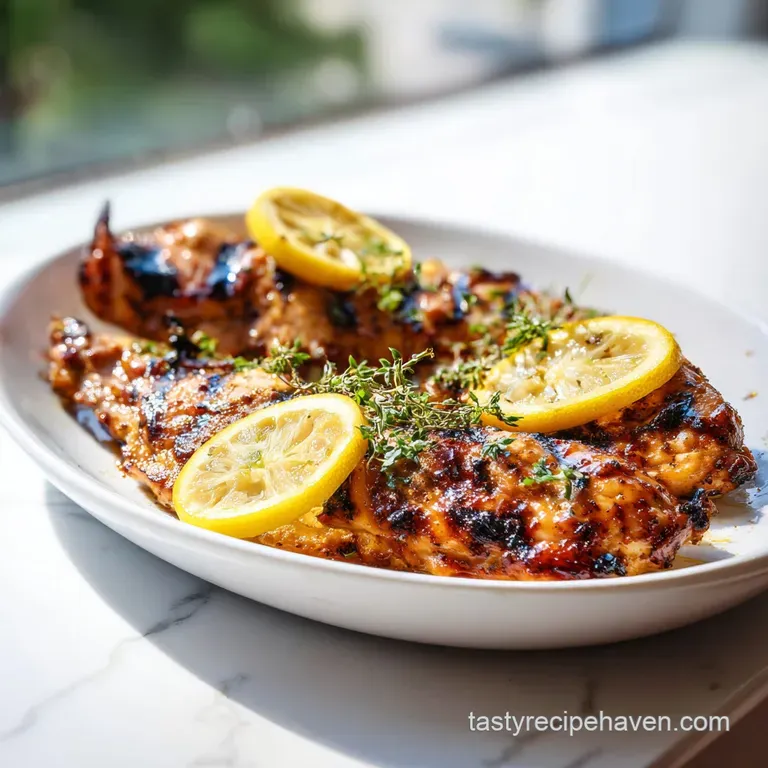
Even the best of us have off days in the kitchen. The most common issue is usually related to heat management or moisture.
| Issue | Solution | ||||
|---|---|---|---|---|---|
| Why Your Chicken is Sticking | This usually happens because the grill wasn't hot enough or the meat was placed on the grate too early. If the meat doesn't "release" naturally, it means the sear hasn't formed yet. Don't force it, or | ||||
| Why Your Meat is Dry | Overcooking is the primary culprit. Even a few minutes too long can turn a juicy breast into a sponge. Remember that the temperature will rise about 5 degrees while resting due to carryover heat. | ||||
| Why Your Crust is Burnt | This happens when the marinade has too much sugar or the heat is too aggressive. Since our marinade is oil based, this is rare, but keep an eye on your flame. | Problem | Root Cause | Solution |
Adjusting Portion Sizes
When you're cooking for a crowd or just yourself, you can't always just double the recipe. Some things don't scale linearly.
For smaller batches (½ or ¼), use a smaller skillet to maintain heat density. You'll likely find the cooking time drops by about 20% because there's less meat absorbing the heat from the pan.
If you're using a single egg in a breading (though not in this specific recipe), beat it first and measure out half.
When scaling up (2x-4x), be careful with the spices. I find that scaling salt and smoked paprika to 1.5x is usually enough, as they can become overwhelming in large quantities. Work in batches. Overcrowding the grill drops the temperature, meaning you'll get steamed meat instead of a charred crust.
Debunking Grilling Myths
Searing meat does not "seal in the juices." This is a common misconception. Moisture loss happens throughout the entire cooking process regardless of the sear. The crust is for flavor and texture, not for locking in water.
Another myth is that you should flip your meat every minute to cook it faster. In reality, flipping too often prevents a proper crust from forming. One single flip is all you need for this Grilled Chicken Breast method.
Finally, some people think you can skip the resting period if you're in a rush. If you cut into the meat immediately, the juices will run out onto the plate, leaving the meat dry. Resting allows those fibers to reabsorb the liquid.
Storage and Zero Waste
Once you've made a batch of Grilled Chicken Breast, you've got a nutrient dense base for the whole week. Store leftovers in an airtight container in the fridge for up to 4 days. For the freezer, wrap the cooked breasts tightly in foil and then a freezer bag; they'll stay good for 2-3 months.
When reheating, avoid the microwave if you can. Use a pan with a splash of water or broth on low heat, covered with a lid. This steams the meat back to life without drying it out. For those hitting the gym, my high protein grilled chicken bowl is a fantastic way to use these leftovers.
For zero waste, don't toss the leftover marinade in the bag. While you can't use it as a sauce (since it touched raw meat), you can boil it in a small saucepan for 5 minutes to create a concentrated glaze for vegetables.
Serving and Pairing Ideas
To make this a satisfying meal, contrast the charred flavor of the meat with something fresh and crunchy. I love serving this alongside a crisp cucumber salad or some roasted asparagus. The acidity of the lemon in the chicken cuts through the richness of a buttery side dish.
If you want a zesty twist, serve the slices over a bed of quinoa with crumbled feta and kalamata olives. The earthy oregano in the marinade ties perfectly into a Greek inspired spread.
For a more comforting vibe, a side of smashed potatoes with garlic and parsley provides a great textural contrast to the velvety chicken.
Since this Grilled Chicken Breast is so lean, adding a healthy fat like sliced avocado or a drizzle of tahini on the plate makes the meal feel more indulgent while keeping it sustainable and health conscious.
Critical in Sodium
1580 mg 1,580 mg of sodium per serving (69% 69% of daily value)
The American Heart Association recommends a limit of 2,300 mg of sodium per day for most adults to maintain heart health.
Tips to Reduce Sodium
-
Reduce Sea Salt-25%
Cut the sea salt in half or eliminate it entirely to achieve the most significant sodium reduction.
-
Increase Lemon Juice-10%
Add an extra tablespoon of fresh lemon juice; the acidity helps mimic the taste of salt and brightens the chicken.
-
Amplify Garlic-5%
Increase the amount of minced garlic to add more pungent, savory depth, reducing the need for salt.
-
Enhance Dried Herbs
Add more dried oregano or incorporate fresh parsley to build complex flavor layers without adding sodium.
Recipe FAQs
How to grill a chicken breast without drying it out?
Pound the meat to an even 3/4 inch thickness and pull it at 160°F. This ensures the chicken cooks uniformly and allows carry over heat to finish the process during the 5-10 minute rest.
How do you grill chicken on a gas grill?
Preheat the grill to medium high heat and lightly oil the surface. Place the chicken on the heat and cook undisturbed for 5-6 minutes per side to develop a deep brown crust.
What is the secret to grilling chicken?
Pounding the meat to a uniform thickness. This prevents the thinner edges from overcooking while the thickest part reaches safety. If you mastered this precision here, see how the same principle works in our grilled nuggets.
Should you marinate chicken before grilling?
Yes, marinating adds essential flavor and moisture. Use the olive oil and lemon juice mixture for at least 30 minutes, but no more than 4 hours to avoid over tenderizing the meat.
Why is my chicken sticking to the grill?
Wait for the meat to release naturally. Sticking usually happens if the grill wasn't hot enough or the meat was flipped before the sear fully formed.
Is it true that chicken breast must be cooked to 180°F for safety?
No, this is a common misconception. Removing the chicken at 160°F is ideal because the internal temperature continues to rise during the resting period.
How do I store and reheat leftovers?
Store in an airtight container in the fridge for up to 4 days. Reheat in a pan with a splash of water on low heat and cover with a lid to steam the meat back to life.
Juicy Grilled Chicken Breast