Easy Traditional Pork and Sauerkraut Dinner

- Time: Active 20 minutes, Passive 8 hours, Total 8 hours 20 minutes
- Flavor/Texture Hook: Velvety pulled pork paired with tender, tangy sauerkraut
- Perfect for: New Year's Day good luck traditions or easy Sunday meal prep
- New Year s Day Dinner Recipe Easy Traditional Meal
- Science of Slow Braising Success
- Component Analysis and Science Roles
- Essential Elements and Simple Swaps
- Tools for a Seamless Cook
- Step-by-Step Slow Cooking Guide
- Solving Common Slow Cooking Hurdles
- Adjusting Servings for Any Crowd
- Debunking Common Braising Misconceptions
- Preservation and Leftover Ideas
- Best Sides for Rich Pork
- Recipe FAQs
- 📝 Recipe Card
New Year s Day Dinner Recipe Easy Traditional Meal
There is a specific sound that defines New Year's Day in my house, and it isn't the cheers from the television. It is the rhythmic, gentle sizzle of a pork shoulder hitting a hot cast iron pan. That initial sear releases an aroma so intoxicating it could wake the sleepiest reveler.
Discover a delicious, easy, and traditional roasted pork recipe perfect for your New Year's Day dinner.
We often start the year feeling a bit sluggish, don't we? The last thing anyone wants is to stand over a stove for hours. This recipe is the ultimate solution because it relies on the magic of time rather than your constant attention.
By layering fermented cabbage, crisp apples, and a hefty piece of bone in pork, you create a self basting environment that yields the most tender results imaginable.
Forget the dry, gray roasts of the past. This version is all about the contrast between the sharp, vinegary sauerkraut and the sweet, mellowed out Granny Smith apples. It is a meal that feels like a warm hug, providing that necessary comfort to kick off a brand new year.
Right then, let's look at why this combination is a culinary powerhouse.
Science of Slow Braising Success
When we cook a 4 lb bone in pork shoulder for eight hours, we aren't just heating meat; we are performing a complex chemical transformation. This "low and slow" approach is the secret to moving past "tough" and straight into "buttery."
- Collagen Conversion: long term heat at low temperatures breaks down tough connective tissue (collagen) into silky gelatin, which provides that unmistakable mouthfeel.
- Acidic Tenderization: The lactic acid in the 2 lbs fresh sauerkraut acts as a mild tenderizer, softening the exterior muscle fibers of the pork as it braises.
- Osmotic Balance: Using a cup of hard apple cider creates a flavorful equilibrium, preventing the meat's internal moisture from escaping into the surrounding dry air of the pot.
Converting Collagen to Gelatin
Pork shoulder is packed with intramuscular connective tissue. Unlike a steak, which toughens as it cooks, this cut requires a minimum internal temperature of 190°F to allow the collagen to fully liquefy.
This process is what creates the "shatter" effect when you finally pull the meat apart with a fork.
Neutralizing Acidic Sharpness
Sauerkraut can be aggressive if left unchecked. By adding 2 tbsp brown sugar and two thick sliced Granny Smith apples, we trigger a flavor balance. The sugars counteract the high acidity, mellowing the brine into a savory sauce that complements the pork without overpowering it.
Layering Aromatics for Depth
We don't just dump ingredients in; we build layers. Smashed garlic cloves and caraway seeds provide a subtle earthy backbone. Caraway, in particular, contains oils that help with the digestion of heavy fats and cabbage, making this a smart choice for a large traditional meal.
Component Analysis and Science Roles
Understanding your ingredients helps you manipulate the final outcome. Each element in this New Year s Day Dinner Recipe Easy Traditional Meal serves a structural or chemical purpose beyond just tasting good.
| Ingredient | Science Role | Pro Secret |
|---|---|---|
| Pork Shoulder | Fat/Protein Source | Leave the fat cap on during the cook to naturally baste the meat from the top down. |
| Fresh Sauerkraut | Acidic Catalyst | Always rinse fresh kraut to remove excess salt, allowing you to control the final seasoning. |
| Hard Apple Cider | Solvent & Sugar | The yeast fermented sugars in cider provide a more complex sweetness than plain apple juice. |
| Caraway Seeds | Digestive Aid | Toast them for 30 seconds in the dry pan before adding to release the volatile oils. |
Essential Elements and Simple Swaps
To get that authentic flavor, you need specific ingredients. However, I’ve found a few alternatives that work in a pinch if your local market is cleaned out after the holiday rush.
- 4 lb bone in pork shoulder (Boston butt): The bone adds flavor and helps conduct heat to the center.
- Substitute: Pork Loin (Note: Reduce cook time by 4 hours; will be leaner and less "shreddy").
- Why this? Highest fat content for long term moisture.
- 2 lbs fresh sauerkraut: Look for the bags in the refrigerated section, not the shelf stable cans.
- Substitute: Shredded green cabbage with 1/2 cup white vinegar.
- Why this? Contains live cultures and a cleaner, crispier acidity.
- 2 large Granny Smith apples: These hold their shape better than softer varieties.
- Substitute: Honeycrisp or Pink Lady apples.
- Why this? High tartness balances the heavy pork fat.
- 1 cup hard apple cider: Adds a fermented depth.
- Substitute: 1 cup chicken broth plus 1 tsp apple cider vinegar.
- Why this? Provides the liquid base for steam braising.
- 2 tbsp brown sugar: Essential for the Maillard reaction during the final stages.
- Substitute: Maple syrup or honey.
- Why this? Molasses notes deepen the color of the kraut.
Tools for a Seamless Cook
You don't need a high tech kitchen to pull this off. Honestly, a simple slow cooker or a heavy pot is all that stands between you and glory.
- Lodge 6 Quart Dutch Oven: If you are using the oven method, cast iron provides the most even heat distribution.
- Crock Pot Slow Cooker: Perfect for the "set it and forget it" crowd. Use a 6 quart or 8 quart model to fit the 4 lb shoulder.
- KitchenAid Meat Claws: While forks work, these make shredding a 4 lb roast a 30 second job.
- Stainless Steel Mesh Strainer: Essential for rinsing that 2 lbs of sauerkraut thoroughly.
Step-by-step Slow Cooking Guide
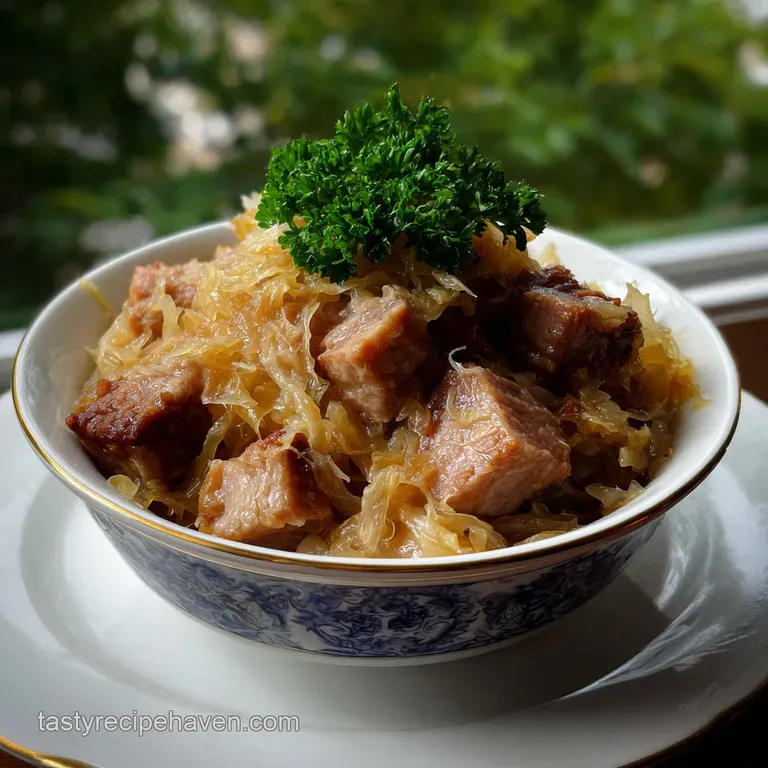
Let's get cooking. Follow these steps carefully to ensure the pork is tender and the flavors are fully integrated.
- Prep the meat. Pat the 4 lb pork shoulder dry with paper towels. Rub the 1 tbsp kosher salt and 1 tsp cracked black pepper over every inch.
- Sear the exterior. Heat a Lodge skillet over medium high heat. Brown the pork on all sides until a deep golden brown crust forms. Note: This creates the Maillard reaction, adding complexity you can't get from boiling.
- Rinse the kraut. Place the 2 lbs sauerkraut in a strainer and run cold water over it. Squeeze out the excess moisture.
- Layer the base. In your slow cooker or Dutch oven, scatter the sliced yellow onion and smashed garlic cloves.
- Build the bed. Spread half of the sauerkraut over the onions. Lay the thick sliced Granny Smith apples on top.
- Nestle the pork. Place the seared pork shoulder on the apple layer. Sprinkle the 1 tsp caraway seeds and 2 tbsp brown sugar over the top.
- Add the liquid. Pour the 1 cup hard apple cider around the sides of the pork, not directly over the sugar rub.
- Top it off. Cover the pork with the remaining sauerkraut. This acts as an "insulation blanket" to keep the meat moist.
- Slow cook. Set your slow cooker to LOW for 8 hours. Wait until the meat falls apart with zero resistance.
- Final shred. Remove the bone. Use two forks to shred the meat directly into the juices and kraut. Mix well to coat every strand.
Chef's Tip: If you have 10 minutes, freeze your butter before grating it into your side dishes. For the pork, try adding a tablespoon of Dijon mustard to the cider for a sharper finish. It's a trick I learned when I accidentally bought a cider that was way too sweet.
Solving Common Slow Cooking Hurdles
Braising is forgiving, but things can still go sideways. If your kitchen smells amazing but the texture looks off, don't panic.
Taming Excessive Sourness
Sometimes the sauerkraut is just too punchy. This usually happens if the apples weren't sweet enough or the kraut wasn't rinsed.
| Problem | Cause | Fix | Pro Tip |
|---|---|---|---|
| Too Sour | Excess Brine | Add 1 tsp baking soda to neutralize acid. | Stir in a little more brown sugar at the end. |
| Dry Meat | High Heat | Shred and soak in the braising liquid for 20 mins. | Always use "Low" setting for 8 hours. |
| Greasy Sauce | Rendered Fat | Chill the liquid and skim the top. | Use a fat separator before mixing meat back in. |
Degreasing the Final Sauce
A 4 lb pork shoulder has a lot of fat. While that fat is flavor, nobody wants a bowl of oil. If the liquid looks too shiny, use a large spoon to skim the clear fat off the surface before you shred the meat.
Alternatively, you can use the "bread trick" lay a slice of white bread on the surface for three seconds; it will soak up the grease while leaving the flavorful juices behind.
Texture Control for Apples
If you find your apples have turned to mush, it's likely they were sliced too thin. Next time, aim for 1 inch thick wedges. For this batch, simply stir them into the sauce; they will act as a natural thickener and sweetener for the sauerkraut, which is actually quite a happy accident.
Adjusting Servings for Any Crowd
Whether you are cooking for a solo start to the year or a full house, scaling this New Year s Day Dinner Recipe Easy Traditional Meal is straightforward.
- To Scale Down (1/2 size): Use a 2 lb pork loin or shoulder. Reduce the cider to 1/2 cup. Keep the cook time around 5-6 hours on low. Use a smaller 3 quart slow cooker to prevent the liquid from evaporating too quickly.
- To Scale Up (2x size): Use two 4 lb shoulders. You do not need to double the liquid; 1.5 cups of cider is plenty. Use a massive 8 quart or 10 quart slow cooker. Ensure the salt is only increased to 1.5 tbsp to avoid an oversalted finished product.
- Baking Option: If using an oven instead of a slow cooker, set it to 300°F. Use a heavy Dutch oven with a tight lid. Cook for about 4 to 5 hours. Check at the 4 hour mark; if the bone slides out easily, it’s done.
Debunking Common Braising Misconceptions
There is a lot of bad advice out there about slow cooking. Let's clear the air so your New Year's meal is perfect.
- Searing does not seal in juices. I see this everywhere. Searing is purely for flavor and color. Moisture loss happens regardless of the sear, but the crust provides the essential savory notes that make the sauce taste like it came from a professional kitchen.
- You don't need to submerge the meat. A common mistake is adding too much liquid, which ends up boiling the pork rather than braising it. You only need enough liquid to cover the bottom third of the roast. The sauerkraut and onions will release their own juices as they break down.
- Low is always better than High. While most slow cookers reach the same final temperature, the "Low" setting gets there more gradually. This gradual climb is essential for the collagen to gelatin conversion we talked about earlier. Cooking on "High" for 4 hours will result in meat that is cooked but noticeably tougher.
Preservation and Leftover Ideas
This recipe arguably tastes better on day two. The flavors continue to meld in the fridge, making the leftovers a prized possession.
- Storage
- Store in an airtight container in the fridge for up to 4 days.
- Freezing
- This freezes beautifully for up to 3 months. Thaw overnight in the fridge before reheating.
- Reheating
- Use a skillet over medium low heat with a splash of apple juice or water to keep it from drying out. Avoid the microwave if possible, as it can turn the pork stringy.
- The Bone
- Save that pork bone! Toss it into a pot with some water and vegetable scraps to make a rich "New Year's Stock" for future soups.
- The Liquid
- If you have leftover braising liquid, don't toss it. It's essentially a pork apple consommé. Use it as the base for a lentil soup or to cook your next batch of rice.
- The Scraps
- Any small bits of pork and kraut that aren't enough for a full meal make an incredible topping for a baked potato or as a filling for a "leftover" quesadilla with some Swiss cheese.
Best Sides for Rich Pork
While this is almost a one pot meal, adding a few sides can round out the experience. I personally love serving this over a bed of creamy mashed potatoes to soak up all that cider infused juice.
If you are looking for a dessert to follow such a hearty meal, these Peanut Butter Cookies recipe provide a familiar, nutty comfort that won't feel too heavy after the pork. For those who want to keep the savory train rolling, a simple side of roasted root vegetables seasoned with a custom Chipotle Spices Recipe can add a smoky counterpoint to the sweetness of the apples.
- Sweet
- Brown sugar, Granny Smith apples.
- Savory
- Seared pork shoulder, yellow onions, caraway seeds.
- Tangy
- Fresh sauerkraut, hard apple cider.
- Rich
- Rendered fat from the bone in shoulder.
Comparison: Fresh vs Shortcut Ingredients
| Feature | Fresh Sauerkraut & Cider | Canned Kraut & Water |
|---|---|---|
| Texture | Crunchy and distinct | Often mushy and soft |
| Complexity | Bright, fermented depth | Flat, salty profile |
| Result | Restaurant quality finish | Standard cafeteria style |
Precision Checkpoints
- Searing Temp: Use a high smoke point oil and wait for the pan to wisper with smoke before adding the pork.
- Internal Temp: Target 205°F for the most effortless shredding experience.
- Resting: Let the meat sit in the juices for 15 minutes after turning off the heat but before shredding.
Decision Shortcut
- If you want a smokier flavor, add 2 slices of thick cut bacon to the bottom of the pot.
- If you want a thicker sauce, whisk 1 tbsp of cornstarch with cold water and stir it into the bubbling liquid at the end.
- If you want a spicier kick, add 1/2 tsp of red pepper flakes to the caraway seed mix.
This New Year s Day Dinner Recipe Easy Traditional Meal is more than just food; it's a way to start the year with a full belly and a relaxed mind. By letting the slow cooker do the heavy lifting, you can focus on your resolutions or more likely, another nap.
Trust me on this one; the combination of pork and sauerkraut is a tradition for a reason. It just works. Let's crack on and get that pork searing!
Recipe FAQs
How long does this traditional New Year's meal take from start to finish?
No, it requires very little active time. Total time is about 8 hours and 20 minutes, but only 20 minutes of that is hands-on work, thanks to the 8-hour slow cook time.
Is searing the pork shoulder really necessary if I am slow cooking it for 8 hours?
Yes, searing is critical for flavor development. Searing creates the deep, savory crust through the Maillard reaction, which boiling or slow cooking alone cannot achieve.
What is the key scientific transformation that makes this pork so tender?
Collagen breaks down into silky gelatin. This requires maintaining a low temperature over many hours (around 190°F internal) for the tough connective tissues to melt, which is similar to the principle used when mastering the texture in a one-pan roasted chicken for perfect tenderness.
Can I use shelf stable canned sauerkraut instead of the fresh refrigerated kind?
No, fresh sauerkraut is highly recommended for texture. Canned versions often become mushy and lack the bright acidity needed to balance the rich pork fat.
I want a slightly different starter for the New Year; what appetizers pair well?
Consider something quick and bright to contrast the rich roast. A vibrant, fresh bite works well, like our recipe for Crispy Garlic Shrimp Crostini, which offers a nice textural break.
My sauce looks too greasy after shredding; how do I salvage the liquid?
Chill the liquid completely before skimming. When the liquid is cold, the rendered fat solidifies on top, making it easy to spoon off the surface.
What if I don't have hard apple cider on hand for the braising liquid?
You can substitute it with broth and vinegar. Use 1 cup of chicken broth mixed with 1 teaspoon of apple cider vinegar to mimic the flavor depth that the fermented cider provides.
Pork And Sauerkraut Feast