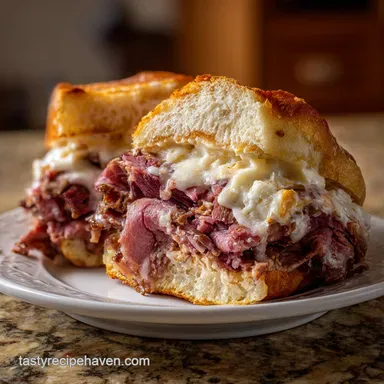
Leftover Prime Rib Recipe Easy and Quick Idea with Horseradish
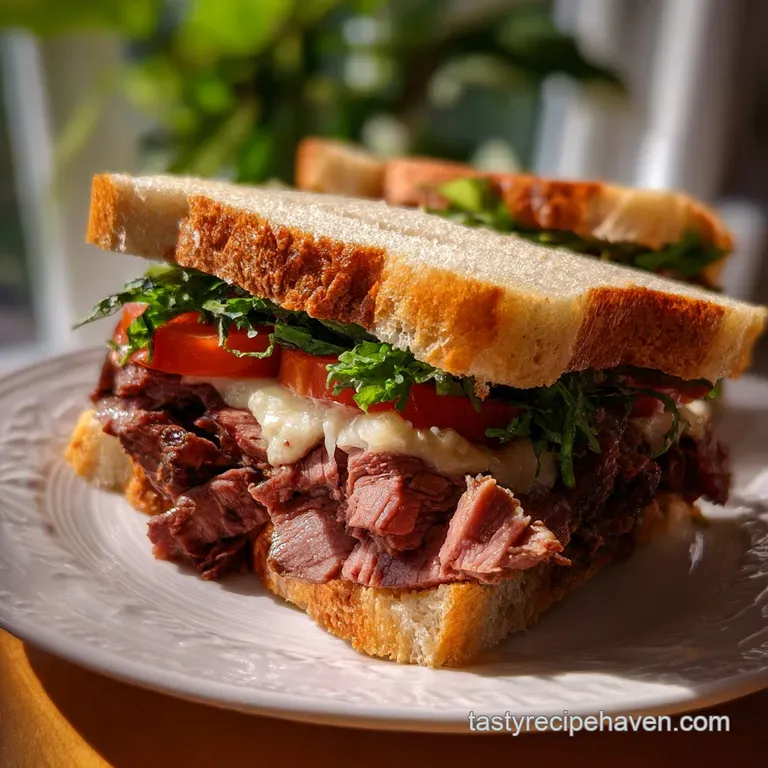
- Effort/Time: 15 minutes / Minimal cleanup
- Flavor Hook: Sharp horseradish heat against velvety, salt-crusted beef
- Perfect for: Post-holiday lunches or high-protein weeknight solutions
- Master the Ultimate Leftover Prime Rib Recipe Easy And Quick Idea with Horseradish
- The Science of Low-Impact Thermal Recovery and Flavor
- Precision Metrics for This Leftover Prime Rib Idea
- The Alchemy of Umami: Selecting Your Elements
- Essential Tools for Minimal-Stress Sandwich Assembly
- The Flash-Warm Protocol for Maximum Tenderness
- Solving Texture and Heat Issues in Your Prime Rib
- Flavor Architecture and Creative Swaps
- ⚗️ The Scaling Lab: The Physics of Quantity
- Preserving the Integrity of Your Beef Leftovers
- Serving Suggestions
- Recipe FAQs
- 📝 Recipe Card
Master the Ultimate Leftover Prime Rib Recipe Easy And Quick Idea with Horseradish
There is nothing quite like the heartbreak of watching a $120 standing rib roast turn into a gray, rubbery mess because you tried to microwave it. I once spent three days dry-aging a beautiful cut, only to ruin the leftovers by hitting them with high heat, effectively turning a medium rare masterpiece into expensive boot leather.
It wasn't just the money down the drain; it was the loss of that specific, buttery texture that only prime rib provides.
I’ve spent years experimenting with "re-heating" versus "re-invigorating," and I’ve learned that the secret isn't actually cooking the meat again it’s about managing thermal mass. Most home cooks panic and treat leftovers like raw ingredients.
In reality, the work is already done; we are simply navigating the physics of moisture retention. By using a gentle au jus bath, we prevent the protein fibers from tightening and squeezing out their precious juices.
The scientific revelation here is the "Flash Warm Protocol." Instead of sustained heat, we use a high temperature liquid medium to bring the beef to serving temperature in under 60 seconds. This prevents further protein denaturation, ensuring the meat stays mahogany pink and tender.
When paired with the sinus clearing bite of a homemade horseradish cream, the acidity breaks down the heavy lipid profile of the ribeye, creating a balanced, high end sandwich experience that rivals the original roast.
The Science of Low-Impact Thermal Recovery and Flavor
- Protein Denaturation Control: Keeping the beef below 55°C (130°F) during reheating prevents the actin and myosin filaments from contracting and expelling moisture.
- Emulsion Stability: The sour cream base in the sauce acts as a fat-in-water emulsion that traps the volatile isothiocyanates in the horseradish, delivering a sharp hit without immediate evaporation.
- Capillary Action in Crusty Bread: Toasting the hoagie roll creates a dehydrated "barrier" that prevents the Au Jus from making the bread soggy, allowing the liquid to sit on the surface rather than soaking the crumb.
- Acid Fat Interplay: Lemon juice provides citric acid that cleaves through the heavy saturated fats of the prime rib, refreshing the palate between bites.
Precision Metrics for This Leftover Prime Rib Idea
To achieve professional results, you must respect the thermal limits of the beef. Unlike a standard steak sandwich, this recipe relies on the existing doneness of your roast.
| Feature | Specification | Rationale |
|---|---|---|
| Beef Temperature | 45°C - 50°C | Target internal temp for "warm but rare" |
| Au Jus Temp | 80°C (Simmering) | Hot enough to warm the beef, not high enough to boil it |
| Beef Thickness | 1.5mm - 2mm | Paper thin slices maximize surface area for instant warming |
The Alchemy of Umami: Selecting Your Elements
| Ingredient | Chemical/Physical Role (Science) | The Pro Secret (Why This Matters) |
|---|---|---|
| Prepared Horseradish | Contains Sinigrin which releases allyl isothiocyanate | Macerate in the sour cream for 10 mins to peak the "heat" profile |
| Au Jus/Consommé | High sodium/collagen liquid medium | Acts as a heat transfer agent that seasons while it warms |
| Provolone Cheese | Low-moisture, high fat meltability | Provides a "fat cap" that seals the beef against the bread |
The Essential Components
- 120 ml (1/2 cup) Sour Cream: Use full fat [Daisy Sour Cream] for a velvety mouthfeel. Why this? Higher fat content prevents the sauce from breaking when hitting warm beef.
- 45 ml (3 tbsp) Prepared Horseradish: Ensure it is drained to avoid a watery sauce.
- 15 ml (1 tbsp) Fresh Chives: Finely minced for a mild allium bite.
- 5 ml (1 tsp) Lemon juice: Freshly squeezed to provide bright enzymatic contrast.
- 1.25 ml (1/4 tsp) Coarse kosher salt: [Diamond Crystal] is preferred for its hollow flake structure.
- 340g (12 oz) Leftover prime rib: Sliced against the grain while cold. Why this? Cold slicing allows for the "paper thin" texture required for rapid warming.
- 2 Large hoagie rolls: Use a high gluten flour roll that can withstand the weight of the meat.
- 60g (4 slices) Provolone cheese: Aged provolone adds a sharper profile than mild varieties.
- 30g (2 tbsp) Unsalted butter: Softened [Kerrygold] for the best flavor.
- 120 ml (1/2 cup) Au Jus: This is your thermal delivery system.
- 30g (1/4 cup) Caramelized onions: Adds a jammy, concentrated sweetness to balance the horseradish.
Essential Tools for Minimal Stress Sandwich Assembly
For this Leftover Prime Rib Recipe Easy And Quick Idea with Horseradish, you don't need a kitchen full of gadgets. A simple Lodge Cast Iron Skillet or a heavy bottomed saucepan is sufficient for heating the jus.
I highly recommend using a very sharp Chef's Knife (like a Wüsthof Classic) to get those slices thin. If your knife is dull, the beef will shred rather than slice. A baking sheet for the oven is the only other major tool.
This approach keeps the process "manageable" and the cleanup nearly non-existent, making it a staple for busy weeknights.
The Flash Warm Protocol for Maximum Tenderness
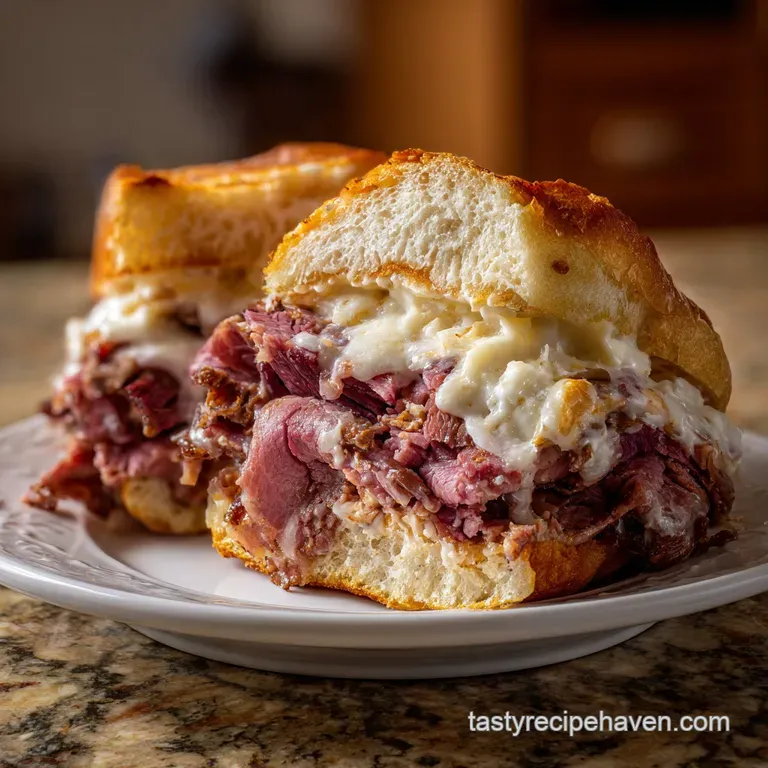
- Whisk sour cream, horseradish, chives, lemon juice, and salt.Note: Allows flavors to meld via molecular diffusion.
- Slice cold prime rib 1.5mm thin against the grain.Note: Shortens muscle fibers for a "tender melt" bite.
- Split hoagie rolls and spread with 30g softened butter.Note: Creates a lipid barrier to prevent sogginess.
- Toast rolls at 200°C for 3 minutes until edges shatter when touched.
- Simmer 120 ml Au Jus in a pan until small bubbles break the surface.
- Spread a thick layer of horseradish sauce on the bottom toasted roll.
- Submerge sliced beef into the simmering Au Jus for exactly 30 seconds until it turns from cold to steaming.
- Lift beef with tongs, allowing excess liquid to drip, and pile onto the roll.
- Layer 30g caramelized onions and 60g provolone over the beef.
- Broil for 60 seconds until the cheese is mahogany spotted and bubbling.
Solving Texture and Heat Issues in Your Prime Rib
When executing this Leftover Prime Rib Recipe Easy And Quick Idea with Horseradish, the most common pitfall is heat management. If your beef looks gray, it's a thermodynamic failure not a recipe failure.
Why Your Reheated Beef is Tough
If the meat becomes chewy, the collagen has tightened due to high intensity heat. Leftover beef is already "set." Re-applying heat triggers secondary protein denaturation, where the proteins coil so tightly they squeeze out all cellular moisture.
This is why we use the "30 second dip" method rather than a microwave or a pan-sear.
| Problem | Root Cause | The Fix | Pro Protocol |
|---|---|---|---|
| Gray, dry meat | Over exposure to Jus | Reduce dip time to 20 seconds | Keep beef in a single layer in the Jus |
| Soggy bread | Insufficient toasting | Use a higher heat (220°C) for the initial toast | Butter all the way to the crust edges |
| Weak sauce | Watery horseradish | Drain the jar through a fine mesh sieve | Use "Extra Hot" varieties for higher punch |
Quick Fix Guide
- Problem: Sauce is too thin. Cause: Lemon juice/Horseradish liquid. Fix: Whisk in 1 tbsp more sour cream.
- Problem: Meat is cold in the center. Cause: Slices too thick. Fix: Flash broil the open faced sandwich for 30 extra seconds.
- Problem: Cheese won't melt. Cause: Beef wasn't hot enough. Fix: Use the broiler; don't rely on the beef's residual heat.
Flavor Architecture and Creative Swaps
This recipe is a foundation. While the horseradish is classic, you can shift the profile by swapping the dairy or the aromatics.
| Original Ingredient | Substitute | Why It Works |
|---|---|---|
| Sour Cream | Greek Yogurt | Higher protein, tangier, but slightly less velvety |
| Provolone | Gruyère | Adds a nutty, alpine complexity that pairs with beef |
| Au Jus | Beef Consommé | Higher gelatin content creates a stickier, richer mouthfeel |
Creative Variations
- The Breakfast Flip: Dice the meat and use this as a Leftover Prime Rib Hash base. Sauté with parboiled potatoes until the beef edges sizzle and crisp.
- Global Twists: Skip the hoagie and make Leftover Prime Rib Tacos. Use the horseradish sauce as a crema and add pickled red onions for acidity. Similar to the bold flavors in a Chipotle Spices Recipe, a little heat goes a long way.
- The Weeknight Comfort: Toss the thin slices into a Prime Rib Stroganoff Recipe at the very last second. Use the horseradish sauce to finish the gravy for a sophisticated depth.
⚗️ The Scaling Lab: The Physics of Quantity
When doubling this Leftover Prime Rib Recipe Easy And Quick Idea with Horseradish for a larger group, you must account for the Evaporation Paradox.
- Au Jus Management: If you double the liquid in a wide pan, the surface area causes faster evaporation. Reduce your total Jus by 10% to keep the salt concentration from becoming overwhelming.
- Thermal Mass: Putting 680g of cold beef into 120ml of Jus will crash the temperature instantly, resulting in lukewarm, gray meat. Mandatory: Heat the beef in 200g batches to maintain the Jus temperature above 70°C.
- The Broiler Gradient: Most home ovens have a "sweet spot" in the center. When doing 4 or 6 rolls at once, rotate the tray halfway through the 60 second broil to prevent the outer rolls from remaining cold while the center ones char.
Preserving the Integrity of Your Beef Leftovers
Storing prime rib requires preventing oxidation. Once oxygen hits the surface of cooked beef, "Warmed Over Flavor" (WOF) begins due to lipid oxidation.
- Fridge: Store unsliced chunks of roast in airtight containers for up to 4 days. Only slice right before you intend to make this Leftover Prime Rib Recipe Easy And Quick Idea with Horseradish.
- Freezing: You can freeze prime rib, but the ice crystals will rupture cell walls, leading to a softer texture upon thawing. Wrap tightly in plastic, then foil, for up to 2 months. Thaw slowly in the fridge never on the counter.
- Reheating: Always use the Au Jus method. Microwaving vibrates water molecules so violently that it destroys the delicate fat and protein balance of the ribeye.
💡 Zero Waste Philosophy
Don't discard the fat trimmings or the rib bones. Fat Trimmings? Render them down into tallow for frying potatoes. Science: Beef tallow has a high smoke point (205°C) and contains stearic acid, which creates a uniquely crisp crust.
Au Jus Scraps? Save the leftover liquid to use as a base for a Quick Prime Rib Soup. The collagen extracted from the bones during the initial roast provides a "velvety" mouthfeel to any broth.
Serving Suggestions
Serve this sandwich immediately while the contrast between the cold horseradish sauce and the steaming beef is at its peak. This recipe provides a "Masterclass" level of balance the fat of the beef, the crunch of the bread, and the sharp hit of the horseradish.
For a side, a simple arugula salad with a light vinaigrette works best. The bitterness of the greens complements the richness of the meat. If you're feeling adventurous, these sandwiches pair exceptionally well with the tangy profile of an In and Out recipe spread used as a dipping sauce for fries on the side.
Three Decision Shortcuts:If you want a crunchier bite, use a sourdough baguette instead of a hoagie. If you want a spicier kick, double the horseradish and add a pinch of cayenne.
If you want a cleaner finish, increase the lemon juice to 10ml to cut the fat further.
- Myth
- You must bring the beef to room temperature before reheating.
- Truth
- Slicing the beef while cold from the fridge allows for thinner, more uniform cuts. The 80°C Au Jus will warm a paper thin slice in seconds regardless of its starting temp.
- Myth
- Horseradish loses its heat if mixed with dairy.
- Truth
- The fats in sour cream actually encapsulate the heat producing oils, allowing them to stay on your palate longer rather than evaporating instantly.
This Leftover Prime Rib Recipe Easy And Quick Idea with Horseradish isn't just a way to use up yesterday's dinner it's a deliberate, scientifically backed method to enjoy one of the world's finest cuts of beef for a second time without sacrificing its soul.
Recipe FAQs
What is the fastest way to reheat prime rib slices without drying them out?
Flash Warm Protocol using simmering Au Jus. The liquid transfers heat quickly while preventing surface moisture loss. This technique prevents the protein fibers from tightening, which is the primary cause of toughness when re-heating beef.
Can I substitute sour cream with regular milk in the horseradish sauce?
- Use full fat dairy only
- Chill sauce thoroughly before mixing
- Add lemon juice last
Should I slice the prime rib before or after warming it?
Is it better to use room temperature beef or cold beef for this sandwich?
Why does my horseradish sauce taste weak after mixing?
What cheese should I use if I want a sharper flavor profile?
What is the required internal temperature for the warmed beef?
Prime Rib Leftovers With Horseradish