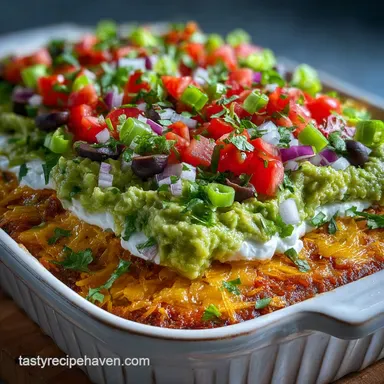
Highly Requested 7 Layer Dip for Super Bowl with Fresh Guacamole
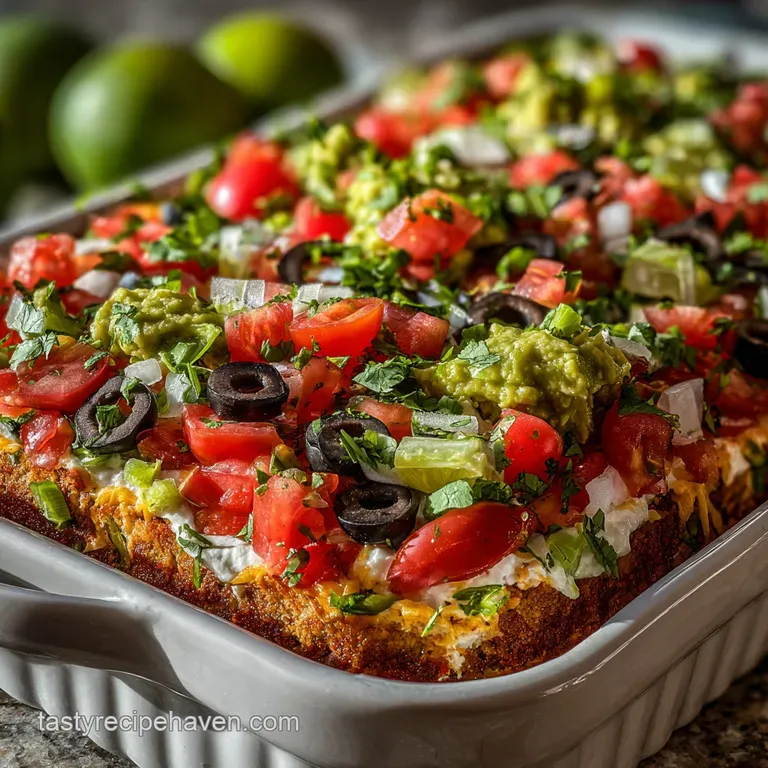
- Time: Active 20 minutes, Passive 5 minutes, Total 25 minutes
- Flavor/Texture Hook: Velvety spiced beans met with buttery avocado and a zesty, chilled cream finish.
- Perfect for: High stakes game days, casual potlucks, and busy weeknight snacking.
Highly Requested 7 Layer Dip for Super Bowl with Fresh Guacamole
Listen, I have witnessed the tragedy of a "soupy" dip too many times to count. You know the one, where the salsa bleeds into the guacamole, and by the time the second quarter starts, you’re basically eating a lukewarm vegetable smoothie with a chip.
This recipe delivers a highly requested 7 Layer Dip for Super Bowl, complete with fresh guacamole, and it’s designed to actually hold its shape.
Last year, I brought this to a friend's house and watched a room full of people ignore the fancy wings just to clear this glass dish in under ten minutes. The secret isn't some expensive imported cheese; it’s all about how we treat the beans and the lime to avocado ratio.
We’re going for a stack that looks like a geological marvel and tastes like a party.
I used to just dump cans of beans into a bowl and hope for the best, but that was a mistake. Now, we’re going to give those beans a little heat and some smoky personality so they aren't just a bland filler.
You want every bite to have that punchy, zesty kick that keeps people coming back for just one more scoop until the dish is scraped clean.
The Architecture of a Non Soggy Dip
Starch Retrogradation: Heating the refried beans with olive oil and cumin slightly breaks down the starches, allowing them to reset into a firmer, more stable base when chilled.
Emulsification Stability: Mixing the taco seasoning directly into full fat sour cream creates a thick, flavored mousse that acts as a moisture barrier between the wet salsa and the fresh guacamole.
Acidic Inhibition: The heavy use of lime juice in the avocado layer doesn't just add zing, it prevents the enzyme polyphenol oxidase from turning your guacamole brown when exposed to air.
Hydrophobic Shielding: Draining the salsa through a fine mesh sieve removes excess water, ensuring the liquid doesn't migrate downward and turn the bottom layers into a puddle.
| Method | Time | Texture | Best For |
|---|---|---|---|
| Fast Method | 20 minutes | Soft and creamy | Last minute guests |
| Classic Method | 45 minutes | Firm and distinct | Aesthetic party platters |
| Warm Base | 25 minutes | Melt in-mouth | Chilly winter game days |
If you are looking for more high protein options that keep you full while watching the game, you might enjoy this Natural Zepboundrelated recipe which uses similar fresh ingredients. It's a great way to balance out the heavier party snacks without losing any of the flavor.
Component Analysis
| Ingredient | Science Role | Pro Secret |
|---|---|---|
| Refried Beans | Structural Foundation | Sautéing them with cumin adds a "toasted" depth that canned beans lack. |
| Ripe Hass Avocados | Fat & Creaminess | Mash them coarsely to provide a "chunkier" bite that stands up to the smooth beans. |
| Full Fat Sour Cream | Moisture Barrier | Never use low-fat; the higher fat content prevents the layers from bleeding together. |
| Thick Chunky Salsa | Acidic Contrast | Drain for at least 5 minutes to remove the "tomato water" that ruins the dip. |
Building a dip is like building a house; you need a solid foundation. While this dip is a vegetarian superstar, I’ve found that serving it alongside a Surf and Turf recipe makes for an incredible spread if you're hosting a more formal dinner party. The richness of the fillet mignon actually complements the cool, creamy layers of the dip surprisingly well.
Components for Success
- 2 cans (16 oz each) refried beans: Use a traditional style for the best structural integrity.
- 1 tbsp extra virgin olive oil: Helps smooth out the beans and carries the spice flavors.
- 1 tsp ground cumin: Provides that essential earthy aroma.
- 1/2 tsp smoked paprika: Adds a hint of "fire roasted" flavor without the heat.
- 4 tbsp lime juice, divided: Essential for both flavor and keeping the guac green. Why this? Fresh lime is non negotiable for high acid brightness.
- 3 large ripe Hass avocados: Look for fruit that yields slightly to gentle pressure.
- 1/2 cup white onion, finely minced: Adds a sharp, clean crunch to the guacamole.
- 1/4 cup fresh cilantro, chopped: Brings a herbal finish that cuts through the fat.
- 1/2 tsp kosher salt: Use to draw out the natural sweetness of the avocados.
- 16 oz full fat sour cream: This acts as the "glue" for your spice mix.
- 1 packet (28g) taco seasoning: A manageable shortcut for consistent, bold flavor. Why this? It contains cornstarch which helps thicken the sour cream layer.
- 2 cups sharp cheddar cheese, shredded: Freshly shredded melts better on the tongue than pre bagged.
- 1 cup thick chunky salsa, drained: Choose a brand with visible vegetable chunks.
- 2.25 oz sliced black olives, drained: Adds a salty, briny pop to the top.
- 3 green onions, thinly sliced: Use both white and green parts for varied flavor.
- 1/2 cup Roma tomatoes, seeded and diced: Roma tomatoes have less water than beefsteak varieties.
Assembly Steps
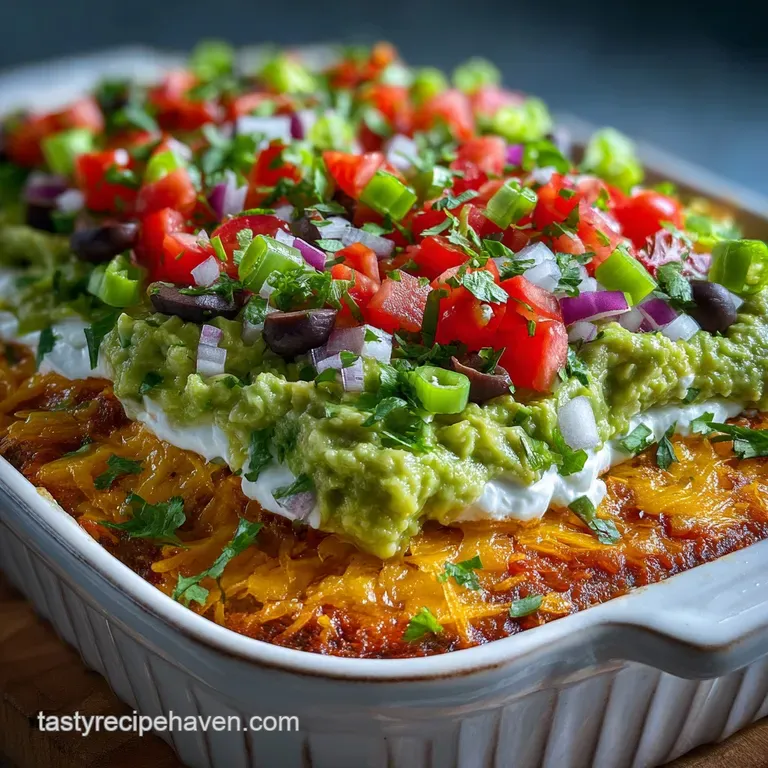
- Warm the beans. Combine the refried beans, olive oil, cumin, and smoked paprika in a small pot over medium low heat. Note: Heating helps the spices bloom and makes the beans easier to spread.
- Brighten the base. Stir in 1 tablespoon of lime juice into the bean mixture, then spread it into the bottom of a 9x13 inch glass dish. Let it cool for 5 minutes.
- Mash the guacamole. In a medium bowl, combine the avocados, 2 tablespoons of lime juice, minced white onion, cilantro, and salt.
- Build the guac. Mash until mostly smooth but with some small chunks, then spread this carefully over the cooled bean layer until no beans are visible.
- Season the cream. Whisk the sour cream, the remaining 1 tablespoon of lime juice, and the taco seasoning in a bowl until perfectly smooth and velvety.
- Apply the barrier. Dollop the sour cream mixture over the guacamole and use an offset spatula to smooth it to the edges. Note: Spreading to the very edge seals the avocado from the air.
- Drain the salsa. Pour the salsa into a fine mesh strainer and let the liquid sit for 2 minutes before spreading the solids over the sour cream.
- Add the cheese. Sprinkle the shredded cheddar evenly over the salsa layer until the red color is mostly covered.
- Garnish the top. Scatter the black olives, diced Roma tomatoes, and green onions over the cheese in a decorative pattern.
- Chill and set. Cover the dish tightly with plastic wrap and refrigerate for at least 1 hour. Serve chilled with sturdy tortilla chips.
Solving Common Texture Issues
The most common complaint with this dish is that it becomes a "mush" after an hour on the table. This usually happens because the tomatoes or salsa weren't properly prepped. If you notice liquid pooling at the bottom, it's a sign that the vegetables are releasing their internal juices.
Always seed your tomatoes that jelly like center is 90% water and has no place in a layered dip.
Another hurdle is the "hard bean" phenomenon. When refried beans are cold, they can be quite stiff, making it hard to scoop without breaking your chip. By whisking in a little olive oil and lime juice while they are warm, we alter the fat structure so they stay supple even after they've been in the fridge.
| Problem | Root Cause | Solution |
|---|---|---|
| Soggy Bottom | Salsa or tomato juice leakage | Strain salsa and seed tomatoes before dicing. |
| Brown Guacamole | Oxygen exposure | Seal the edges with the sour cream layer completely. |
| Broken Chips | Bean layer is too cold/stiff | Mix oil and lime into beans while warming. |
Common Mistakes Checklist
- ✓ Never use "light" sour cream; it is too watery for stable layering.
- ✓ Don't skip the lime juice in the beans; the acid helps cut the heaviness of the starch.
- ✓ Avoid over mashing the avocados; a little texture helps the layer hold its height.
- ✓ Ensure the beans are cool before adding the guacamole to prevent "wilting" the greens.
- ✓ Always drain your olives; the brine can discolor the cheese layer.
If you're making this for a big crowd, you might want to double up on appetizers. I often pair this with my Buffalo Chicken Dip recipe because they offer two totally different flavor profiles one cool and fresh, the other hot and spicy.
Adjusting for Large Crowds
Scaling this recipe is fairly straightforward because the layers are forgiving. If you need to feed 30 people instead of 15, don't just double everything and put it in a deeper dish. Deep layers are harder to scoop and often result in people getting only the top three layers on their chip.
Instead, use two separate 9x13 dishes or one large rimmed baking sheet (the "Texas Style" approach).
When scaling up the spices, I recommend keeping the salt and taco seasoning at 1.5x rather than a full 2x. Spices can become overwhelming in large volumes. However, you should definitely keep the lime juice ratio at a full double to ensure the avocados in the second dish stay just as fresh as the first.
| Servings | Ingredient Adjustments | Dish Size |
|---|---|---|
| 8 People | Halve all ingredients | 8x8 inch square pan |
| 15 People | Standard recipe | 9x13 inch glass dish |
| 30 People | Double all ingredients | Two 9x13 dishes or 1 sheet pan |
Culinary Misconceptions
Many people believe that keeping the avocado pit in the center of the guacamole prevents browning. This is actually a myth; the pit only protects the area it is physically touching.
The only way to truly prevent oxidation is to create a physical barrier (like our sour cream layer) or to use enough acid to stall the chemical reaction.
Another misconception is that you need to cook the beans for a long time. Since canned refried beans are already cooked, we are simply "tempering" them. Overcooking them will actually evaporate too much moisture, leaving you with a chalky, dry base that isn't pleasant to eat.
Five minutes on the stove is all you need to integrate the flavors.
Storage and Zero Waste
This dip is best enjoyed within 24 hours, but it will technically stay safe in the fridge for up to 3 days. After day one, the texture starts to soften as the layers begin to exchange moisture. To store, press plastic wrap directly onto the surface of the dip to eliminate any air pockets.
I don't recommend freezing this; the sour cream and tomatoes will undergo "syneresis" (leaking liquid) upon thawing, resulting in a grainy, watery mess.
For a zero waste approach, don't toss the liquid you strained from the salsa! Save it in a jar to use as a flavor starter for a soup or to braise chicken. If you have leftover dip that's looking a bit messy the next day, stir it all together and use it as a filling for "trashcan nachos" or fold it into a breakfast burrito.
The flavors are still there, even if the beautiful layers have finally mingled.
Recipe FAQs
What is the order of the 7 layer dip?
The order is critical for structural integrity, starting from the bottom: 1. Seasoned Refried Beans, 2. Fresh Guacamole, 3. Spiced Sour Cream (the moisture barrier), 4. Drained Salsa, 5. Shredded Cheese, 6. Black Olives, and 7.
Diced Tomatoes and Green Onions. Getting the sequence right prevents the salsa from wilting the avocado layer below it.
What dip is always a crowd pleaser?
Yes, the 7 Layer Dip is consistently a top-tier crowd pleaser, especially for game days. Its success lies in the contrast between the cool, fresh components like guacamole and the savory, seasoned layers below. If you enjoy this kind of rich, balanced layering, you might find similar satisfaction mastering the texture control needed for our Chicken Lasagna recipe.
Can you make a 7 layer dip the night before?
Yes, you can assemble the first three layers the night before for best results. Prepare and chill the seasoned bean layer, guacamole, and the sour cream barrier completely before refrigerating.
Wait to drain and add the salsa and toppings until about one hour before serving to maintain the sharpest texture contrast.
How long will 7 layer dip last in the fridge?
It is best consumed within 24 hours for peak flavor and texture. After this point, the layers begin to exchange moisture, resulting in a softer consistency. Always press plastic wrap directly onto the surface to minimize air exposure and maximize freshness.
How do I prevent my guacamole layer from turning brown?
Ensure you thoroughly mash 4 tablespoons of lime juice into the avocado mixture before spreading. The high acidity prevents oxidation, but you must also create a strong moisture shield above it. Spreading the spiced sour cream layer completely to the edges seals the guacamole from the air.
Why does my dip get watery at the bottom?
Wateriness is caused by un-drained salsa or the watery center of tomatoes bleeding into the bean layer. Always place your salsa in a fine mesh strainer for several minutes before spreading it over the sour cream. If you apply this principle of moisture control to sauces, you'll see great results, similar to how we manage liquid content when making our Garlic Dipping Sauce recipe.
Is it true that I must use warm beans for the base?
No, the beans only need to be warmed briefly to incorporate the spices, not fully cooked. Heating them with cumin and olive oil blooms the spices and creates a smoother base that stays pliable when chilled, avoiding a stiff, cold foundation.
7 Layer Dip For Super Bowl