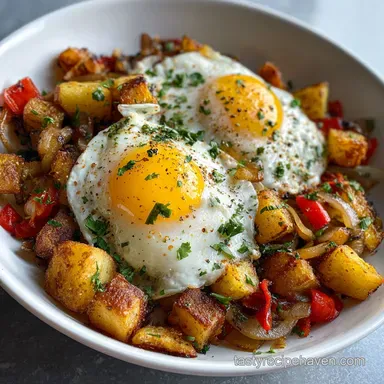
Breakfast Hash Skillet with Crisp Potatoes
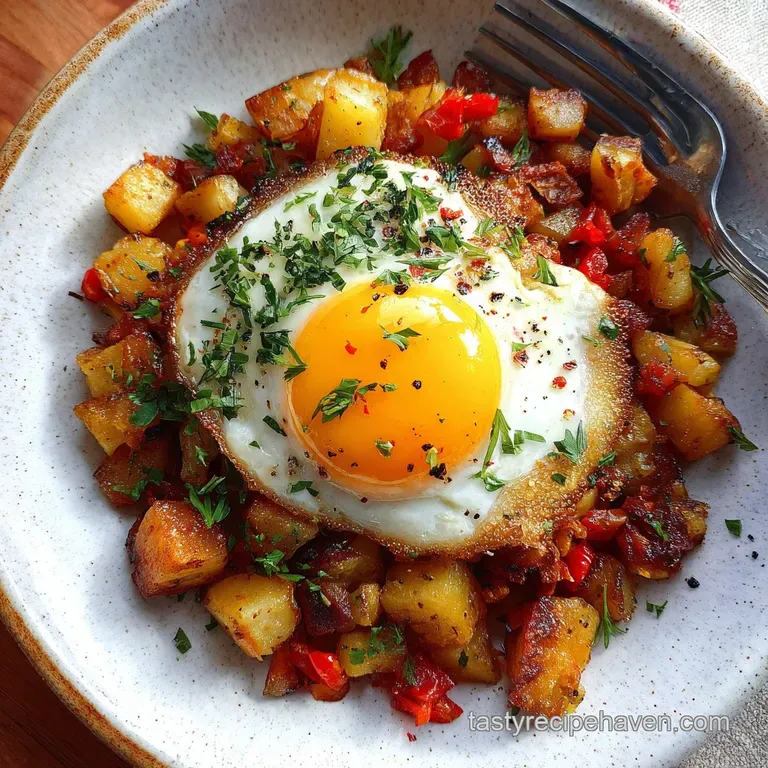
- Time: Active 15 minutes, Passive 25 minutes, Total 40 minutes
- Flavor/Texture Hook: Shatter crisp edges with a velvety, soft potato center
- Perfect for: Weekend family brunch or high protein meal prep
- The Physics of the Potato Crunch
- Component Analysis for Peak Performance
- Sourcing Your Savory Breakfast Elements
- Assembling the Essential Kitchen Gear
- Executing the Golden Skillet Flow
- Avoiding Common Soggy Potato Pitfalls
- Customizing Your Morning Skillet Flavors
- Strategic Storage and Reheating Methods
- Plating Your Finished Morning Masterpiece
- Recipe FAQs
- 📝 Recipe Card
The Physics of the Potato Crunch
Starch Evacuation: Rinsing diced potatoes removes surface sugars that would otherwise burn and stick before the interior is cooked. This ensures the cubes fry rather than steam bonding together in the pan.
Fat Saturation: Using 150g of thick cut bacon provides rendered lard that has a higher smoke point than butter, allowing for intense heat without the acrid taste of burnt milk solids.
Thermal Momentum: Russet potatoes have high starch and low moisture, which leads to a fluffier interior through rapid water evaporation when they hit the hot oil.
| Method | Total Time | Texture | Best For |
|---|---|---|---|
| Fast Method | 20 minutes | Soft with charred spots | Busy weekday mornings |
| Classic Method | 40 minutes | Uniformly crispy all over | Lazy weekend hosting |
| Oven Finish | 35 minutes | Extremely dry and crunchy | Large groups/bulk prep |
The difference between a fast hash and a classic one usually comes down to heat management. If you're in a rush, you might skip the rinse and dry step, but you'll lose that specific "shatter" when you bite in. For a crowd, I often suggest the oven finish to keep things warm while the eggs set. If you're looking for another morning win, you might love this Classic Breakfast Burritos recipe which uses a similar potato technique.
Component Analysis for Peak Performance
| Ingredient | Science Role | Pro Secret |
|---|---|---|
| Russet Potatoes (800g) | High starch structure | Dry them with a kitchen towel until bone dry after rinsing |
| Thick cut Bacon (150g) | Primary fat source | Start in a cold pan to render maximum liquid fat |
| Yellow Onion (1 medium) | Sugars for browning | Dice them the same size as potatoes for even caramelization |
Sourcing Your Savory Breakfast Elements
- 800g Russet potatoes: Peeled and diced into 1/2 inch cubes. Why this? Russets have the highest starch for that classic fluffy inside crunchy outside contrast.
- Substitute: Yukon Golds (waxy texture, won't be as fluffy but hold their shape better).
- 2 tbsp avocado oil: High smoke point for searing.
- Substitute: Grapeseed oil or any neutral oil with a high heat threshold.
- 150g thick cut bacon: Diced. Why this? Provides both the seasoning and the frying medium for the veg.
- Substitute: Smoked pancetta or turkey bacon (add 1 extra tbsp oil for turkey).
- 1 medium yellow onion: Finely diced.
- Substitute: Shallots for a more delicate, garlicky onion vibe.
- 1 red bell pepper: Chopped into 1/2 inch pieces.
- Substitute: Chopped kale or spinach added at the very end.
- 2 cloves garlic: Minced.
- Substitute: 1 tsp garlic powder if you're worried about burning fresh cloves.
- 4 large eggs: The crowning glory.
- Substitute: Firm tofu crumbles for a scramble style finish.
- 1 tsp smoked paprika: For that deep, wood fired aroma.
- 0.5 tsp kosher salt: Essential for drawing out moisture.
- 0.25 tsp cracked black pepper: Freshly cracked is non negotiable here.
- 1 tbsp fresh chives or parsley: For a pop of brightness.
Assembling the Essential Kitchen Gear
To get that restaurant grade Breakfast Hash, you really need a heavy bottomed skillet. A 12 inch cast iron skillet (like a Lodge) is my absolute favorite because it holds onto heat even when you dump in 800g of cold potatoes.
If you use a thin non stick pan, the temperature drops too fast, and you’ll end up steaming the potatoes instead of searing them.
You’ll also want a sharp chef's knife for those 1/2 inch cubes. Consistency is everything here. If some cubes are tiny and others are huge, the small ones will turn into carbon before the big ones are even soft.
A sturdy metal spatula is also better than silicone for scraping up those "brown bits" (the fond) from the bottom of the pan that's where all the flavor lives.
Executing the Golden Skillet Flow
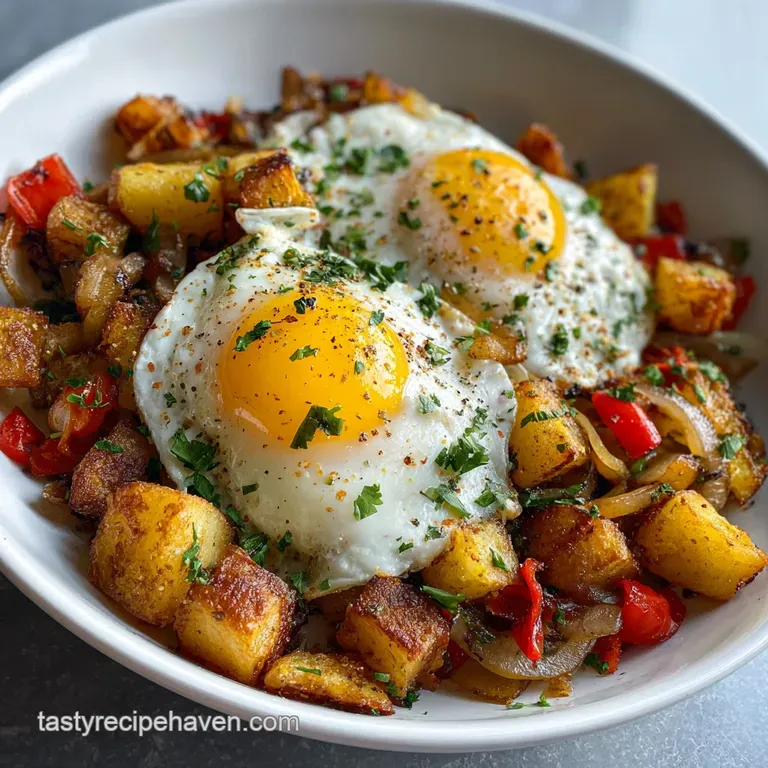
- Prep the potatoes. Rinse the 800g of diced Russets under cold water until the water runs clear, then pat them completely dry. Note: Surface moisture is the enemy of a good sear.
- Render the bacon. Add 150g diced bacon to a cold skillet and turn heat to medium. Cook 8 minutes until fat is liquid and bacon is crisp.
- Remove the solids. Use a slotted spoon to move the bacon to a paper towel, leaving the fat in the pan.
- Sear the spuds. Add 2 tbsp avocado oil to the bacon fat, then add the potatoes. Sizzle for 12 minutes without moving them too much until the bottoms are golden.
- Soft veggies. Toss in the diced onion and red pepper. Note: Adding these later prevents them from turning into mush while potatoes crisp.
- Add aromatics. Stir in 2 cloves minced garlic, 1 tsp smoked paprika, salt, and pepper. Sauté for 3 minutes until the garlic smells fragrant.
- Create wells. Use your spoon to make 4 little nests in the hash.
- Drop the eggs. Crack one egg into each well. Cook 5 minutes until whites are set but yolks are jiggly.
- The garnish. Remove from heat and sprinkle the crispy bacon back on top with the fresh chives.
Avoiding Common Soggy Potato Pitfalls
Why Your Hash is Sticking
If your potatoes are bonding to the pan, you likely tried to flip them too early. Potatoes need time to form a crust; once that crust forms, they will naturally "release" from the metal. Also, make sure your pan is actually hot before the potatoes hit the oil.
Why Your Veggies are Burnt
If you add the onions and peppers at the same time as the potatoes, they will be black by the time the potatoes are cooked. Veggies have more sugar and less mass, so they cook faster. Always give the potatoes a 10-12 minute head start.
| Problem | Root Cause | Solution |
|---|---|---|
| Greasy hash | Oil wasn't hot enough | Wait for the oil to shimmer before adding potatoes |
| Raw potato centers | Cubes were too large | Keep dicing to a strict 1/2 inch or 1 cm |
| Burnt spices | Added too early | Add paprika and garlic only in the last 5 mins |
- ✓ Always pat potatoes dry with a clean lint free towel (paper towels can tear).
- ✓ Use a large enough skillet - if potatoes are overlapping, they will steam.
- ✓ Don't skimp on the salt; potatoes absorb a massive amount of seasoning.
- ✓ Let the eggs cook undisturbed; putting a lid on the pan for 2 minutes helps whites set faster.
- ✓ If using leftovers, reheat them in a dry pan to restore the crunch.
Customizing Your Morning Skillet Flavors
If you want a Healthy Breakfast Hash, you can swap the Russets for sweet potatoes. Keep in mind that sweet potatoes have more sugar, so they brown much faster and might need a slightly lower heat to prevent burning. They also pair beautifully with black beans and lime. For a dessert leaning breakfast later, you could try these Healthy Banana Muffins recipe to balance the salt.
A Vegetarian Breakfast Hash is just as easy. Skip the bacon and use a smoked sea salt or a dash of liquid smoke in the oil to mimic that umami. I love adding diced halloumi cheese or smoked tofu cubes to get that chewy, salty texture that bacon usually provides.
- If you want a spicy kick, add diced jalapeños with the bell peppers.
- If you want it cheesy, sprinkle 50g of sharp cheddar over the top before the eggs finish.
- If you want it Mediterranean, use feta, olives, and swap the paprika for dried oregano.
Strategic Storage and Reheating Methods
Breakfast Hash is actually a fantastic meal prep option, though the eggs are best cooked fresh. You can store the potato and veggie base in the fridge for up to 4 days. When you're ready to eat, don't use the microwave unless you want a soggy mess.
Throw the mix back into a hot, dry skillet for 3-5 minutes until it sizzles again, then crack your fresh eggs on top.
For freezing, you can freeze the cooked potato and bacon base for up to 2 months. Spread the cooled mixture on a baking sheet to freeze individually before bagging them up this prevents one giant frozen block. To use the "zero waste" approach, save your potato peels!
Toss them with a little oil and salt, bake at 200°C for 10 minutes, and you’ve got a crispy snack while you wait for your hash to cook.
Plating Your Finished Morning Masterpiece
The beauty of a skillet meal is that you can serve it right in the pan. It keeps everything hot and looks rustic and inviting on the table. I always put the skillet on a wooden board in the center of the table and let everyone dig in.
A drizzle of hot sauce or a dollop of Greek yogurt on the side can help cut through the richness of the bacon fat.
If you’re feeling fancy, top it with some sliced avocado or a handful of microgreens. The contrast between the hot, crispy potatoes and the cool avocado is incredible. Just make sure everyone gets a yolk to break that golden liquid acts like a natural sauce that ties the whole dish together.
It's a humble meal, but when those textures hit right, it feels like a five star brunch.
Recipe FAQs
What is breakfast hash primarily made of?
Potatoes, meat, and aromatics. Typically, this involves diced, fried potatoes, often mixed with cured pork like bacon or corned beef, along with onions and peppers.
Why is it called breakfast hash?
It derives from the French verb "hacher," meaning "to chop." The term refers to the method of roughly chopping cooked ingredients, often leftovers, together to form a single pan meal, traditionally served at breakfast.
What is the difference between hash and hashbrowns?
Hash is a mixture; hashbrowns are a potato preparation. Hash involves multiple ingredients cooked together, while hashbrowns specifically refer to shredded or diced potatoes pan-fried until crispy, sometimes with onions added.
How to make a perfect hash?
Sear the potatoes first in hot fat without overcrowding the pan. Ensure your potato cubes are dry to achieve a crust, and don't stir them constantly during the initial searing phase; this allows the fond to build.
Can I use sweet potatoes instead of Russets for my hash?
Yes, but reduce the cooking time slightly. Sweet potatoes have more sugar and moisture, so they brown faster and risk burning before the center softens; if you enjoyed controlling the heat for maximum potato crispness here, apply that lower heat control to the sweeter variety.
Is it true that I must use cold ingredients when making hash?
No, this is a common misconception for the primary ingredients. While the bacon should start cold to render fat slowly, the potatoes should be dry, and the pan must be hot before they are added to ensure they sear rather than steam.
What protein pairs best with hash if I skip the traditional bacon?
Smoked or firm tofu works excellently for texture. If you want a savory, chewy replacement, cubed halloumi or smoked tofu that you pan-fry separately provides a great salty bite, similar to how we achieve texture in our Monster Cookie Protein recipe.
Crispy Breakfast Hash Skillet