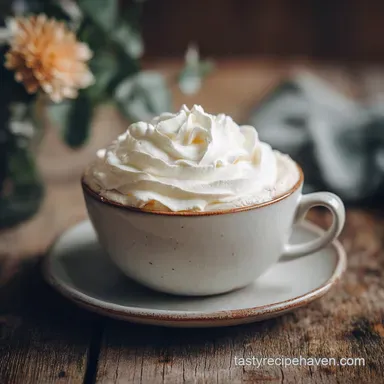
Whipped Cream Recipe: Stable, Airy Peaks
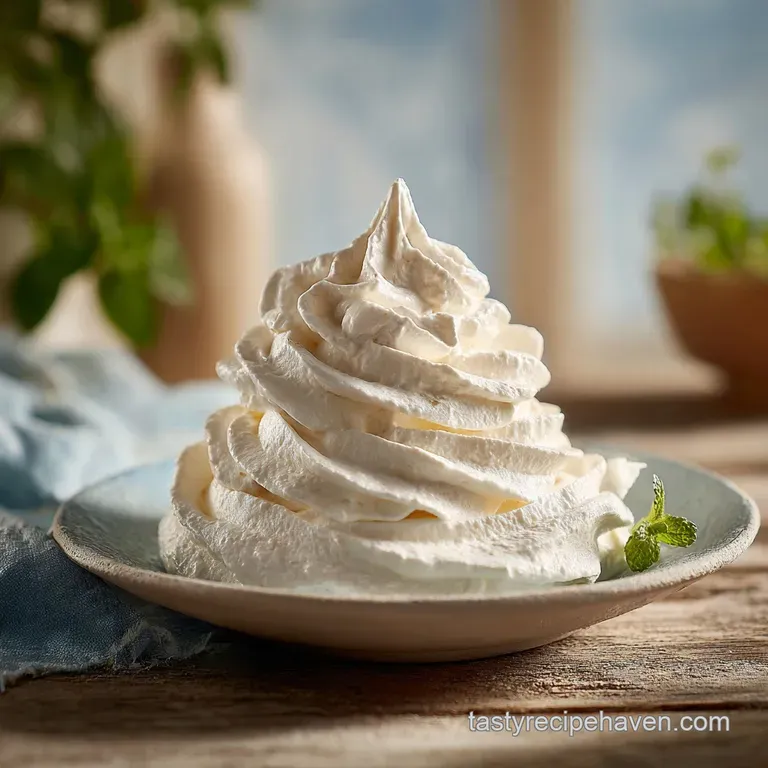
- Time: Active 5 minutes, Passive 0 minutes, Total 5 minutes
- Flavor/Texture Hook: Velvety, cloud like peaks with a subtle vanilla finish
- Perfect for: Birthday cakes, summer berries, or topping a cozy hot cocoa
- Unlock This Reliable Whipped Cream Recipe
- Why Your Cream Stays Fluffy
- Precision Details for Success
- Essential Components for Velvety Foam
- Minimal Tools for Maximum Volume
- Four Steps to Perfect Peaks
- Rescuing Your Grainy Overwhipped Cream
- Simple Flavor Twists to Try
- Storing and Using Your Scraps
- Serving Ideas for Every Occasion
- Recipe FAQs
- 📝 Recipe Card
Unlock This Reliable Whipped Cream Recipe
The sizzle of a fresh apple pie cooling on the counter is the ultimate siren song for a massive dollop of cold, whipped dairy. I remember the first time I tried to make a homemade whipped cream recipe for a friend’s birthday; I was so determined to make it "perfect" that I kept whisking until it looked like yellow gravel.
I’d accidentally made vanilla butter. It was a heartbreak that taught me my most valuable kitchen lesson: watch the bowl, not the clock.
That velvety cloud we all crave is surprisingly temperamental but incredibly easy once you know the signs. Whether you're making this for a casual Tuesday night treat or as a critical whipped cream recipe for cake, the secret isn't fancy equipment.
It's about respecting the fat globules and keeping everything chill literally. We’ve all been there, staring at a bowl of runny liquid wondering why it won't stiffen up. Trust me, we’re going to fix that today.
Today’s approach is all about the "minimal tools" philosophy. You don't need a massive stand mixer to get professional results. In fact, doing it with a simple hand whisk or a basic hand mixer gives you much more control.
You'll feel the cream thicken, moving from a watery splash to a heavy drag, and that’s where the magic happens. Let’s get your kitchen smelling like vanilla and cream.
Why Your Cream Stays Fluffy
Fat Lattice Structure: When you whip cream, you're forcing air into a liquid. The fat globules in the heavy cream (which must be at least 36% fat) strip off their protective membranes and join together to form a protective wall around those air bubbles.
Sugar Stabilization: Using a whipped cream recipe with powdered sugar is a total pro move. Unlike granulated sugar, powdered sugar contains a tiny bit of cornstarch. This starch absorbs excess moisture, acting like a microscopic "glue" that keeps your peaks from weeping or deflating over time.
Thermal Integrity: Cold fat is firm fat. If your cream or your bowl is warm, the fat globules won't be solid enough to hold their shape, and the air bubbles will simply pop. Keeping everything at a crisp 4°C is the difference between a cloud and a puddle.
| Method | Time | Texture | Best For |
|---|---|---|---|
| Hand Whisk | 5-7 minutes | Soft, ultra smooth | Small batches, total control |
| Electric Hand Mixer | 2-3 minutes | Firm, consistent | Cake frosting, large dollops |
| Stand Mixer | 1-2 minutes | Very stiff, airy | Large parties, heavy decorating |
Using an electric hand mixer is usually the sweet spot for a quick whipped cream recipe. It gives you the speed you need without the risk of over whipping that happens in a blink with a powerful stand mixer. If you're topping our Vanilla Ice Cream recipe, a slightly softer, hand whisked texture often feels more luxurious.
Precision Details for Success
| Component | Science Role | Pro Secret |
|---|---|---|
| Heavy Cream | Emulsion Base | Must be "Heavy" (36%+ fat) or it won't hold air. |
| Powdered Sugar | Stabilizer | Sift it first to prevent "shatter" of sugar clumps. |
| Vanilla Extract | Aromatics | Alcohol in the extract helps the fat bond faster. |
| Sea Salt | Flavor Contrast | A tiny pinch heightens the perception of sweetness. |
Getting the proportions right is key for a balanced vanilla whipped cream. I always suggest weighing your sugar if you can 25g is the magic number here. It’s just enough to sweeten the cream without masking the natural dairy flavor.
Essential Components for Velvety Foam
- 1 cup (240ml) heavy whipping cream, cold: Why this? The high fat content is what creates the structural foam. (Substitute: Full fat coconut cream for a dairy-free version)
- 3 tbsp (25g) powdered sugar, sifted: Why this? Contains cornstarch which prevents the cream from weeping. (Substitute: 1 tbsp honey, but note it softens the peaks)
- 1 tsp pure vanilla extract: Why this? Adds a nostalgic, floral depth to the dairy. (Substitute: Scraped vanilla bean for fancy black flecks)
- 1 small pinch fine sea salt: Why this? It balances the fat and makes the flavor "pop." (Substitute: Table salt, but use half the amount)
Minimal Tools for Maximum Volume
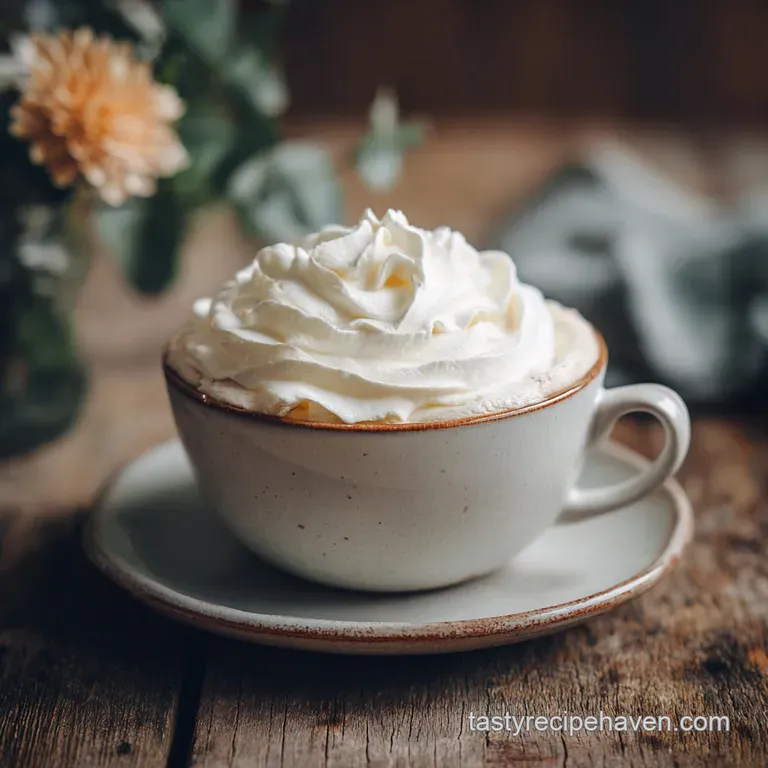
Chilling the Fat Globules
Before you even touch the ingredients, stick your mixing bowl and your beaters in the freezer for 10 minutes. It might seem like an extra step, but in a warm kitchen, this is your insurance policy.
A cold bowl ensures the cream stays at the optimal temperature to build that fat lattice we talked about earlier.
Building a Stable Lattice
When you start whisking, begin at a low speed. It’s tempting to crank it to high immediately, but starting slow creates smaller, more uniform air bubbles. These smaller bubbles are much more stable than large, erratic ones.
Think of it like building a brick wall small, tight bricks are much stronger than big, clunky ones.
Mastering the Speed Shift
Once the cream starts to show small bubbles (the "frothy" stage), you can increase the speed to medium. This is when the easy whipped cream recipe starts to take shape. You’ll see the whisk leaving faint trails in the cream. This is your signal to pay close attention.
The transition from "liquid" to "soft peaks" happens in about 30 seconds.
Four Steps to Perfect Peaks
- Pour 240ml cold cream into your chilled metal bowl. Note: Metal conducts cold better than glass or plastic.
- Whisk on low speed for 1 minute until the surface is covered in tiny, uniform bubbles.
- Add 25g sifted sugar, vanilla, and salt once the cream has slightly thickened to the consistency of melted ice cream.
- Increase to medium speed and whisk until the cream holds its shape when you lift the whisk. Stop when you see soft, billowy peaks.
- Check for doneness by stopping the mixer and pulling the whisk straight up; the cream should stay upright with a slight curl at the tip.
- Scrape the sides with a spatula to ensure all the sugar is incorporated into the velvety mixture.
- Final whisk by hand for the last 10 seconds if using an electric mixer. Watch for the texture to become matte.
- Serve immediately or cover and chill for up to 2 hours.
Chef's Tip: If you want to take this to a "Masterclass" level, freeze your metal whisk for 15 minutes before you start. It keeps the fat globules from melting during the friction of whisking.
Rescuing Your Grainy Overwhipped Cream
Why Your Cream Separated
It happens to the best of us you turn your head for a second and suddenly the cream looks curdled and grainy. This is because the fat globules have bonded too tightly, starting the process of churning butter. It loses that velvety sheen and starts to look matte and lumpy.
Preventing Sudden Deflation
If your whipped cream recipe with powdered sugar seems to be losing its volume, it’s usually due to heat or over mixing. If you're serving this on a hot day, keep the bowl inside another bowl filled with ice water. This keeps the structure "locked" in place while you work.
| Problem | Root Cause | Solution |
|---|---|---|
| Grainy Texture | Over whipping the fat | Fold in 1 tbsp of cold, liquid cream and whisk gently by hand. |
| Runny/No Peaks | Cream or bowl was too warm | Chill everything for 20 mins and try whisking again. |
| Yellowish Color | Using low-fat cream | Ensure you are using "Heavy" cream with 36%+ fat. |
Common Mistakes Checklist
- ✓ Never use "Half and Half" - the fat content is too low to hold air.
- ✓ Avoid whisking on high speed the entire time; it creates unstable bubbles.
- ✓ Don't add the sugar at the very beginning; let the foam start to form first.
- ✓ Stop immediately when the whisk leaves a clear path in the bowl.
- ✓ Use a deep bowl to prevent the cream from splashing and losing volume.
Simple Flavor Twists to Try
Infusing Warm Spices
For a cozy vibe, especially when serving alongside a Snickerdoodle Cookies Recipe, add half a teaspoon of ground cinnamon or a dash of nutmeg. The spices pair beautifully with the vanilla and make the cream feel much more sophisticated.
Creating Cocoa Clouds
If you want a chocolate version, sift in 1 tablespoon of high-quality cocoa powder with the powdered sugar. It creates a rich, mousse like texture that is incredible on top of strawberries or a plain pound cake. Just remember that cocoa powder can dry out the cream, so you might need a tiny splash of extra liquid.
| Modification | Ingredient Change | Resulting Texture |
|---|---|---|
| Stiff/Pipeable | Add 1 tbsp Instant Pudding Mix | Extremely stable, holds shape for days. |
| Tangy/Bold | Replace 1/4 cup cream with Sour Cream | Thicker, slightly tart, great for fruit. |
| Espresso Kick | Add 1 tsp Instant Espresso powder | Mocha colored, sharp, great for brownies. |
Storing and Using Your Scraps
Storage: Whipped cream is best used within an hour, but thanks to the powdered sugar, this version will hold up in the fridge for about 24 hours. Keep it in an airtight container.
If it loses a bit of its fluff, just give it a quick 10 second whisk by hand to revive the peaks before serving.
Freezing: Did you know you can freeze whipped cream? Dollop leftover cream onto a parchment lined baking sheet and freeze until solid. Once frozen, pop the "clouds" into a freezer bag. They are perfect for dropping into hot coffee or hot chocolate later!
Zero Waste: If you truly over whip the cream beyond rescue, don't throw it out. Keep whisking until the buttermilk separates from the butter solids. Strain out the liquid (save it for pancakes!) and you’ve got delicious, homemade vanilla butter for your morning toast.
Serving Ideas for Every Occasion
For the Base
This cream recipe is the perfect blank canvas. While it's iconic on a slice of pie, I love using it as a layer in a trifle. The powdered sugar keeps it from soaking into the cake layers too quickly, maintaining that distinct velvety separation that makes a trifle look so professional.
For Flavor and Structure
If you're using this for a layered cake, you can "stabilize" it even further. A secret trick I use is adding a teaspoon of unflavored gelatin bloomed in water. This turns your easy whipped cream recipe into a "mousse like" frosting that can sit out at room temperature for much longer without melting.
Myth: Granulated sugar is better for texture.
Truth: Granulated sugar is actually heavier and can weigh down the air bubbles. It also doesn't dissolve as easily in cold cream, which can lead to a gritty texture. Powdered sugar is lighter and provides the cornstarch needed for stability.
Myth: You can't over whip cream by hand.
Truth: You absolutely can. While it's harder than using a machine, your arm strength is plenty to turn that cream into butter if you aren't paying attention. Once you feel resistance, slow down and check the peaks frequently.
Myth: Heavy cream and whipping cream are the same.
Truth: In many grocery stores, "Whipping Cream" has about 30-35% fat, while "Heavy Cream" has 36% or more. For the most stable, long lasting peaks, always reach for the "Heavy" version. That extra few percent of fat makes a massive difference in how well the cream holds its shape.
Recipe FAQs
How is whipped cream made from scratch?
Start by chilling your equipment and cream. Pour cold heavy cream into a cold bowl, then whip using a whisk or mixer starting slow and gradually increasing speed until soft peaks form. This traps air within the stabilized fat structure.
What are the ingredients of whipping cream?
Heavy cream (36%+ fat), powdered sugar, vanilla extract, and a pinch of salt. The high fat content is non-negotiable for structure; powdered sugar adds sweetness and cornstarch for stabilization.
How to make whipped cream in 5 minutes?
Use an electric hand mixer on medium speed with pre-chilled ingredients. Begin whipping slowly to incorporate air, then quickly increase speed after the cream starts to look foamy. The transition from liquid to soft peaks is the fastest part of the process.
How to make very fluffy whipped cream?
Whip until the cream is matte and holds a stiff, well defined peak. Fluffiness comes from incorporating the maximum stable air volume before the fat globules begin to clump into butter. If you master this aeration technique, it applies equally well when making a topping for our Applesauce Coffee Cake Recipe.
Can I use granulated sugar instead of powdered sugar in whipped cream?
No, powdered sugar is strongly recommended. Granulated sugar is heavier and can weigh down the foam, often leaving gritty, undissolved crystals in the finished product. Powdered sugar dissolves faster and includes cornstarch, which helps prevent weeping.
What temperature should the cream be for whipping?
The cream, bowl, and beaters must be very cold, ideally around 4°C (39°F). Cold fat globules are firm enough to bond around the air bubbles you introduce; if the mixture warms up, the fat melts and the structure collapses.
If my cream gets too thick and looks grainy, is it ruined?
No, it is likely just slightly over whipped, not ruined. If you've passed the stiff peak stage, gently fold in one tablespoon of fresh, cold liquid heavy cream by hand. This smooths out the texture, similar to how balancing acidity improves flavor contrast in dishes like our Corn and Cream recipe.
Easy Whipped Cream Recipe