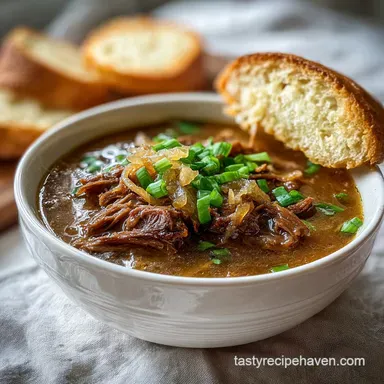
French Onion Beef Short Rib Soup: Slow-Cooked Masterpiece
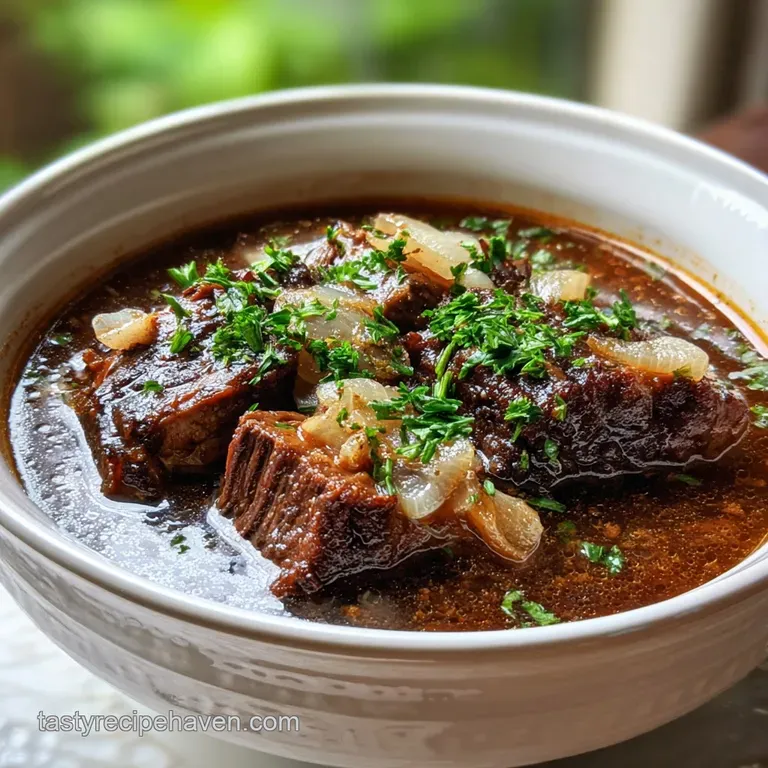
- Time: Active 45 mins, Passive 3 hours 15 mins, Total 4 hours
- Flavor/Texture Hook: Velvety beef and shattering Gruyère
- Perfect for: Cold Sunday afternoons or special dinners
- Making French Onion Beef Short Rib Soup
- Why You Will Crave This
- Timing and Yield Essentials
- The Science of Your Ingredients
- Necessary Gear for Success
- Mastering the Stepwise Method
- Avoiding and Fixing Errors
- Flavor Variations and Swaps
- Adjusting for More Guests
- Debunking Kitchen Folklore
- Storage and Longevity Guide
- Best Serving Ideas
- Very High in Sodium
- Recipe FAQs
- 📝 Recipe Card
Making French Onion Beef Short Rib Soup
Imagine the heavy, sweet aroma of five pounds of onions slowly collapsing into a mahogany jam while the scent of searing beef fills your kitchen. I remember the first time I tried this, I was so impatient that I pulled the onions after twenty minutes. They were pale and sharp, and the soup felt thin.
I learned the hard way that you cannot rush chemistry. This dish isn't just a meal, it's a transformation of humble ingredients into something that feels incredibly expensive.
We're going to take those 3 lbs of bone in short ribs and let them braise until they literally slide off the bone with the nudge of a spoon. When you break through the molten cheese topping, the steam carries the scent of thyme and red wine, hitting you before the first velvety spoonful even reaches your mouth.
It's the kind of cooking that makes the whole house feel like a warm hug.
Trust me, once you see that deep brown color developing in the bottom of your pot, you'll know exactly why we're doing this. We're building layers of flavor that a store-bought broth could never replicate.
We're going to use a massive pile of onions, a good splash of wine, and a lot of patience to get that signature "umami bomb" effect. Let's get into the details of why this specific method works so well.
Why You Will Crave This
- Maillard Magic: Searing the short ribs at high heat creates a complex crust of flavor molecules that dissolve back into the broth.
- Collagen Breakdown: Long, slow simmering converts tough connective tissue in the ribs into silky gelatin, giving the soup a luxurious mouthfeel.
- Sugar Concentration: The 3 hours 30 mins cook time allows onion sugars to undergo pyrolysis, turning them from pungent to candy sweet.
- Fat Emulsification: The butter and beef fat meld with the wine and stock to create a stable, rich liquid that coats your tongue.
Stovetop vs Oven Comparison
| Feature | Stovetop Method | Oven Braised |
|---|---|---|
| Heat Quality | Direct bottom heat; requires stirring | Gentle surrounding heat; set and forget |
| Texture | Onions break down into a silkier puree | Ribs stay more intact and succulent |
| Aroma | Fills the house with constant scent | Concentrates flavors inside the pot |
The oven method is my personal favorite because it provides the most consistent temperature for the beef to become tender without scorching the onions on the bottom.
Timing and Yield Essentials
| Servings | Beef Amount | Pan Size | Total Cook Time |
|---|---|---|---|
| 2-3 People | 1.5 lbs ribs | 4 quart pot | 3 hours 15 mins |
| 6 People | 3 lbs ribs | 7 quart Dutch oven | 4 hours |
| 10-12 People | 6 lbs ribs | Double batch/2 pots | 4 hours 30 mins |
The Science of Your Ingredients
The Chemistry of the Caramelized Onion
Caramelization is a non enzymatic browning reaction that occurs when carbohydrates like sucrose are heated. By cooking 5 lbs of yellow onions with 4 tbsp of butter, we are slowly evaporating water and breaking down complex sugars into hundreds of new flavor compounds.
This is why the onions shrink so much, they lose nearly 75% of their volume as they transform into that dark, jammy base.
| Ingredient | Science Role | Pro Secret |
|---|---|---|
| Short Ribs | Provides gelatin and protein | Bone in adds more depth than boneless |
| Dry Red Wine | Acids break down tough fibers | Use a Pinot Noir you would actually drink |
| Tomato Paste | Adds glutamates for umami | Sauté it until dark red to remove raw taste |
| Gruyère | High fat melting cheese | Grate it yourself for a smoother melt |
When you're picking your meat, look for ribs with heavy marbling. That fat is what carries the flavor of the thyme and garlic throughout the soup. If you're looking for another deep, rich experience, the technique here is quite similar to my Chipotle Barbacoa Recipe, where slow cooking transforms the beef texture entirely.
Necessary Gear for Success
You really need a heavy bottomed vessel for this. An enameled cast iron Dutch oven is the gold standard because it holds heat so well. If you use a thin stainless steel pot, those onions will likely burn before they ever get sweet.
You'll also want a sharp knife for the onions because, honestly, slicing 5 lbs of them is the only "hard" part of this recipe.
A good box grater for the 12 oz of Gruyère is better than the pre shredded stuff, which is coated in starch and won't give you that silky "cheese pull." Finally, make sure you have oven safe crocks or bowls for the final broiler step.
If you don't have those, you can toast the baguette and cheese on a sheet tray and float them on top afterward.
Mastering the Stepwise Method
- Prep the Beef. Pat the 3 lbs of short ribs completely dry with paper towels and season heavily with kosher salt and black pepper. Note: Moisture is the enemy of a good sear.
- Sear the Ribs. Heat 2 tbsp neutral oil in your pot over medium high. Sear the ribs for 3-4 mins per side until a dark brown crust forms.
- Remove and Drain. Set the beef aside and pour off all but 2 tbsp of the rendered fat. Note: We want the flavor, not a grease slick.
- Sauté the Onions. Melt 4 tbsp unsalted butter into the pot. Add 5 lbs of sliced yellow onions and a pinch of salt.
- Caramelize Slowly. Cook the onions for 45-60 mins, stirring occasionally, until they turn deep mahogany and smell like burnt sugar.
- Add Aromatics. Stir in 2 tbsp tomato paste, 6 cloves minced garlic, and 1 tbsp fresh thyme. Cook for 2 mins until the garlic is fragrant.
- Deglaze the Pot. Pour in 1 cup dry red wine. Scrape the bottom of the pot with a wooden spoon until all the brown bits (fond) dissolve.
- Start the Braise. Return the beef to the pot. Add 6 cups beef stock, 1 tbsp Worcestershire, 1 tbsp soy sauce, and 2 bay leaves.
- Simmer and Shred. Cover and simmer on low (or 300°F/150°C oven) for 3 hours until the meat falls off the bone. Remove bones and bay leaves; shred the beef back into the liquid.
- Broil the Gratinée. Ladle soup into crocks. Top with baguette slices, 12 oz Gruyère, and 2 oz Parmesan. Broil 3-5 mins until the cheese is bubbling and charred.
Chef's Tip: If the soup feels too thick after shredding the beef, add an extra 1/2 cup of hot water or stock to loosen it up before the cheese step.
Avoiding and Fixing Errors
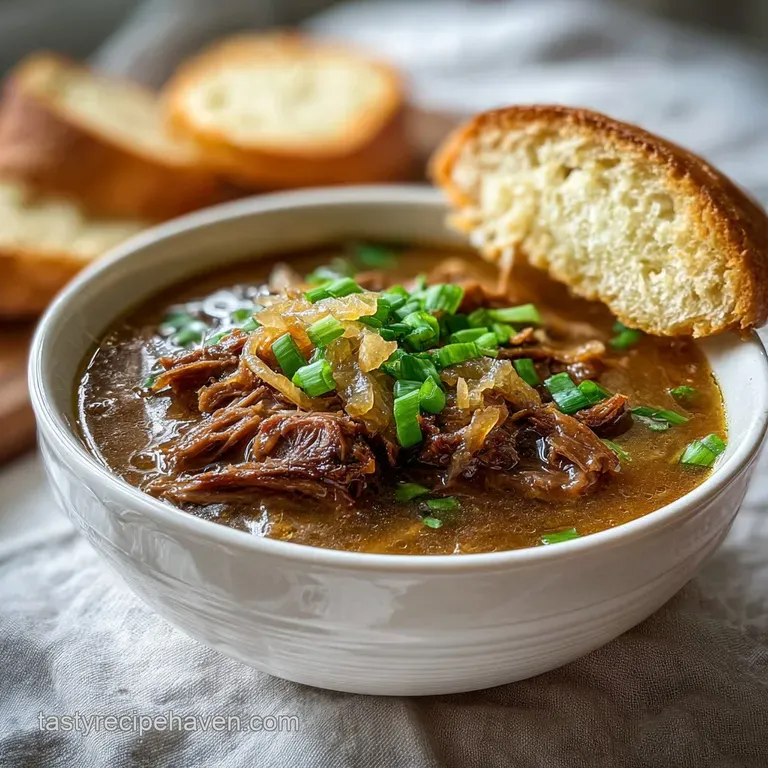
Why Your Soup Is Bitter
If your onions go from brown to black, they will taste acrid. This usually happens if the heat is too high or you aren't stirring enough during the last 15 minutes of caramelization. If it's just a little bitter, a teaspoon of sugar or balsamic vinegar can often balance it out.
Why the Broth Is Oily
Short ribs are fatty. If you don't skim the fat after the braise, you'll have a thick layer of oil on top. I like to use a wide spoon to gently "top skim" the surface once the beef is removed for shredding.
| Problem | Root Cause | Solution |
|---|---|---|
| Tough Beef | Under cooked | Simmer for another 30 mins until tender |
| Bland Broth | Lack of salt/acid | Add a splash of soy sauce or lemon juice |
| Soggy Bread | Bread sliced too thin | Use 1 inch thick slices of stale baguette |
Common Mistakes Checklist
- ✓ Don't skip drying the meat; wet beef steams instead of searing.
- ✓ Don't rush the onions; they need at least 45 minutes for full flavor.
- ✓ Use low sodium stock so you can control the final saltiness yourself.
- ✓ Grate your own cheese to avoid the grainy texture of pre shredded packs.
- ✓ Let the soup sit for 10 minutes before eating to avoid "pizza palate" burns.
Flavor Variations and Swaps
If you want to change things up, you can try different liquids or cheeses. Using a dark stout beer instead of red wine gives the soup a more earthy, bitter sweet profile that is incredible with the beef. You might even find that the braising liquid reminds you of a classic Red Wine Braised recipe, which uses a similar base for a thicker chili.
| Original Ingredient | Substitute | Why It Works |
|---|---|---|
| Gruyère | Comté or Emmental | Similar melting points and nutty flavor profiles. |
| Red Wine | Beef Stock + 1 tbsp Vinegar | Provides the necessary acidity without the alcohol. |
| Fresh Thyme | Dried Thyme (1 tsp) | Concentrated flavor. Note: Add earlier in the cook. |
Adjusting for More Guests
When scaling this up, the biggest challenge is the onion volume. If you're doubling the recipe to 10 lbs of onions, you'll need two separate pots to caramelize them properly; otherwise, they will just steam and turn to mush.
For the beef, you don't need to double the salt and spices perfectly start with 1.5x and taste as you go.
For a smaller crowd, you can easily halve everything. Use a smaller pot so the liquid still covers the beef. When halving, the cook time remains mostly the same because the collagen in the short ribs needs those 3 hours to break down regardless of the total volume.
Debunking Kitchen Folklore
One common myth is that you need to add sugar to caramelize onions. While sugar speeds it up, the onions have plenty of natural sugars on their own. Adding white sugar often leads to a "fake" sweet taste rather than the deep, complex flavor of a slow braise.
Another myth is that you must use expensive wine. Heat destroys the delicate nuances of a $50 bottle. Use something decent but affordable; the main goal is the acidity and the tannins, which will be modified by the beef fat anyway.
Storage and Longevity Guide
Storage: This soup actually tastes better the next day. Keep it in an airtight container in the fridge for up to 4 days. The fat will solidify on top, making it even easier to scrape off if you want a leaner soup.
Freezing: You can freeze the soup base (beef and onions) for up to 3 months. Do not freeze it with the bread or cheese on top. Thaw it overnight in the fridge before reheating on the stovetop.
Zero Waste: Don't throw away those beef bones! If they still have some bits attached, you can simmer them with water and veggie scraps to make a small batch of "bonus" beef stock for your next meal. Even the onion skins can be saved in a freezer bag for making stock later.
Best Serving Ideas
This soup is a meal in itself, but it pairs beautifully with a crisp green salad tossed in a sharp vinaigrette to cut through the richness. If you want a full feast, serve it alongside some roasted root vegetables.
The most important part of serving is the timing of the broiler. Don't melt the cheese until you are ready to put the bowls on the table. You want that cheese to be "lava hot" and the bread to still have a bit of crunch in the center.
It's the ultimate comfort food that feels like a restaurant quality treat right in your own dining room.
Very High in Sodium
1480 mg 1480mg of sodium per serving (64% 64% of daily value)
The American Heart Association recommends limiting sodium intake to about 2,300mg per day for adults. This recipe significantly exceeds that recommendation.
Tips to Reduce Sodium in Your Short Rib Recipe
-
Broth Swap-30%
Use no-sodium added beef broth or homemade beef stock. This can significantly cut down on the overall sodium content.
-
Reduce Added Salt-25%
Eliminate or greatly reduce the amount of kosher salt added 'to taste'. Taste as you go and only add a tiny pinch if absolutely necessary.
-
Cheese Choice-15%
Select a lower sodium Gruyère or reduce the amount used. Consider using a smaller quantity of Parmesan Reggiano, or look for a low-sodium Parmesan alternative.
-
Sauce Reduction-15%
Cut back on the Worcestershire and soy sauce, or use low-sodium versions of these sauces. Consider omitting them entirely for a noticeable reduction.
-
Tomato Paste-10%
Consider a no-salt added tomato paste or adjust amount added and taste as you go
-
Spice It Up
Enhance the flavor with fresh herbs and spices like black pepper, garlic, thyme, and bay leaves to compensate for the reduced salt.
Recipe FAQs
Are short ribs good for soup?
Yes, absolutely. Short ribs are excellent for soup because their high fat and connective tissue content breaks down during slow cooking, creating a rich, gelatinous broth and incredibly tender meat. This makes them perfect for deep flavor development and luxurious texture, much like the braising technique used in our Chipotle Barbacoa Recipe.
What is the secret to great French onion soup?
The secret is patience with the onions. Deeply caramelizing the onions until they are a rich mahogany color, which takes at least 45-60 minutes, is crucial for that signature sweet, complex flavor. Rushing this step results in a thin, less flavorful broth.
Is French onion soup anti inflammatory?
It can be, due to certain ingredients. Onions and garlic are known for their anti inflammatory properties, and beef broth provides minerals. However, the high sodium content from stock and cheese, along with the saturated fat from the beef and butter, can counteract some of these benefits if consumed in excess.
Is French onion soup better with broth or stock?
Stock generally provides a richer base. Beef stock, made from simmering bones, contains more collagen and gelatin than broth (made from simmering meat), which contributes to a thicker, more luxurious texture and deeper flavor.
However, using a high-quality beef broth is still a good option if stock isn't available.
Can I use boneless short ribs for this soup?
Yes, you can, but expect a different result. Boneless short ribs will still provide great flavor and tenderness, but bone-in ribs contribute more gelatin and marrow to the broth, creating a richer, more unctuous soup. If using boneless, you might want to add a touch more beef stock for body.
How do I prevent the cheese from burning when broiling?
Watch it closely and position the rack correctly. Place your oven rack about 6 inches below the broiler element, and broil for only 3-5 minutes, or until the cheese is bubbly and lightly browned. If it starts browning too quickly, you can always pull it out sooner.
Can I make this soup ahead of time?
Yes, the base can be made up to 2 days in advance. This allows the flavors to meld even further, which is a common technique in many slow cooked dishes like Tim Walz Hot Dish: Scratch Beef Mushroom Casserole. Reheat the soup gently on the stovetop before topping with bread and cheese and broiling.
French Onion Beef Short Rib Soup