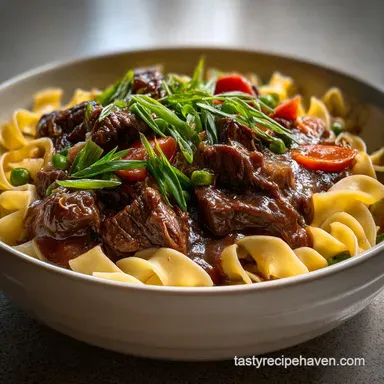
Beef and Noodles

- Time: Active 15 minutes, Passive 8 hours, Total 8 hours 15 mins
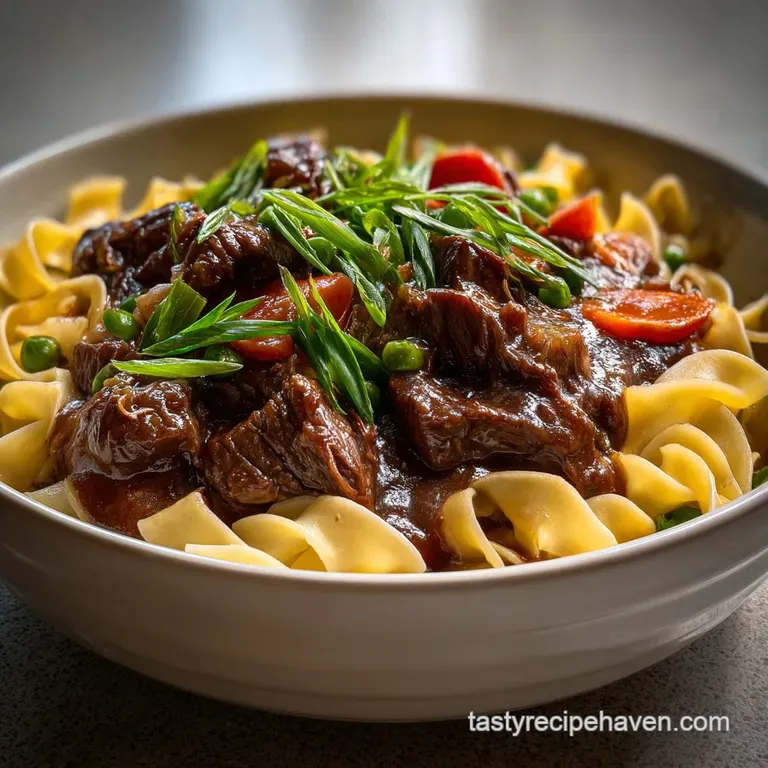
- Flavor/Texture Hook: Silky, savory gravy with tender, fork shredded beef
- Perfect for: Stress free family Sunday dinners or cozy meal prepping
- Beef and Noodles for Cozy Sunday Dinners
- The Science of Braised Succulence
- Component Analysis for Peak Flavor
- Essentials for the Perfect Pot
- Step by Step Scent Cues
- Troubleshooting Your Beef and Noodles
- Managing Batch Sizes with Ease
- Debunking Slow Cooking Old Tales
- Keeping Fresh and Reducing Waste
- Very High in Sodium
- Recipe FAQs
- 📝 Recipe Card
Beef and Noodles for Cozy Sunday Dinners
There is something hypnotic about the smell of a slow cooker working its magic on a rainy afternoon. I remember the first time I tried making this for a crowd; I was worried the beef might turn out tough or the sauce would be too thin.
Instead, the house filled with this deep, oniony, herby perfume that had everyone hovering in the kitchen long before the timer went off. It is the kind of meal that feels like a warm hug, requiring almost zero effort once the lid is closed.
We have all had those nights where we want a massive bowl of comfort but don't have the energy to stand over a stove. This specific version of Beef and Noodles relies on the long, slow breakdown of proteins to create a sauce so rich it clings to every curve of the egg noodles. It is not just dinner, it is a mood.
Trust me, once you see how the beef literally shatters at the touch of a fork, you will never go back to the stovetop version.
The beauty of this dish lies in its simplicity. We are using accessible ingredients that create a complex flavor profile through time and patience. Whether you are feeding a group of hungry teenagers or just looking for a reliable meal that leftovers beautifully, this is the one.
Let's get into why this method is actually superior to the traditional quick sear approach.
The Science of Braised Succulence
Collagen Conversion: The low, steady heat slowly transforms tough connective tissue into gelatin, which creates a silky mouthfeel and keeps the meat moist.
Protein Denaturation: Unlike over high heat frying which tightens muscle fibers, slow cooking allows proteins to relax and absorb the surrounding seasoned broth.
Emulsification: Adding softened cream cheese at the end binds the fats and liquids into a stable, velvety sauce that won't break or feel greasy.
Maillard Reaction: Even without a pre sear, the long cook time allows for subtle browning and flavor development through the amino acids in the beef broth and ranch seasoning.
| Method | Time | Texture | Best For |
|---|---|---|---|
| Slow Cooker | 8 hours | Fork tender, shredded | Maximum flavor with zero effort |
| Stovetop | 2 hours | Chunkier, firmer meat | When you need dinner faster |
| Instant Pot | 1 hour | Soft but less infused | Last minute weeknight cravings |
The choice between methods usually comes down to how much you value that "all day" aroma. While the stovetop is classic, the slow cooker allows the flavors of the ranch and au jus to penetrate deep into the center of the 1.4 kg of beef chuck roast. It creates a unified flavor that you just can't rush.
Component Analysis for Peak Flavor
| Ingredient | Science Role | Pro Secret |
|---|---|---|
| Beef Chuck Roast | High fat/collagen content | Trim the large fat caps but leave the internal marbling for moisture. |
| Au Jus Gravy Mix | Concentrated umami source | Provides the structural salt and savory "backbone" to the entire sauce. |
| Cream Cheese | Fat based thickener | Always use full fat to ensure the sauce stays creamy and doesn't curdle. |
| Dried Thyme | Volatile oil release | Rub it between your palms before adding to "wake up" the herbal aroma. |
The interaction between the acidic ranch seasoning and the fatty beef is what makes this dish pop. While it might seem like a lot of seasoning, the 450g of egg noodles will soak up a huge portion of that intensity, leaving you with a perfectly balanced bite.
Essentials for the Perfect Pot
To get this right, you need to start with the right cut. Do not be tempted to use lean stew meat; it will end up dry and stringy. We want that 1.3 kg to 1.4 kg chuck roast because it is marbled with the good stuff.
- 1.4 kg Beef Chuck Roast: Trimmed and cubed into 2.5 cm pieces. Why this? Higher fat content ensures the meat stays juicy through the 8 hour cook. (Substitute: Pot roast or bottom round)
- 1 large Yellow Onion: Diced finely. Why this? It melts into the sauce, providing natural sweetness and body. (Substitute: White onion or shallots)
- 3 cloves Garlic: Minced. Why this? Adds an aromatic punch that balances the richness of the beef. (Substitute: 1 tsp garlic powder)
- 475 ml Low sodium Beef Broth: Why this? Controls the salt level while providing the essential braising liquid. (Substitute: Chicken broth with a splash of soy sauce)
- 1 packet (28g) Au Jus Gravy Mix: Why this? The "secret" for that restaurant style deep brown gravy color. (Substitute: Brown gravy mix)
- 1 tsp Dried Thyme: Why this? Adds an earthy, floral note that cuts through the heavy fat. (Substitute: Dried rosemary)
- 0.5 tsp Black Pepper: Why this? Essential for a subtle heat that lingers on the palate. (Substitute: White pepper)
- 1 tbsp Worcestershire Sauce: Why this? Adds fermented depth and a touch of tanginess. (Substitute: Soy sauce)
- 0.5 packet (14g) Dry Ranch Seasoning: Why this? The tang from the buttermilk powder brightens the entire dish. (Substitute: Onion powder and dried dill)
- 115g Cream Cheese: Softened. Why this? Transforms the broth into a thick, luxurious coating for the noodles. (Substitute: Heavy cream or sour cream)
- 450g Wide Egg Noodles: Why this? Their broad surface area is designed to grab onto thick sauces. (Substitute: Fettuccine or hearty pasta)
- 1 tbsp Cornstarch: Why this? Provides the final "insurance" for a thick, non watery sauce. (Substitute: Arrowroot powder)
- 2 tbsp Cold water: For the slurry.
If you are looking for a similar comfort profile but with a different noodle vibe, you might enjoy the technique used in my American Chop Suey Recipe. It uses that same one pot philosophy but with a tomato based savory twist.
Step by step Scent Cues
- Prepare the beef. Trim the excess fat from the 1.4 kg chuck roast and cut it into 2.5 cm cubes. Note: Consistent sizing ensures all pieces finish tender at the exact same time.
- Layer the aromatics. Place the diced yellow onion and minced garlic at the bottom of the slow cooker. Note: Placing them at the bottom lets them soften in the natural juices of the meat.
- Season the meat. Toss the beef cubes into the pot over the onions. Sprinkle the au jus mix, ranch seasoning, thyme, and black pepper over the top.
- Add the liquids. Pour in the 475 ml of beef broth and the tablespoon of Worcestershire sauce. Stop when you smell the sharp, vinegary kick of the Worcestershire hitting the garlic.
- Slow braise. Cover and cook on low for 8 hours. By hour six, the aroma should be deep, savory, and unmistakably beefy.
- Thicken the sauce. About 30 minutes before serving, whisk the cornstarch and cold water together. Stir this slurry into the bubbling liquid.
- Temper the creaminess. Add the 115g of softened cream cheese in small chunks. Note: Whisk gently until the white streaks vanish into a tan, velvety gravy.
- Cook the noodles. Boil the 450g of wide egg noodles in a separate pot of salted water until just al dente. They should have a slight "snap" when bitten.
- Combine and rest. Drain the noodles and fold them into the beef mixture. The sizzle of the hot noodles hitting the thick gravy is your cue that it is ready. Let it sit for 5 minutes to allow the noodles to drink up the sauce.
Troubleshooting Your Beef and Noodles
Sometimes the slow cooker can be unpredictable depending on the age of your appliance or the exact fat content of your beef. If your sauce looks a little thin, don't panic. The noodles are like sponges; they will continue to absorb liquid even after you turn the heat off.
If you find the flavor is too intense, a small splash of water or extra broth can mellow it out instantly.
Why Your Sauce is Thin
If you open the lid after 8 hours and it looks more like soup than gravy, it's usually because the onions released more moisture than expected. This is why the cornstarch slurry is vital. Make sure the liquid is actually hot when you add the slurry, or it won't activate.
Why Your Beef is Tough
If the beef feels rubbery, it actually hasn't cooked long enough. Unlike a steak, chuck roast gets tender only after the collagen melts. If it's tough, give it another hour. It will eventually hit that "shatter" point where it falls apart with a spoon.
| Problem | Root Cause | Solution |
|---|---|---|
| Greasy Sauce | Too much fat left on the roast | Skim the top with a wide spoon before adding cream cheese. |
| Bland Flavor | Not enough salt/acid | Add a tiny splash of apple cider vinegar or more Worcestershire. |
| Curdled Sauce | Cold cream cheese added too fast | Whisk vigorously and ensure cream cheese is room temp next time. |
Common Mistakes Checklist
- ✓ Don't use "stew meat" packages; they are often a mix of lean cuts that won't get tender.
- ✓ Resist the urge to open the lid - every peek adds 15-20 minutes to the cook time.
- ✓ Always cook the noodles separately; cooking them in the slow cooker often leads to a gummy, starchy mess.
- ✓ Use low sodium broth to prevent the "salt bomb" effect from the seasoning packets.
- ✓ Let the dish rest for 5 minutes after mixing to let the sauce emulsify.
Managing Batch Sizes with Ease
When you want to scale this recipe down for two people, it is quite simple. Use about 700g of beef and half of all the other ingredients. You can still use a 6 quart slow cooker, but keep an eye on it around the 6 hour mark, as smaller amounts of liquid can evaporate faster.
For the egg, since we aren't using whole eggs here, you don't need to worry about the half egg trick!
Scaling up for a party is where this Beef and Noodles recipe really shines. You can double the beef to 2.8 kg, but you only need to increase the liquids and seasonings by about 1.5 times. If you use too much broth in a crowded pot, it won't reduce properly, and you'll end up with a watery sauce.
I usually find that a 6 quart pot can handle a double batch if you are careful with the liquid levels.
If you find yourself with extra beef but no noodles, this base is incredibly versatile. It actually works brilliantly over mashed potatoes, much like the filling in a Chipotle Barbacoa Recipe. The shredded beef is the star, no matter what starch it sits on.
Debunking Slow Cooking Old Tales
One of the biggest myths is that you must sear the beef before it goes into the slow cooker to "lock in juices." In reality, searing is about creating flavor through the Maillard reaction, not moisture retention.
While a sear adds depth, the au jus and ranch packets in this recipe provide so much concentrated flavor that the extra step is often unnecessary for a weeknight meal.
Another common misconception is that you can't overcook meat in a slow cooker. You absolutely can. After about 10-11 hours on low, even the best chuck roast will start to turn from "tender" to "mushy." The fibers eventually lose all structure and become grainy.
Stick to the 8 hour window for the best texture that still has some bite.
Finally,, people often think they need to submerge the meat in liquid. You don't! The onions and the meat itself will release a significant amount of fluid as they cook. If you start with too much broth, you'll drown the flavor. The 475 ml of broth is plenty to create a rich braise without turning it into a soup.
Keeping Fresh and Reducing Waste
Storage: This dish is actually better the next day. Keep it in an airtight container in the fridge for up to 4 days. The sauce will thicken significantly as it cools, so when you reheat it, you might need to add a tablespoon of water or milk to loosen it back up to that velvety consistency.
Freezing: You can freeze the beef and gravy base for up to 3 months. I recommend freezing the meat and sauce without the noodles. Cooked egg noodles tend to get mushy and fall apart when frozen and thawed.
When you're ready for a quick meal, thaw the beef overnight, heat it up, and boil fresh noodles.
Zero Waste: Don't toss those onion skins or garlic ends! I keep a "stock bag" in my freezer for all my veggie scraps. Also, if you have leftover gravy but no meat, it makes an incredible base for a poutine or poured over a simple piece of toast for a "shit on a shingle" style breakfast. If you have extra uncooked noodles, they are perfect for a quick Weeknight Dinner with recipe later in the week. Using every bit of your ingredients not only saves money but builds a more flavorful kitchen overall.
Very High in Sodium
1485 mg mg of sodium per serving (65% % of daily value)
The American Heart Association recommends limiting sodium intake to about 2,300mg per day for optimal health.
Tips to Reduce Sodium in Your Beef & Noodles
-
DIY Broth-30%
Skip the low-sodium beef broth and Au Jus Gravy Mix entirely. Make your own broth from scratch using roasted beef bones and vegetables. This can reduce sodium significantly while enhancing flavor. Replace the Au Jus Gravy Mix with a homemade version or omit it altogether.
Making a homemade Au Jus substitute can lower sodium content by approximately 30%
-
Ditch the Ranch-25%
Eliminate the dry ranch seasoning mix (0.5 packet). Ranch seasoning is a large source of sodium. Enhance flavors using fresh herbs and spices, which will significantly reduce the sodium content. This simple change can reduce the recipe's sodium by up to 25%.
-
Lower Sodium Cheese-15%
Substitute the cream cheese with a Neufchâtel cheese or low-fat cottage cheese blended until smooth. These options contain significantly less sodium while providing a similar creamy texture. This swap can decrease sodium by approximately 15%.
-
Skip the Noodles-10%
Reduce the portion size of the egg noodles or substitute them with a lower sodium alternative like zucchini noodles or cauliflower rice. While the noodles themselves don't contribute much sodium, reducing their quantity reduces the overall portion size and, therefore, total sodium intake.
This can reduce sodium by up to 10%.
-
Herb Power
Boost the flavor with fresh herbs (parsley, rosemary) and spices (garlic powder, onion powder) instead of relying on salt heavy seasonings. Experiment with different combinations to find what you enjoy most. Using more herbs and spices in general will make for a more interesting dish.
Recipe FAQs
Can I put uncooked pasta in a crock pot?
No, not usually for beef and noodles. While some recipes allow for dry pasta, egg noodles for beef and noodles tend to get mushy and overcooked. It's best to cook them separately until al dente and then combine them with the sauce.
What is the best meat to use for beef and noodles?
Beef chuck roast is ideal. Its high fat and collagen content break down beautifully over long, slow cooking times, resulting in incredibly tender and flavorful shredded beef.
Can I put raw beef straight into a slow cooker?
Yes, absolutely. For beef and noodles, you can add raw, cubed beef chuck roast directly to the slow cooker. The long cooking time will tenderize it perfectly without the need for pre-searing, much like the principle of braising in our Cross Rib Roast Recipe: Tender Ready in 60 Minutes.
Can I put dry noodles in the slow cooker?
Generally, no, for this dish. Dry egg noodles absorb too much liquid and can turn gummy and overcooked when cooked for the 8 hours required for the beef. Cook them separately until al dente and add them at the end.
Will the beef be tough if I don't sear it first?
No, searing isn't strictly necessary for tenderness here. The slow cooker's low, moist heat effectively breaks down the connective tissues in beef chuck roast over several hours, making it fork tender.
Searing primarily adds depth of flavor through the Maillard reaction, which is already achieved by the gravy and seasonings in this recipe.
How do I ensure the sauce is thick and not watery?
Use a cornstarch slurry and cream cheese. Towards the end of cooking, whisk together cornstarch and cold water, then stir it into the hot liquid to thicken. Adding softened cream cheese also helps emulsify and enrich the sauce into a velvety consistency.
What if I want a variation on beef and noodles?
Explore similar comfort food recipes. If you enjoy the hearty, savory nature of beef and noodles, you might also like the comforting flavors in our Tim Walz Hot Dish: Scratch Beef Mushroom Casserole, which also uses slow cooked beef.
Beef And Noodles