French Onion Chicken Orzo: Velvety & Crispy
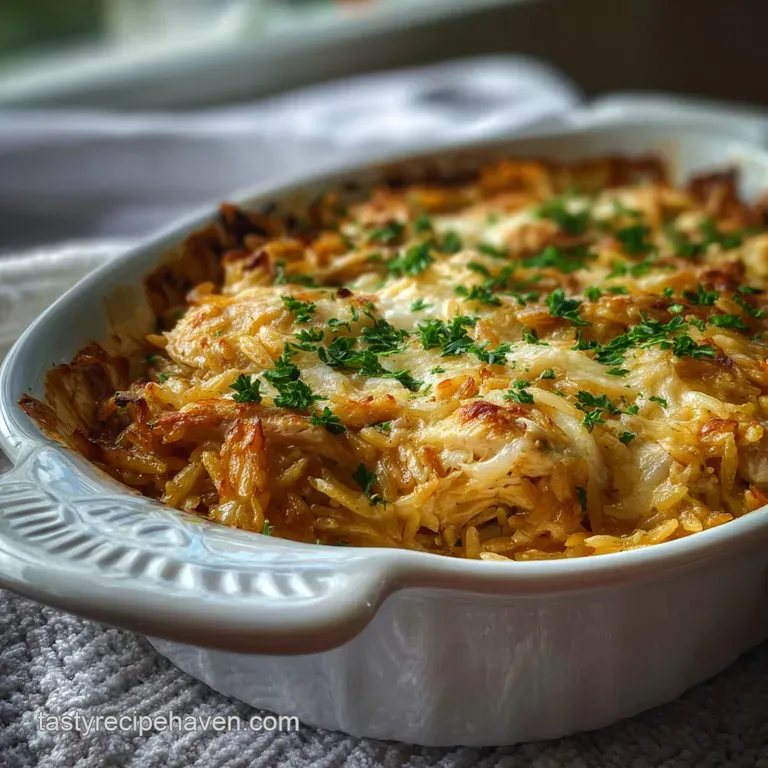
- Time: Active 15 minutes, Passive 40 minutes, Total 55 minutes
- Flavor/Texture Hook: Velvety orzo with a shattering onion crust
- Perfect for: Cozy weeknight dinners or impressing guests with minimal cleanup
- Make The Best French Onion Chicken Orzo
- Why This Savory One Pot Flavor Works Well
- Precise Cooking Times And Visual Doneness Cues
- Essential Ingredient Analysis And Smart Substitutions
- Essential Kitchen Tools For The Best Results
- Step By Step Method For One Pot Success
- Solving Common Texture And Flavor Problems
- Smart Scaling For Any Crowd
- Personalizing This Classic Dish
- Best Practices For Storage And Reheating Leftovers
- Serving Suggestions For The Full Bistro Experience
- Debunking Common Myths About French Onion Cooking
- High in Sodium
- Recipe FAQs
- 📝 Recipe Card
Make The Best French Onion Chicken Orzo
I remember the first time I tried to make a French Onion Chicken Orzo Casserole. I was impatient, hungry, and honestly, a bit lazy. I figured I could just toss some sliced onions in a pan with the chicken, let them brown for five minutes, and call it a day. The result was...
Well, let's just say it was a sad pile of gray onions and bland pasta. It lacked that deep, mahogany soul that makes French onion soup so iconic. I learned the hard way that you can't rush the caramelization, but you can definitely outsmart it.
The secret I discovered changed everything. By adding a tiny pinch of baking soda to the onions, they break down into a jammy, golden silkiness in half the time. When you combine that with the nutty toastiness of orzo and the sharp bite of Gruyère, it creates something truly special.
It is the kind of meal that makes the whole house smell like a high end French bistro, making everyone gravitate toward the kitchen before you even set the table.
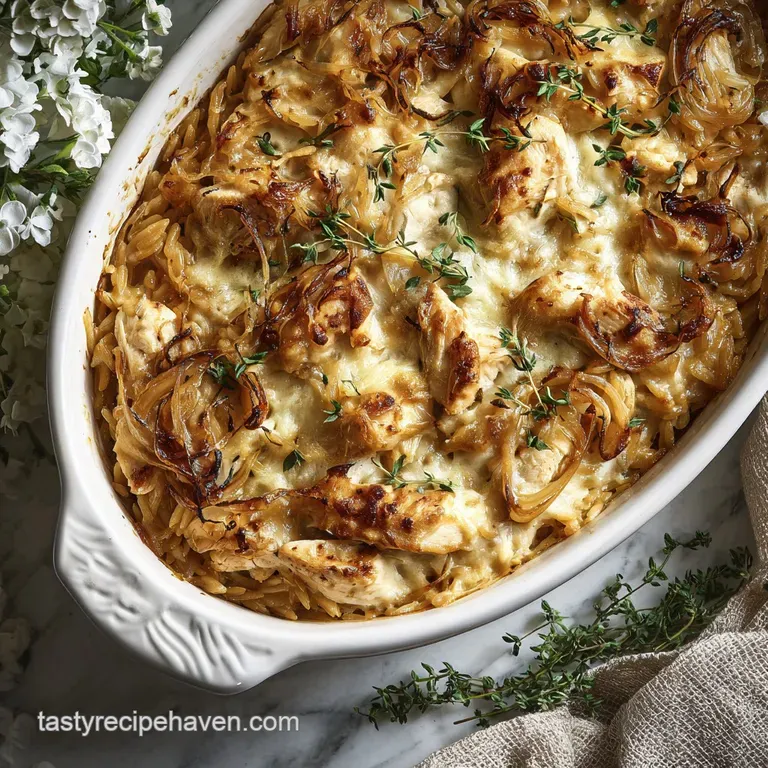
This recipe is about those contrasts. You get the soft, velvety texture of the pasta soaked in beef broth, the savory sear on the chicken, and that incredible "shatter" from the fried onion topping.
We are going for maximum flavor with minimum effort here, keeping everything in one pan so you aren't stuck scrubbing dishes while everyone else is enjoying a second helping. Let's get into the details of how to make this work every single time.
Why This Savory One Pot Flavor Works Well
The success of this dish isn't just luck; it is chemistry happening right in your skillet. Understanding how these flavors interact helps you adjust the dish to your own palate without losing the core of what makes it great.
- The Chemistry of Caramelization: Baking soda raises the pH of the onions, which speeds up the Maillard reaction. This allows the natural sugars to brown and develop deep complexity much faster than usual.
- Starch Suspension: Unlike boiling pasta in a large pot of water, cooking orzo directly in the beef broth allows the starch to stay in the pan. This creates a natural, silky sauce that clings to every grain.
- Alcoholic Extraction: Using dry sherry isn't just for flavor; the alcohol bonds with both fat and water molecules. This helps bridge the gap between the butter and the beef broth, pulling hidden aromatic compounds out of the thyme and garlic.
- Fat Saturation: The combination of butter and rendered chicken fat provides a rich mouthfeel. This fat carries the savory Worcestershire notes across the tongue, ensuring the flavor doesn't just disappear.
| Thickness of Chicken | Internal Temperature | Rest Time | Visual Cue |
|---|---|---|---|
| 1 inch pieces | 165°F | 5 minutes | Juices run clear, no pink |
| 0.5 inch pieces | 165°F | 3 minutes | Firm to touch, lightly browned |
| Whole thighs | 170°F | 8 minutes | Bone pulls away slightly |
Cooking your chicken to the right internal temperature is the difference between a juicy bite and a rubbery chore. Since we are using chicken thighs, they are much more forgiving than breasts, but they still benefit from a quick rest to let those juices redistribute into the meat.
Precise Cooking Times And Visual Doneness Cues
When you are making an Onion Chicken Orzo Casserole, timing is everything to prevent the pasta from turning into mush. You want that orzo to be "al dente" before it hits the oven, as it will continue to soak up liquid during the final bake.
| Cooking Method | Total Time | Texture | Best For |
|---|---|---|---|
| Stovetop to Oven | 55 minutes | Silky pasta, crispy top | Authentic bistro finish |
| Stovetop Only | 40 minutes | Creamy, risotto like | Quick weeknight speed |
| Slow Cooker | 4 hours (Low) | Extremely tender | Hands off meal prep |
The stovetop to oven method is my personal favorite because it gives you that iconic cheesy crust. If you are looking for a different vibe, you might also enjoy the technique used in my Slow Cooker or recipe which handles the caramelization over a longer period.
Essential Ingredient Analysis And Smart Substitutions
The ingredients in this French Onion Chicken Orzo are simple, but their quality matters. Freshly shredded cheese will always melt better than the pre bagged stuff, which is coated in potato starch to prevent clumping. That starch can make your sauce feel gritty rather than velvety.
| Ingredient | Science Role | Pro Secret |
|---|---|---|
| Yellow Onions | Sugar source for caramel | Slice them against the grain to help them break down into a jam. |
| Dry Sherry | Acidic deglazer | If you don't have sherry, a dry vermouth or white wine works wonders. |
| Gruyère | High fat melter | Mix with a bit of Parmesan for a saltier, sharper flavor profile. |
| Orzo Pasta | Starch thickener | Toast the dry pasta in the butter for 2 minutes before adding liquid to add a nutty depth. |
For the liquid base, 3 cups of beef broth provides the necessary savory backbone. If you want a lighter version, you could use chicken broth, though you will lose that traditional "French Onion" richness. Always use low sodium broth so you can control the salt levels yourself.
- 3 large yellow onions
- Sliced thin (approx. 900g). Why this? They have the highest sugar content for perfect browning. (Substitute: White onions)
- 3 tbsp unsalted butter (42g)
- Used for the base sauté. (Substitute: Olive oil)
- 0.25 tsp baking soda
- The "turbo" button for caramelization. (Substitute: None, but you'll need 20 extra mins)
- 0.25 cup dry sherry (60ml)
- To scrape up the flavorful browned bits. (Substitute: Dry white wine)
- 1 tbsp fresh thyme leaves
- For an earthy, floral aroma. (Substitute: 1 tsp dried thyme)
- 1.5 lbs chicken thighs
- Cut into 1 inch pieces (680g). Why this? Thighs stay juicy during the baking process. (Substitute: Chicken breast)
- 1.5 cups dry orzo pasta (300g)
- The heart of the dish. (Substitute: Arborio rice)
- 3 cups beef broth (710ml)
- The primary cooking liquid. (Substitute: Chicken or vegetable broth)
- 3 cloves garlic, minced
- For aromatic depth. (Substitute: 1 tsp garlic powder)
- 1 tbsp Worcestershire sauce
- The umami "secret sauce". (Substitute: Soy sauce)
- 1.5 cups Gruyère cheese
- Freshly shredded (150g). Why this? It has the perfect melt to stretch ratio. (Substitute: Swiss or Fontina)
- 0.5 cup Parmesan cheese
- Grated (50g). (Substitute: Pecorino Romano)
- 1 cup French fried onions (40g)
- For the essential crunch. (Substitute: Panko breadcrumbs)
Essential Kitchen Tools For The Best Results
You really only need one main piece of equipment: a large, oven safe skillet or a Dutch oven. A cast iron pan is excellent here because it holds heat beautifully, ensuring the onions brown evenly without hot spots.
- Large Oven Safe Skillet: A 12 inch skillet (like a Lodge) is perfect for providing enough surface area for the onions to breathe.
- Sharp Chef's Knife: Essential for getting those 3 onions sliced into uniform thin half moons.
- Wooden Spoon: Best for scraping the "fond" (the brown bits) off the bottom of the pan after deglazing.
- Box Grater: For that fresh Gruyère. Trust me, the effort of grating it yourself pays off in the melt.
Chef's Note: If you don't have an oven safe skillet, you can do all the stovetop work in a regular pan and then transfer everything to a 9x13 baking dish before adding the cheese and fried onions. Just be sure to scrape every drop of that liquid into the dish!
Step by step Method For One Pot Success
This Chicken Orzo Casserole relies on layering flavors. Don't rush the steps, especially the onion part. That is where all the magic lives.
- Caramelize the onions. Melt 3 tbsp butter in the skillet over medium heat. Add the 3 sliced onions and 0.25 tsp baking soda. Cook for 15 minutes until they are deep mahogany and jammy.
- Deglaze the pan. Pour in 0.25 cup dry sherry. Note: This lifts the caramelized sugars off the bottom. Stir until the liquid has mostly evaporated.
- Season the base. Stir in 1 tbsp fresh thyme and 3 cloves minced garlic. Cook for 1 minute until the garlic is fragrant.
- Brown the chicken. Add the 1.5 lbs of chicken thigh pieces to the pan. Sauté for 5 minutes until the outside is no longer pink. It doesn't need to be cooked through yet.
- Toast the orzo. Add 1.5 cups dry orzo to the skillet. Stir constantly for 2 minutes until the pasta smells slightly nutty.
- Simmer the mixture. Pour in 3 cups beef broth and 1 tbsp Worcestershire sauce. Bring to a boil, then reduce heat and simmer for 8 minutes. The orzo should be tender but still have a bite.
- Add the cheese. Stir in 0.5 cup Parmesan and half of the Gruyère. Note: This creates a creamy binder for the pasta.
- Top it off. Sprinkle the remaining Gruyère and 1 cup French fried onions over the top in an even layer.
- The final bake. Place the skillet in a preheated 400°F oven for 10 minutes. Bake until the cheese is bubbling and the onions are golden and crackling.
- Rest and serve. Let the dish sit for 5 minutes before serving. This allows the sauce to thicken slightly and ensures the chicken is perfectly juicy.
Solving Common Texture And Flavor Problems
Sometimes things go sideways in the kitchen. Maybe your heat was too high, or your pasta was a bit older and absorbed liquid differently. Here is how to fix the most common issues with this Chicken Orzo Casserole.
Why Your Orzo Is Mushy
If the pasta feels like porridge, it usually means it was simmered too long on the stovetop before going into the oven. Orzo is small and cooks fast. Always err on the side of "underdone" before the baking step, as the residual heat will finish it off.
Why Your Onions Are Bitter
Bitterness usually comes from burning the onions rather than caramelizing them. If you see black flecks instead of a uniform brown, your heat is too high. You can often save this by adding a teaspoon of sugar and an extra splash of broth to balance the char.
| Problem | Root Cause | Solution |
|---|---|---|
| Dry pasta | Not enough liquid | Add 0.25 cup extra broth and cover with foil for 5 mins |
| Greasy sauce | Cheese separated | Stir in a splash of warm milk to re emulsify the fats |
| Bland flavor | Low sodium broth | Add a pinch of salt or an extra dash of Worcestershire |
Common Mistakes Checklist:
- ✓ Pat the chicken dry before adding to the pan to ensure it browns instead of steams.
- ✓ Don't skip the baking soda; it is the only way to get deep flavor in under 20 minutes.
- ✓ Use a large enough pan so the onions aren't crowded; they need air to caramelize.
- ✓ Shred your own Gruyère to avoid the gritty texture of pre shredded starches.
- ✓ Let the dish rest for at least 5 minutes to let the velvety sauce set up.
Smart Scaling For Any Crowd
Adjusting this recipe for a smaller or larger group is fairly straightforward since it is a one pan meal. However, you have to be careful with the liquid ratios.
- To Scale Down (1/2 recipe): Use a smaller 8 inch skillet. Reduce the cook time for the orzo by about 2 minutes since there is less thermal mass. Use a small egg if you are using any binders, or simply stick to half the weight of the chicken and pasta.
- To Scale Up (Double recipe): Do not just double everything in one pan unless you have a massive braiser. It is better to caramelize the onions in one batch, then split the mixture into two pans or a very large roasting tray. Reduce the total liquid by about 10% (use 5.5 cups instead of 6) to prevent it from becoming soupy, as less evaporation happens in larger volumes.
- For Meal Prep: This dish scales beautifully for the week. Simply follow the recipe but stop before adding the fried onions. Store in containers and add the crunchy onions right before reheating in the air fryer or oven.
Personalizing This Classic Dish
While the classic French Onion Chicken Orzo is a masterpiece on its own, you can easily tweak it to fit your dietary needs or pantry contents.
- For the "Vegetarian" Shift: Swap the chicken for 1 lb of thick sliced cremini mushrooms. Sauté them until they release all their moisture and turn golden before adding the orzo. Use a high-quality vegetable bouillon or mushroom broth instead of beef.
- For a Lighter Twist: Use chicken breast and a light Swiss cheese. You can also swap half the orzo for riced cauliflower, though you will need to reduce the broth by half since cauliflower doesn't absorb liquid like pasta does.
- For gluten-free Needs: Use a gluten-free orzo (usually made from corn or rice) or swap for Arborio rice. If using rice, increase the broth by 1/2 cup and the simmer time by 10 minutes.
- The Bistro Presentation: Serve this in individual ramekins. It looks incredibly elegant and ensures everyone gets an equal amount of that crunchy, cheesy topping.
| Feature | Classic Stovetop | Slow Cooker Version |
|---|---|---|
| Prep Effort | Medium (slicing/sautéing) | Low (dump and go) |
| Onions | Deeply caramelized | Soft and sweet |
| Topping | Shattering and crispy | Melted and gooey |
If you love the idea of this flavor profile but want something even more "set it and forget it," you should check out my Crockpot Chicken Spaghetti recipe for another creamy, cheesy winner.
Best Practices For Storage And Reheating Leftovers
This is one of those rare dishes that might actually taste better the next day. The flavors continue to meld in the fridge, making the leftovers a gold mine.
- Storage: Keep in an airtight container in the fridge for up to 4 days.
- Freezing: You can freeze this for up to 2 months. However, the fried onions will lose their crunch. I recommend freezing the base and adding fresh fried onions when you reheat.
- Reheating: To keep the velvety texture, add a splash of beef broth or water before microwaving. For the best results, reheat in a 350°F oven for 15 minutes to crisp up the top again.
- Zero Waste Tip: Don't throw away the onion peels or the thyme stems! Toss them into a freezer bag. When the bag is full, boil them with water and some salt to make a quick "scrap broth" for your next soup or risotto.
Serving Suggestions For The Full Bistro Experience
To truly lean into the French bistro theme, serve this French Onion Chicken Orzo with a side that cuts through the richness. A simple green salad with a sharp Dijon vinaigrette is the perfect companion.
For something heartier, a side of roasted green beans or steamed asparagus provides a nice snap. If you want to go all out, serve it alongside some crusty baguette slices to soak up any remaining sauce. For a similar comfort food vibe with a different twist, my Chicken Casserole recipe is another great one pan option to keep in your rotation.
Debunking Common Myths About French Onion Cooking
- Myth: You must cook onions for 45 minutes to get flavor. While the traditional way takes time, the baking soda trick genuinely works by changing the chemical environment. You get 90% of the flavor in 30% of the time.
- Myth: Alcohol in the sherry "cooks out" completely. Most of it evaporates, but about 5-10% usually remains. This is actually good, as it continues to enhance the aromatics of the dish as you eat.
- Myth: Thighs are too fatty for casseroles. In a dish like this, the fat from the thighs is what keeps the orzo from becoming a dry block of pasta. It provides the necessary lubrication for that velvety mouthfeel.
This dish is a testament to how a few smart techniques can turn basic ingredients into a restaurant level meal. It's cozy, it's rich, and it's incredibly satisfying. Whether you're cooking for a crowd or just treating yourself on a Tuesday, this orzo bake is going to be a hit.
Trust me, once you try the baking soda onion trick, you'll never go back to the old way again. Right then, let's get that skillet hot and start caramelizing!
High in Sodium
985 mg mg of sodium per serving (43% % of daily value)
The American Heart Association recommends limiting sodium intake to about 2,300mg per day for overall cardiovascular health.
Tips to Reduce Sodium in This Recipe
-
Low-Sodium Broth-30%
Replace the regular beef broth with low-sodium or no-salt added beef broth. This can significantly reduce the sodium content, as broth is a major contributor.
-
Reduce Cheese-15%
Reduce the amount of Gruyère and Parmesan cheese by 25-50%. These cheeses are high in sodium, so using less will make a noticeable difference. Consider adding a sprinkle of nutritional yeast for a cheesy flavor with no sodium.
-
Skip Fried Onions-10%
Omit the French fried onions completely. These are a concentrated source of sodium and offer little nutritional value. Alternatively, make your own baked fried onions with no added salt.
-
Low-Sodium Worcestershire-10%
Use a low-sodium Worcestershire sauce or reduce the amount used by half. This sauce contributes significantly to the overall sodium content.
-
Spice It Up!
Enhance the flavor with fresh herbs and spices instead of salt. Garlic, thyme, black pepper, and a pinch of red pepper flakes can add depth and complexity.
Recipe FAQs
Do I have to use dry sherry, or can I skip it?
No, skipping it will diminish flavor depth. The sherry acts as an acidic deglazer, lifting the caramelized sugars off the bottom of the pan; use dry white wine if sherry is unavailable.
How to speed up onion caramelization significantly?
Add a small pinch of baking soda to the onions while sautéing. This raises the pH level, accelerating the Maillard reaction to achieve deep mahogany color in about 15 minutes instead of an hour.
Is it true that using pre-shredded Gruyère will ruin the sauce texture?
Yes, it can make the sauce slightly gritty. Pre-shredded cheese contains anti caking agents like potato starch, which interferes with a smooth melt; grating your own cheese yields a superior velvety sauce.
How to ensure the orzo pasta does not become mushy before the final bake?
Simmer the orzo only until it is slightly underdone, or al dente. It should still have a distinct bite before you transfer it to the oven, as it will absorb plenty of residual liquid while baking.
What is the best way to reheat leftovers while maintaining the crispy onion topping?
Reheat in a 350°F oven for about 15 minutes. For best results, store the crispy onions separately and sprinkle them on top immediately before serving to restore their texture.
Can I substitute chicken thighs with chicken breast in this one-pot recipe?
Yes, but you must reduce the cooking time slightly. Chicken breasts are leaner and can dry out faster, so ensure you monitor their internal temperature closely and reduce the initial stovetop sauté time.
Why should I toast the dry orzo pasta before adding the broth?
Toasting the dry orzo adds a nutty, depth of flavor to the entire dish. Stir it in the melted butter for about two minutes until it smells aromatic, similar to the technique used in our American Goulash recipe to build foundational flavor.
French Onion Chicken Orzo