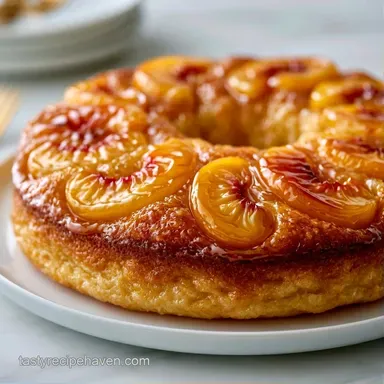
Tender Fresh Peach Season Cake
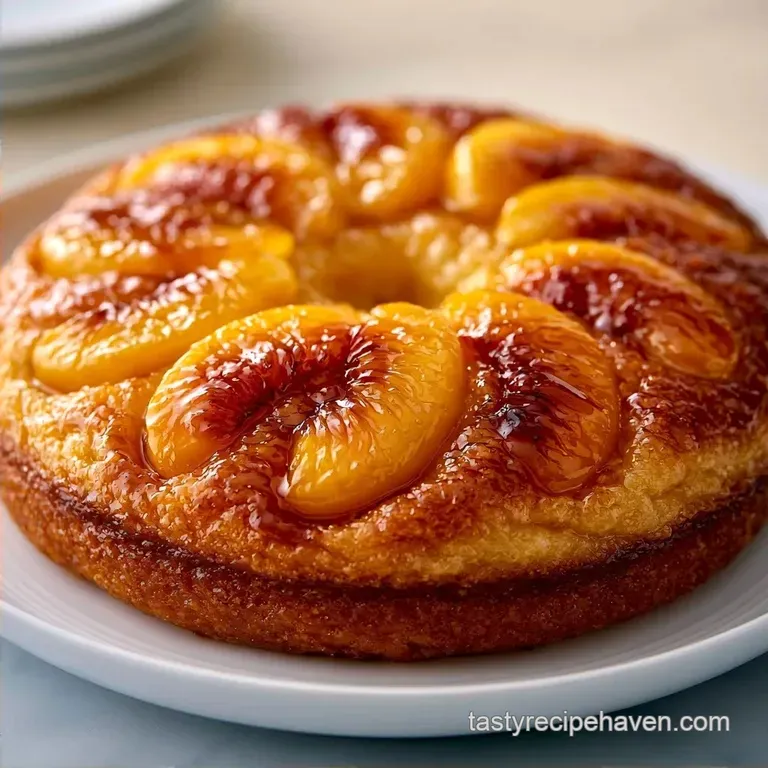
- Time: 15 min active + 60 min baking
- Flavor/Texture Hook: Buttery, fine crumb with bursting fresh fruit
- Perfect for: Summer garden parties or a weekend family treat
That smell of warm cinnamon and bubbling peaches hitting the air is the best part of August. I remember one summer when I tried a simpler recipe and the peaches completely plummeted to the bottom. I ended up with a pale, bland sponge on top and a sodden, jammy layer at the base that stuck to the pan. It was a mess.
The fix was focusing on how the fruit interacts with the batter. By coating the peaches in a bit of flour and sugar, they grip the cake instead of sliding through it. This creates a beautiful, structured look where every slice has a consistent amount of fruit.
You can expect a Fresh Peach Season Cake that feels substantial but doesn't weigh you down. It has a distinct, old-fashioned quality, but the reverse creaming technique makes it more reliable than the cakes our grandmothers used to make.
Why Most Recipes Fail
Standard baking usually starts by creaming butter and sugar. For a Fresh Peach Season Cake, that often leads to too much gluten development, which makes the cake tough. I use the reverse creaming method, where butter is mixed into the dry ingredients first.
This coats the flour particles in fat, blocking water from forming long gluten chains.
The fruit is another common failure point. Peaches are heavy and full of water, which is why they usually sink. Tossing them in a flour cinnamon mixture creates a dry barrier. This barrier helps the peaches stay suspended on the surface, preventing that dreaded soggy bottom.
If you enjoy this approach to fruit cakes, you might also like the structure of a Homemade Peach Sponge Cake, which uses a different aeration method.
Fruit Grip: The flour coating on the peaches creates friction against the batter, stopping them from sinking. Reverse Creaming: Mixing butter into flour first ensures a fine, tender crumb and prevents the cake from becoming bread like.
| Method | Prep Time | Texture | Best For |
|---|---|---|---|
| Fast Mix | 10 mins | Coarser, denser | Quick snacks |
| Classic Reverse | 15 mins | Fine, buttery | Occasions |
Essential Recipe Specs
For this recipe, precision matters. I've found that using room temperature ingredients is the only way to get a smooth emulsion. If your buttermilk is ice cold, the cubed butter will seize up, and you'll end up with tiny lumps of fat in your batter.
The temperature of the oven is equally important. At 350°F (175°C), the edges set quickly enough to support the weight of the peaches. If the oven is too cool, the cake rises too slowly, and the fruit will eventually migrate downward.
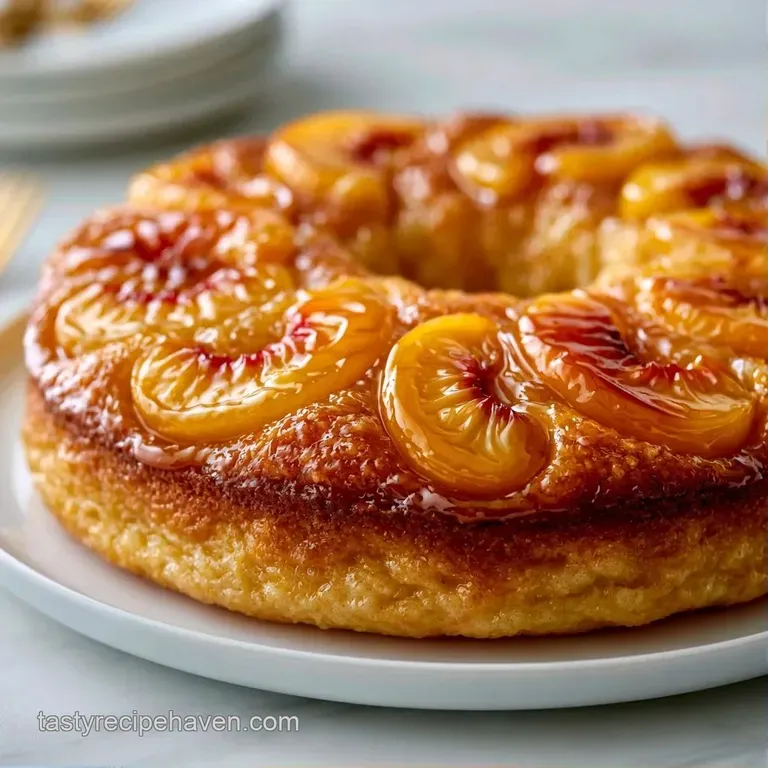
Keep an eye on the timer, but trust your nose. When the kitchen smells like caramelized sugar and cooked fruit, you're close. The visual cue is the mahogany color around the edges of the springform pan.
The Building Blocks
Buttermilk is essential for this Fresh Peach Season Cake because its acidity softens the gluten and adds a subtle tang that cuts through the sweetness of the fruit. Be sure to use full fat buttermilk to maintain the cake's characteristic richness.
Your peaches should be ripe but still firm. Using overripe fruit can result in too much moisture being released during the 60 minutes of baking, which often causes the center to sink. Firm, juicy peaches will hold their shape, ensuring clean wedges on top.
What Each Ingredient Does
| Ingredient | What It Does | Best Swap |
|---|---|---|
| All Purpose Flour | Builds the cake's framework | Cake flour (for a lighter feel) |
| Unsalted Butter | Contributes flavor and a tender texture | Coconut oil (solid state) |
| Buttermilk | Ensures a soft, tender crumb | Milk + 1 tsp lemon juice |
| Fresh Peaches | Primary source of taste and moisture | Canned peaches (drained) |
Full Ingredient List
For the Cake Base
- 2.5 cups (310g) all purpose flourWhy this? The ideal protein content for a cake that is both soft and stable
- 1.5 cups (300g) granulated sugarWhy this? Adds sweetness and encourages a golden crust
- 1 tbsp (8g) baking powderWhy this? The main leavening agent for the batter
- 0.5 tsp (3g) saltWhy this? Brings out the other flavors in the recipe
- 1 cup (225g) unsalted butter, room temperature and cubedWhy this? Critical for the reverse creaming technique
- 3 large (150g) eggs, room temperatureWhy this? Provides stability and holds the batter together
- 1 cup (240ml) buttermilk, room temperatureWhy this? Results in a moist and tender interior
- 2 tsp (10ml) vanilla extractWhy this? Adds a layer of aromatic complexity
For the Peach Layer
- 3 cups (450g) fresh peaches, peeled and sliced into 1/2 inch wedgesWhy this? Offers the most authentic seasonal taste
- 2 tbsp (16g) all purpose flourWhy this? Keeps the fruit slices from sinking
- 1 tbsp (12g) granulated sugarWhy this? Promotes caramelization of the fruit
- 0.5 tsp (1g) ground cinnamonWhy this? A timeless complement to stone fruits
- 1 tbsp (15ml) lemon juiceWhy this? Keeps the fruit bright and prevents oxidation
- 2 tbsp (25g) melted butterWhy this? Used to glaze the top
- 1 tbsp (12g) coarse turbinado sugarWhy this? Creates a crisp, sugary topping
Equipment Needed
A stand mixer, such as a KitchenAid, makes the reverse creaming method far simpler, though one isn't strictly required. If you prefer a hand mixer, just take care not to overmix the batter after incorporating the liquids.
A 9 inch springform pan is essential for this Fresh Peach Season Cake. Because the fruit adds weight to the top, a conventional cake pan can make it hard to remove the cake without disturbing the peach arrangement. The springform sides simply slide away, keeping the presentation flawless.
Parchment paper is the best way to ensure the bottom doesn't stick; I always cut a circle to fit the base exactly. For the sides, greasing with butter and a light dusting of flour ensures a clean release.
From Prep to Plate
Preparing the Fruit
Set your oven to 350°F (175°C). Grease a 9 inch springform pan and line the base with parchment paper. Toss the sliced peaches with lemon juice in a medium bowl.
In a small bowl, whisk 2 tbsp flour, 1 tbsp sugar, and cinnamon, then fold in the peach slices until they are evenly coated in a powdery film.
Mixing the Batter
Combine 2.5 cups flour, 1.5 cups sugar, baking powder, and salt in a mixer bowl. Mix in the cubed butter on low speed until the consistency resembles coarse sand. Whisk the eggs, buttermilk, and vanilla in a separate jug.
Gradually stream the liquid into the flour mixture, beating on medium speed for 60 seconds until the batter is smooth and velvety.
Baking to Perfection
Transfer the batter to the pan, leveling the top with a spatula. Arrange the coated peach slices in concentric circles on top, pressing them lightly into the batter. Brush the peaches with melted butter and sprinkle with turbinado sugar.
Bake for 60 minutes until a cake tester comes out clean.
Chef's Note: Avoid pressing the peaches too deep. If you push them too far down, they'll sink regardless of the flour coating. A gentle nudge is enough to set them in place.
How to Fix Common Problems
Addressing a Gummy Base
A gummy cake base usually indicates that the peaches leaked excess liquid. This typically occurs when using overripe fruit or omitting the flour tossing stage. Make sure the buttermilk is fully room temperature to stop the batter from splitting, which prevents moisture from pooling at the bottom.
Correcting a Mid-Cake Dip
A dip in the center often results from premature oven peeking or expired baking powder. Wait at least 45 minutes before opening the oven. To check if your leavening agent is still active, drop a pinch into hot water; if it fails to bubble instantly, replace it with a fresh tin.
Substituting Canned Peaches
This Fresh Peach Season Cake can be made with canned peaches, provided you drain them in a colander for at least 30 minutes. Use paper towels to pat them dry before tossing them in flour. Since canned fruit is softer, cut the slices slightly thicker than fresh ones so they don't melt into the batter.
Stopping the Peaches from Sinking
If your fruit continues to sink, examine the batter's thickness. A batter that is too runny cannot support the weight of the peaches. Ensure you measure the flour by weight (310g) rather than by volume, as cup measurements can be inconsistent and alter the batter's density.
Serving Suggestions
This Fresh Peach Season Cake tastes best when served slightly warm, which highlights the buttery crumb and gives the peaches a soft, jam-like consistency. A touch of unsweetened whipped cream adds a lovely cool contrast to the heat of the cake.
If you prefer a more indulgent dessert, topping it with vanilla bean ice cream is a timeless pairing. The ice cream melts into the warm crevices between the peach slices, creating a creamy sauce. For brunch service, a drizzle of maple syrup or a few fresh berries are excellent additions.
For an alternative fruit focused treat, check out my Homemade Peach Bread for a quicker morning option.
| Serving Size | Slices | Ideal For |
|---|---|---|
| Individual | 1 slice | Coffee break |
| Small Group | 4-6 slices | Family dessert |
| Party | 12 slices | Summer gathering |
Preservation Secrets
Keep any remaining Fresh Peach Season Cake under a cake dome or loosely wrapped in foil; it will last on your counter for 2 days. Keep in mind that the fresh fruit content makes it more prone to mold than a basic sponge in humid conditions.
For extended storage, keep the cake refrigerated for 5 days. Wrap it securely in plastic wrap to prevent the fridge from drying out the texture. When serving, allow it to sit at room temperature for 30 minutes or microwave a slice for 10 seconds to soften the butter.
If you have a blender, you can repurpose the peach peels. Simmer them with some water and sugar to create a rustic peach syrup for your pancakes.
Make It Your Own
You can easily customize this recipe based on what you have on hand. To introduce an almond flavor, substitute 2 tablespoons of the all-purpose flour in the cake base with almond flour. This provides a nutty richness that pairs perfectly with stone fruits.
Frozen peach slices are a great alternative if fresh ones aren't available. Just ensure they are fully thawed and patted dry with a paper towel before the flour toss. Keep in mind that frozen fruit tends to release more moisture, so an additional tablespoon of flour in the coating may be necessary.
To switch up the topping, use a cinnamon sugar blend instead of turbinado sugar. This results in a bolder crust reminiscent of a peach crisp.
Decision Shortcut:
- For a denser crumb: decrease the buttermilk by 2 tablespoons.
- For sweeter fruit: stir in an extra tablespoon of sugar when tossing the peaches.
- For a crunchier top: opt for turbinado sugar over granulated sugar.
Debunking Baking Myths
There is a common belief that creaming butter and sugar for 5 minutes is the sole secret to a light cake. However, this Fresh Peach Season Cake employs the reverse creaming technique, which produces a more tender and uniform crumb by reducing gluten development.
Another misconception is that room temperature eggs should be avoided due to stability issues. In truth, eggs at room temperature emulsify more effectively, ensuring the batter doesn't curdle once the buttermilk is incorporated.
The Fresh Peach Season Cake is a foolproof method for bottling the essence of summer. By understanding the interaction between the fruit's moisture and the cake's structure, you can sidestep typical fruit cake mistakes.
Stick to the reverse creaming and the flour tossing technique to guarantee a beautiful dessert every time.
Recipe FAQs
Can I add fresh peaches to a cake mix?
Yes, though scratch recipes offer better structural control.
Tip: Toss the fruit in flour first to prevent them from sinking.
Is it true that fresh peaches always sink to the bottom?
No, this is a common misconception. Coating the slices in flour, sugar, and cinnamon creates a grip that keeps them on the surface.
Tip: Press the slices gently into the batter to secure them.
How to achieve a tender crumb?
Mix the cubed butter into the dry ingredients before adding the buttermilk and eggs.
Tip: If you enjoyed the reverse creaming here, see how the same principle works in our silky vanilla cake.
What prevents the cake from becoming soggy?
Dusting the peach wedges with flour absorbs excess moisture during baking.
Tip: Cut slices into 1/2 inch wedges for the best moisture balance.
Do I need to peel the peaches?
Removing the skins creates a more refined texture and a professional look.
Tip: Blanch the fruit in boiling water for 30 seconds to peel them easily.
When is the cake finished baking?
Remove the pan when a toothpick inserted into the center comes out clean.
Tip: Check for doneness exactly at 60 minutes.
Will cold buttermilk still work?
False. Cold liquids cause the butter to clump, which ruins the fine crumb.
Tip: Set your dairy on the counter for an hour before mixing.
Fresh Peach Season Cake