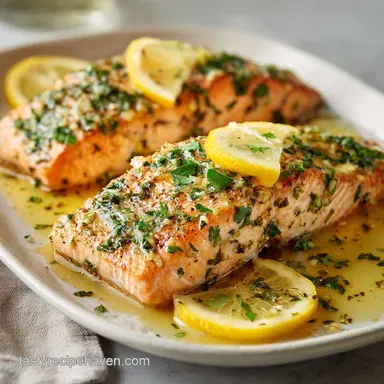
Salmon Recipe with Lemon and Herbs: Flaky and Butter Basted
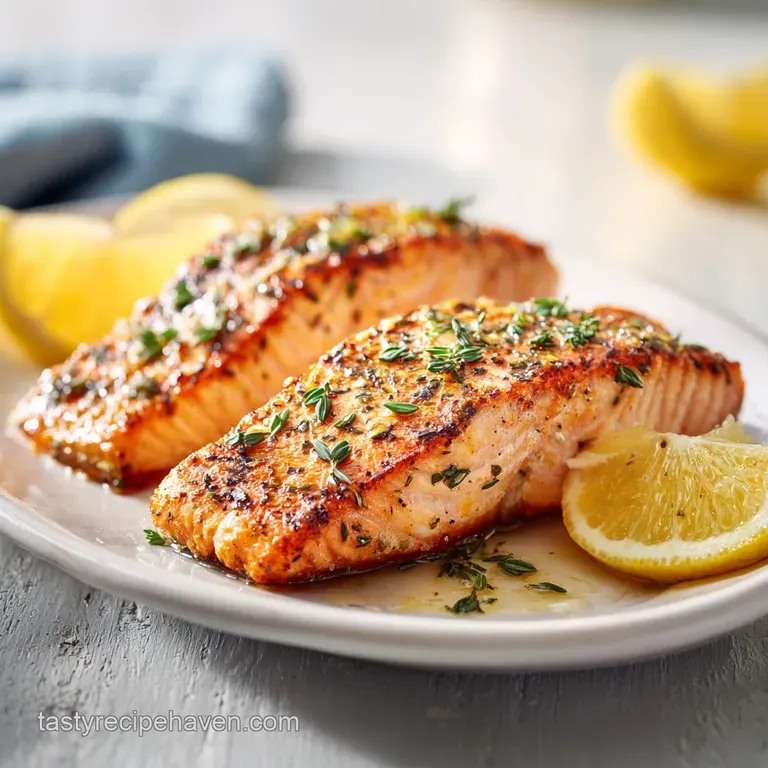
- Time: Active 10 minutes, Passive 12 minutes, Total 22 minutes
- Flavor/Texture Hook: Flaky, butter basted, and vibrant citrus
- Perfect for: Stress free weeknight dinners or impressive hosting
- Mastering This Salmon Recipe with Lemon and Herbs
- The Secrets to Silky Salmon
- Analyzing the Essential Ingredients
- Tools for Kitchen Success
- Steps for the Perfect Bake
- Avoid These Common Cooking Blunders
- Smart Swaps and Variations
- Preserving Flavor and Reducing Waste
- Serving Suggestions for Weeknight Success
- Recipe FAQs
- 📝 Recipe Card
Mastering This Salmon Recipe with Lemon and Herbs
We've all been there, standing over a baking sheet, staring at a piece of salmon that looks more like a dry pink eraser than a meal. You poke it, and instead of flaking into silky layers, it feels tough, or worse, it's covered in that weird white goo.
I used to think I just wasn't a "fish person," but the truth was I was just overcomplicating the process while ignoring the basic physics of the fillet. This Salmon Recipe with Lemon and Herbs is the result of me failing enough times to realize that salmon doesn't need a complex marinade, it needs a thermal shield and a lot of moisture.
The real problem most of us face is the "albumin explosion." That white stuff isn't harmful, but it's a neon sign screaming that your heat is too high or your fish is too dry. This recipe fixes that by using a thick, herb heavy compound butter that acts like a blanket.
It protects the delicate proteins while the lemon halves caramelize on the tray, creating a built in sauce that's light years better than anything you'd buy in a jar. We're going for a texture that's so velvety it practically melts, contrasted with the bright, sharp zing of fresh dill and parsley.
Honestly, don't even bother with the low-fat versions of this. The butter is what carries the flavor of the garlic and smoked paprika deep into the flakes. When you pull this out of the oven, the sizzle on the pan and the aroma of toasted garlic and citrus will tell you everything you need to know.
It’s manageable for any family, even during a chaotic Tuesday night scramble, because it only takes 22 minutes from the fridge to the table.
The Secrets to Silky Salmon
Thermal Insulation: The softened butter creates a protective fat barrier that slows down heat penetration, preventing the protein fibers from tightening too quickly and squeezing out moisture.
Aromatic Infusion: Fats are incredible flavor carriers, so by suspending the garlic and herbs in butter, the flavors are held against the fish throughout the entire 12 minutes of cooking.
Sugar Caramelization: Placing the lemon halves cut side down on the hot tray concentrates the sugars in the citrus, making the juice less acidic and more complex when squeezed over the final dish.
| Method | Cook Time | Texture | Best For |
|---|---|---|---|
| Stovetop | 8 minutes | Crispy skin, firm | Single portions |
| Oven Bake | 12 minutes | Even, velvety flakes | Families and prep |
| Air Fryer | 10 minutes | Very charred edges | Quick lunches |
Cooking salmon in the oven is my preferred route because it's hands off and provides the most consistent internal temperature across multiple fillets. While the stovetop is great for getting that ultra crispy skin, the oven method in this Salmon Recipe with Lemon and Herbs ensures the center stays lush and moist without you having to play "flip and pray" with a spatula.
Analyzing the Essential Ingredients
| Ingredient | Science Role | Pro Secret |
|---|---|---|
| Salmon Fillets | High fat protein | Choose center cut pieces for even cooking and consistent thickness. |
| Unsalted Butter | Moisture barrier | Use European style butter for higher fat content and a silkier finish. |
| Fresh Dill | Volatile oil source | Never use dried dill here, the fresh oils provide the essential "shatter" of flavor. |
| Smoked Paprika | Color and depth | A tiny amount adds a woodsy note that mimics a cedar plank grill. |
When you're choosing your fish, look for fillets that are vibrant and firm to the touch. If you're looking for a full Mediterranean salmon meal prep later in the week, this specific herb profile is the perfect starting point. The chemistry of the fats in the salmon, specifically the Omega-3s, requires a gentle heat curve, which is why we preheat to 200°C but only cook for a short window.
Tools for Kitchen Success
You don't need a high end kitchen to make this work, but two tools are non negotiable for me. First, a rimmed baking sheet is a must to catch the melting butter and lemon juices. If you use a flat cookie sheet, you'll end up with a smoke alarm situation as the fat drips onto the oven floor.
Second, get a digital meat thermometer. Estimating doneness by color is a recipe for disappointment because salmon looks cooked on the outside long before the center reaches that perfect 130°F.
I also swear by parchment paper rather than aluminum foil. Foil can sometimes cause the bottom of the fish to steam too much, whereas parchment allows for a bit more airflow around the skin. It also makes cleanup a five second job, which is the kind of weeknight solution we all need. If you're pairing this with a starch, I often suggest a lemon risotto recipe to keep the citrus theme going while the fish rests.
Steps for the Perfect Bake
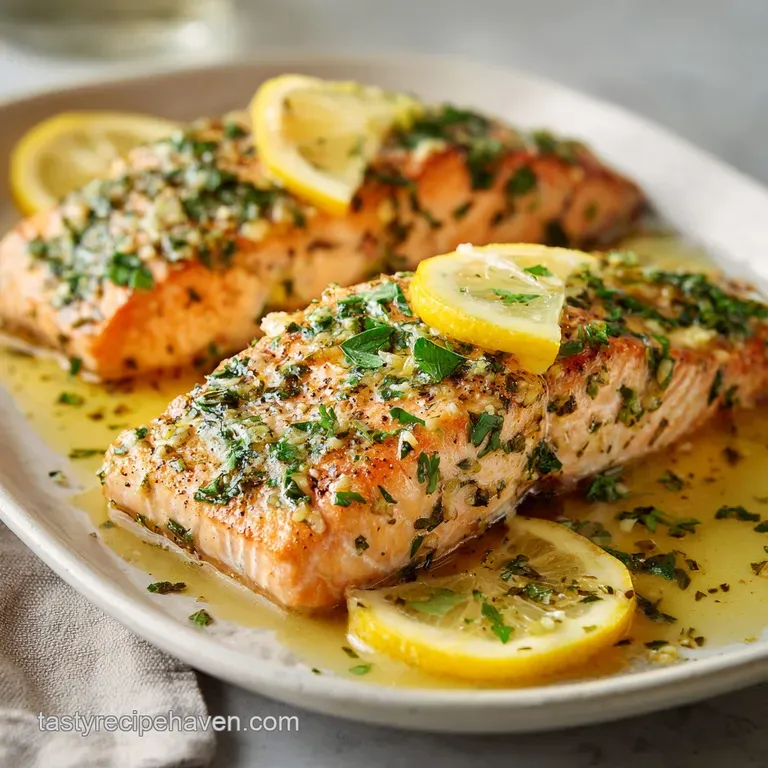
- Preheat your oven to 200°C. Line a rimmed baking sheet with parchment paper. Pat the 4 (6 oz) salmon fillets completely dry with paper towels until the surface feels tacky. Note: Surface moisture is the enemy of a good crust.
- In a small bowl, cream together the 3 tbsp softened unsalted butter, 3 cloves minced garlic, 1 tbsp chopped dill, 1 tbsp chopped parsley, lemon zest, and 1/2 tsp smoked paprika.
- Use a fork to blend the mixture until it forms a uniform, thick paste with no large lumps of butter remaining.
- Brush the salmon fillets with 1 tbsp extra virgin olive oil and season them evenly with 1 tsp kosher salt and 1/2 tsp fresh cracked black pepper.
- Spread a generous layer of the herb butter mixture over the top of each fillet, ensuring the entire top surface is covered.
- Place the lemon halves on the tray cut side down right next to the fillets so they can caramelize in the rendered fats.
- Bake for 10-12 minutes on the center rack until the thickest part of the fish feels firm but has a slight give.
- Remove the tray from the oven when the internal temperature hits 130°F to 135°F.
- Let the salmon rest for 3 minutes to allow for carryover cooking. The internal temp will rise to a safe 145°F while the juices settle.
- Squeeze the roasted lemon halves over the fish just before serving for a hit of concentrated, mellow acidity.
Avoid These Common Cooking Blunders
Why Your Salmon Is Dry
The most frequent mistake is ignoring carryover cooking. Salmon is a dense protein that continues to cook for several minutes after it leaves the oven heat. If you wait until it looks "done" in the oven, it will be overdone by the time it hits your plate. Trust the thermometer and pull it out early.
| Problem | Root Cause | Solution |
|---|---|---|
| White "Goo" | Heat is too high | Lower oven to 200°C and don't skip the butter shield. |
| Soggy Bottom | Excess moisture | Pat the skin side extremely dry before placing on the tray. |
| Raw Middle | Fillet is too cold | Let salmon sit at room temp for 15 minutes before baking. |
A common scramble on busy nights is forgetting to take the butter out of the fridge. If the butter isn't softened, it won't spread, and you'll end up tearing the delicate flesh of the fish. You can grate cold butter with a cheese grater to speed up the softening process in a pinch.
- ✓ Pat the salmon with double layer paper towels to remove every drop of moisture.
- ✓ Use kosher salt rather than table salt for a more even, controlled seasoning.
- ✓ Don't peek! Opening the oven door drops the temperature by 25 degrees instantly.
- ✓ Always rest the fish for 3 full minutes before serving to ensure the flakes stay juicy.
Smart Swaps and Variations
If you're out of fresh dill, don't reach for the dried stuff in the pantry. Instead, swap it for fresh cilantro or even thin slices of green onion. The flavor profile will shift, but you'll keep that essential fresh "pop" that defines this dish.
For those watching their dairy intake, a high-quality vegan butter works surprisingly well, though it may melt a bit faster than the traditional unsalted variety.
| Original Ingredient | Substitute | Why It Works |
|---|---|---|
| Unsalted Butter | Ghee | Higher smoke point and a deeper, nuttier flavor profile. |
| Fresh Dill | Fresh Tarragon | Adds a sophisticated anise like sweetness that pairs beautifully with lemon. |
| Smoked Paprika | Chili Powder | Provides a similar earthy color but with a tiny bit more heat. |
If you want a bit more texture, you can mix a tablespoon of Panko breadcrumbs into the herb butter. This creates a "crunch factor" that contrasts with the velvety fish. However, for the purest Salmon Recipe with Lemon and Herbs experience, I recommend sticking to the herb heavy paste.
It keeps the dish light and gluten-free without sacrificing any of the richness.
Preserving Flavor and Reducing Waste
This fish is best enjoyed immediately, but you can store leftovers in an airtight container in the fridge for up to 2 days. When reheating, do not use the microwave! It will turn your beautiful salmon into a rubbery mess.
Instead, place it in a cold oven, set it to 150°C, and heat just until it's warmed through usually about 8 minutes. This gentle rise in temperature prevents the proteins from tightening up again.
For zero waste cooking, don't throw away those herb stems. I keep a "stock bag" in my freezer where I toss the stems of the dill and parsley. They add incredible depth to seafood broths or veggie soups later.
The leftover roasted lemon rinds can also be tossed into a pot of simmering water with a stick of cinnamon to make your kitchen smell like a dream after the "fishy" scent has faded.
Serving Suggestions for Weeknight Success
I love serving this right on the baking sheet for a rustic, family style feel. The contrast between the vibrant green herbs and the charred lemons looks stunning. If you're looking for a "If you want X, do Y" approach to your meal planning, consider these three paths:
- If you want a light lunch, serve the flaked salmon cold over a bed of arugula with a vinaigrette.
- If you want a hearty dinner, pair it with roasted baby potatoes that you've cooked on a separate tray at the same temperature.
- If you want a low carb option, serve it over sautéed zoodles or steamed asparagus.
The beauty of this Salmon Recipe with Lemon and Herbs is its versatility. It's sophisticated enough for a Saturday night dinner party but simple enough that you can get it on the table before the kids start asking "what's for dinner" for the tenth time. Just remember: pat it dry, shield it with butter, and let it rest.
Those three small steps are the difference between a mediocre meal and a kitchen triumph. Let's crack on and get that oven preheated!
Recipe FAQs
Is it true that I should wash my salmon fillets before cooking?
No, this is a common misconception. Washing raw fish splashes bacteria around your kitchen and prevents the surface from drying properly, which is essential for a good crust.
How to ensure the salmon skin doesn't stick to the baking sheet?
Line your rimmed baking sheet with high-quality parchment paper. This creates a non-stick barrier that ensures the fish lifts off cleanly without leaving the delicate skin behind.
Why is my salmon not forming a nice crust?
You likely skipped patting the fillets dry. Excess moisture creates steam instead of a crust; if you enjoyed achieving this crispy texture, you can apply the same surface drying principle to our Garlic and Herb Chicken Thighs for perfectly seared skin.
How to tell when the salmon is perfectly cooked?
Use an instant read thermometer to check for an internal temperature of 130°F-135°F. Removing the fish at this stage allows for carry over cooking, reaching a safe and moist 145°F during the resting period.
How to prevent the herb butter from melting off the fish too quickly?
Cream the butter and herbs together thoroughly until the mixture forms a thick, uniform paste. A well blended paste adheres better to the salmon surface than simply placing loose butter pats on top.
Is it necessary to let the salmon rest after baking?
Yes, always rest your salmon for 2-3 minutes. This short pause allows the juices to redistribute throughout the fillet, ensuring every bite remains tender rather than drying out.
How to store leftovers properly?
Keep leftovers in an airtight container in the refrigerator for up to two days. Gently reheat the fish in a low-temperature oven or microwave until just warm to maintain its delicate texture.
Lemon Herb Baked Salmon