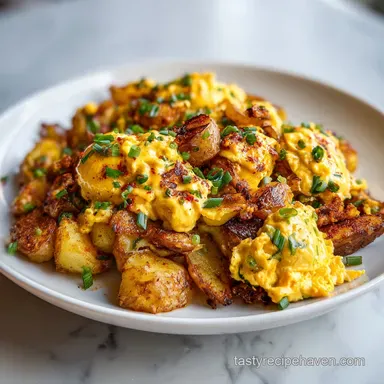
Chorizo Potato Breakfast Skillet with Scrambled Eggs
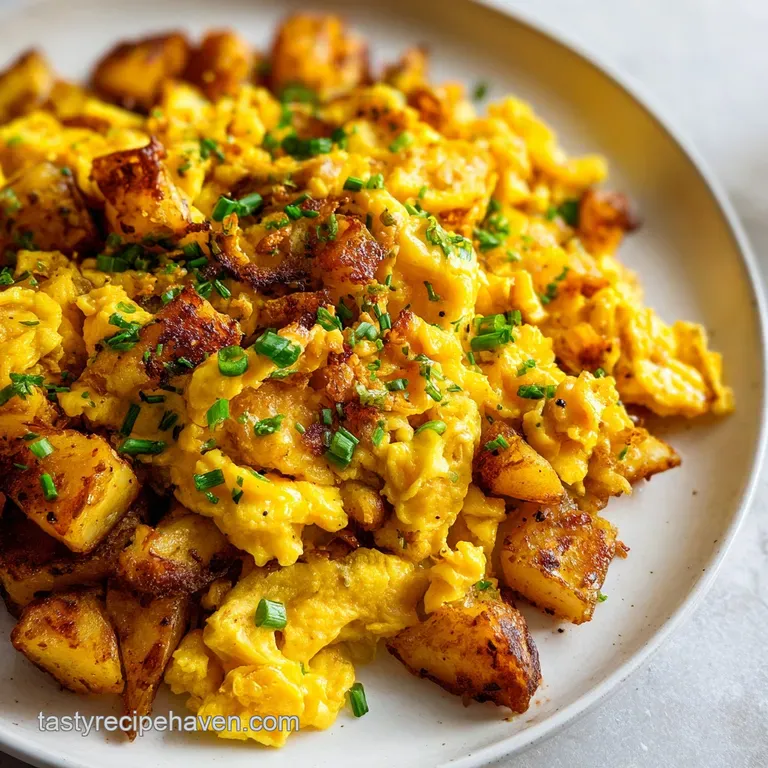
- Time: Active 10 minutes, Passive 15 minutes, Total 25 minutes
- Flavor/Texture Hook: Smoky, shatter crisp potatoes meets buttery, soft scrambled curds.
- Perfect for: Weekend recovery brunch or a high protein midweek fuel up.
- A Bold Breakfast Idea with Scrambled Eggs
- The Logic of Heat and Fat
- Component Analysis and Selection
- Essential Ingredients and Substitutes
- Instructions
- Troubleshooting Common Issues
- Scaling for Different Needs
- Common Breakfast Scramble Misconceptions
- Storage and Zero Waste Guidelines
- Very High in Sodium (🚨)
- Recipe FAQs
- 📝 Recipe Card
A Bold Breakfast Idea with Scrambled Eggs
The second that 4 oz of ground chorizo hits a 12 inch cast iron skillet, the kitchen transforms. It starts with a sharp, vinegary sizzle, quickly followed by the heavy, brick red aroma of smoked paprika and garlic filling every corner of the room.
This isn't just a meal; it's a sensory wake up call that promises maximum flavor with minimum cleanup.
I used to think scrambled eggs were just a side dish, a quick afterthought to a piece of toast. But once you realize that the fat rendered from spicy sausage is the best cooking medium for potatoes, the whole game changes.
We are talking about tubers that are shatter crisp on the outside and fluffy like a cloud on the inside, all tossed with eggs that have been whisked into a silken, golden foam.
This recipe is my go to when I want a "big win" in the morning without spending an hour at the stove. It’s a one pot wonder that feeds two people perfectly, though I’ll be honest I’ve definitely polished off the whole skillet myself on a slow Sunday.
It’s comfort food at its most efficient, using simple techniques to get chef level results.
The Logic of Heat and Fat
Fat Based Infusion: The chorizo renders out a vibrant, spiced oil that acts as the primary seasoning and cooking fat for the potatoes, ensuring flavor penetrates every bite.
By using a cast iron skillet, we maintain a consistent heat that encourages the Maillard reaction without burning the delicate egg proteins later on.
Starch Gelatinization: Leaving the Yukon Gold potatoes undisturbed for 3-4 minutes allows the surface starches to dehydrate and brown, creating a structural "crust" that holds up against the moisture of the eggs.
This prevents the dreaded mushy texture that plagues most amateur breakfast hashes.
Residual Heat Carryover: Removing the skillet from the burner while the eggs are still slightly wet prevents the protein bonds from tightening too much. The thermal mass of the cast iron continues to cook the eggs to a velvety finish, avoiding that rubbery, sulfurous result caused by over exposure to direct heat.
| Component | Fast Method (This Recipe) | Classic Method (Traditional Hash) | Payoff |
|---|---|---|---|
| Potato Prep | Small 1/2 inch dice | Par boiling whole potatoes | Saves 15 minutes while keeping crisp edges |
| Flavoring | Rendered chorizo fat | Plain butter or vegetable oil | Deeper, smoky profile with zero extra ingredients |
| Egg Texture | Spiced soft scramble | Plain fried or hard scramble | Velvety mouthfeel that binds the hash together |
This specific approach to heat management is why this breakfast idea with scrambled eggs works so well compared to just throwing everything in a pan at once. If you're looking for another way to feed a crowd with similar flavors, you might also love this Breakfast Casserole recipe which uses brioche to soak up all that savory goodness.
Component Analysis and Selection
| Ingredient | Science Role | Pro Secret |
|---|---|---|
| Yukon Gold Potatoes | Medium starch content | Do not soak them in water; the surface starch is what creates the golden, crispy "shatter" layer. |
| Ground Chorizo | Emulsified fat source | Look for "Mexican" chorizo (raw) rather than Spanish (cured) to ensure you get that liquid gold fat for frying. |
| Heavy Cream | Protein buffer | The fat in the cream coats the egg proteins, slowing down coagulation for a much softer, more forgiving curd. |
| Turmeric & Cumin | Aromatic blooming | Adding these to the egg wash allows the spices to "bloom" in the hot fat, releasing fat soluble flavor compounds. |
To get the most out of these ingredients, always ensure your pan is properly preheated. A cold pan is the enemy of a good sear, especially when you're dealing with ground meat and starchy vegetables.
Essential Ingredients and Substitutes
- 2 cups Yukon Gold potatoes: Diced into 1/2 inch cubes. Why this? They hold their shape better than Russets but have a creamier interior than red potatoes.
- Substitute: Red bliss potatoes (Keep the skins on for extra texture).
- 4 oz ground chorizo: Fresh Mexican style. Why this? It provides the foundational spice and the fat needed to crisp the potatoes.
- Substitute: Hot Italian sausage with an extra 1/2 tsp of smoked paprika.
- 0.5 small red onion: Finely diced. Why this? Adds a sharp sweetness that cuts through the heavy fat of the sausage.
- Substitute: Shallots for a more delicate, garlicky undertone.
- 1 jalapeno: Seeded and minced. Why this? Provides a controlled, bright heat to balance the earthy cumin.
- Substitute: A pinch of red pepper flakes or a diced poblano for milder heat.
- 1 tbsp ghee: For the scramble. Why this? Higher smoke point than butter but keeps that rich, nutty dairy flavor.
- Substitute: Unsalted butter (just watch the heat to prevent browning).
- 4 large organic eggs: The protein base. Why this? Organic yolks often have a deeper orange hue and richer flavor profile.
- Substitute: Liquid egg whites (use 1 cup) for a lower fat version.
- 1 tbsp heavy cream: For texture. Why this? Prevents the eggs from weeping and ensures a silken finish.
- Substitute: Whole milk or full fat coconut milk (adds a slight tropical note).
- Spice Blend: 0.5 tsp each of ground turmeric, ground cumin, smoked paprika, kosher salt, and 0.25 tsp black pepper. Why this? This specific ratio creates a warm, "bloomed" flavor profile common in Indian style scrambled eggs.
- Garnish: 0.25 cup fresh cilantro, 1 lime wedge, and 0.25 cup crumbled cotija cheese. Why this? The acid from the lime and salt from the cotija provide the necessary "high notes" to the dish.
Instructions
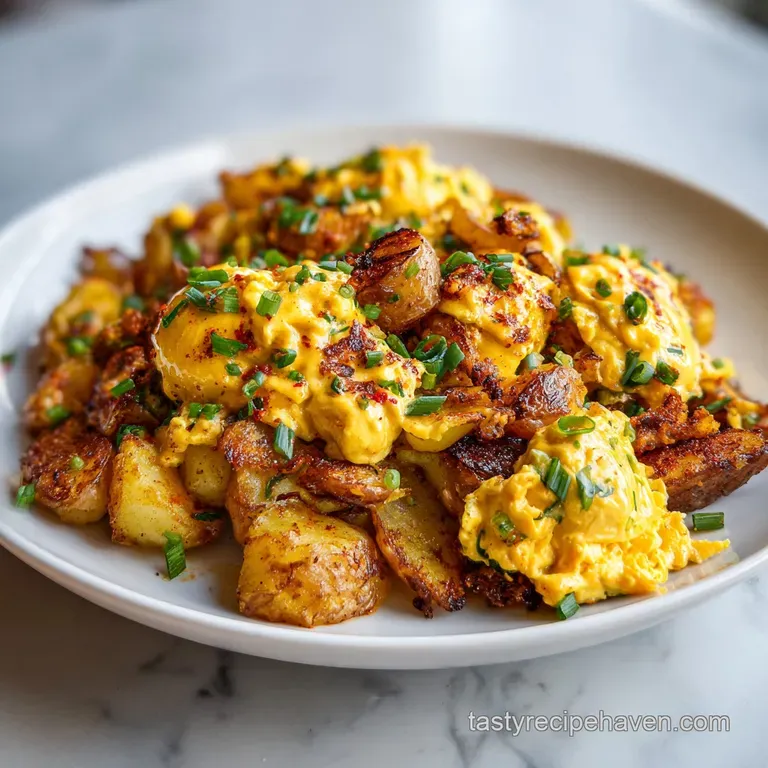
Place a 12 inch cast iron skillet over medium high heat. Add the 4 oz ground chorizo and cook, breaking it up with a spatula. Cook 5 minutes until the fat renders out and the meat is mahogany colored and crispy. Use a slotted spoon to remove the meat, leaving the rendered fat in the pan.
Add the 2 cups diced potatoes to the rendered fat in the skillet. Spread them in a single layer. Leave undisturbed for 3-4 minutes until you see a deep golden brown crust forming on the bottom. Note: Resist the urge to shake the pan too early; the potatoes need contact time to crisp.
Toss in the 0.5 diced red onion and minced jalapeno. Sauté for another 4-5 minutes until the potatoes are fork tender and the onions are translucent and fragrant.
While potatoes cook, whisk the 4 eggs, 1 tbsp heavy cream, and the spice blend (turmeric, cumin, paprika, salt, pepper) in a small bowl. Whisk until the mixture is uniform and slightly frothy.
Push the potato and onion mixture to the edges of the skillet, creating a "well" in the center. Reduce heat to medium low. Add 1 tbsp ghee to the center. Wait 30 seconds until the ghee is melted and bubbling slightly.
Pour the egg mixture into the center of the pan. The aroma of the cumin and turmeric hitting the hot ghee should be immediate and earthy.
Using a silicone spatula, gently fold the eggs from the edges of the center toward the middle. Continue folding for about 2 minutes until soft, pillowy curds form. Note: The eggs will look wet; this is intentional.
Stir the crispy chorizo and the potato border back into the eggs. Toss gently to ensure every piece of potato is coated in a thin layer of spiced egg.
Remove the skillet from the heat immediately. The residual heat of the cast iron will finish the cooking in the next 60 seconds.
Garnish the skillet with 0.25 cup chopped cilantro, 0.25 cup cotija cheese, and a squeeze of lime. Serve directly from the skillet for the best temperature retention.
For a Silken Curd Texture
The secret to the velvety fold is all in the spatula work. You aren't "scrambling" in the sense of a frantic stir; you are "folding." By moving the spatula in long, slow sweeps, you allow larger sheets of egg to cook at once.
This traps the heavy cream and fat within the protein structure, creating a mouthfeel that is vastly superior to the dry, crumbly eggs found in most diners.
For Deep, Bloomed Aromatics
When the spices hit the ghee in step 6, you are performing a technique known as "tempering" or "blooming." Many people add spices at the end, but by introducing the turmeric and cumin to the hot fat before they are fully absorbed by the eggs, you unlock fat soluble flavor compounds that would otherwise stay dormant.
The smell should change from raw and dusty to rich, savory, and toasted.
Troubleshooting Common Issues
The Problem of Rubbery Eggs
The most frequent issue with a breakfast idea with scrambled eggs is overcooking. Eggs are nearly 75% water; when they get too hot, the proteins coil tightly and squeeze that water out. This is why you sometimes see a puddle of water on your plate next to dry, bouncy eggs.
Ensuring Crispy (Not Mushy) Potatoes
If your potatoes are soft or sticking, it’s usually a moisture or temperature issue. Yukon Golds have enough sugar to caramelize beautifully, but they need a dry environment. If you crowd the pan or stir too often, you trap steam, which turns the frying process into a steaming process.
| Problem | Root Cause | Solution |
|---|---|---|
| Potatoes sticking to pan | Skillet wasn't hot enough or moved too soon | Wait for the "release." Once the crust forms, the potato will naturally detach from the cast iron. |
| Eggs are grey or dull | Spices didn't bloom or eggs overcooked | Ensure the turmeric is fresh and remove the pan from heat while eggs still look "glossy." |
| Chorizo is chewy, not crisp | Heat was too low | Render the fat on medium high to fry the meat in its own oils until it feels light and "gravelly." |
Common Mistakes Checklist
- ✓ Pat the diced potatoes dry with a paper towel before adding them to the pan to ensure maximum crispiness.
- ✓ Don't skip the heavy cream; it acts as a thermal buffer that prevents the eggs from seizing up too quickly.
- ✓ Use a cast iron skillet if possible; the heat retention is crucial for the "off heat" finish.
- ✓ Seed the jalapeno thoroughly unless you want a very aggressive spice level that masks the egg flavor.
- ✓ Salt the eggs at the very last second or during whisking, but never hours in advance, as salt can break down egg proteins prematurely.
Scaling for Different Needs
When you need to scale this recipe down for a solo breakfast, it's quite simple. Use 2 eggs and half the amount of potatoes and chorizo. However, I recommend still using a 10 inch or 12 inch skillet. A smaller pan will crowd the potatoes and prevent them from getting that essential sear.
You can reduce the cooking time for the potatoes by about 2 minutes since there's less mass to heat through.
Scaling up is where things get tricky. If you're doubling this for 4 people, I highly recommend working in batches for the potato crisping phase. If you throw 4 cups of potatoes into a single skillet, they will layer on top of each other and steam.
Instead, crisp the potatoes in two batches, then combine them all at the end before adding the eggs. You may also want to use 8 large eggs and 2 tbsp of heavy cream.
For very large groups, you might consider an alternative approach. You can roast the potatoes and chorizo on a large sheet pan at 200°C for 20 minutes, then transfer everything to a large skillet just to fold in the eggs at the end. For more tips on preparing eggs for a crowd, checking out these Classic Breakfast Burritos can give you ideas on how to manage large scale egg prep and storage.
| Servings | Potato Quantity | Egg Count | Skillet Size |
|---|---|---|---|
| 1 Person | 1 cup | 2 Large | 10 inch |
| 2 People | 2 cups | 4 Large | 12 inch |
| 4 People | 4 cups | 8 Large | Two 12 inch pans |
Common Breakfast Scramble Misconceptions
One of the biggest myths in the kitchen is that adding milk makes scrambled eggs fluffier. In reality, milk is mostly water, which can lead to a watery, thin scramble. It’s actually the fat in heavy cream or ghee that creates the creamy, decadent texture we want.
The fat coats the proteins and prevents them from forming the tight, tough bonds that lead to rubbery eggs.
Another myth is that you need to "seal in the juices" of the chorizo by searing it at the highest possible heat. Searing meat doesn't seal anything; it simply creates flavor through the Maillard reaction.
For this breakfast idea with scrambled eggs, we want a medium high heat that allows the fat to render out slowly enough that the meat crisps without burning the spices.
Finally, many people believe you should stir eggs constantly for a "diner style" scramble. Constant stirring creates very small curds, almost like a porridge. For a hearty hash like this, you want larger, pillowy folds that can stand up to the weight of the potatoes and chorizo.
A gentle fold every 10-15 seconds is more than enough.
Storage and Zero Waste Guidelines
This dish is definitely at its peak the moment it leaves the skillet. However, life happens. If you have leftovers, they can be stored in an airtight container in the fridge for up to 3 days. When reheating, avoid the microwave if possible, as it will turn the eggs into rubber and make the potatoes soggy.
Instead, toss everything back into a lightly oiled skillet over medium heat for 3-4 minutes until the potatoes regain some of their crunch.
For a zero waste approach, don't throw away those cilantro stems! They actually hold more flavor than the leaves. Finely mince them and sauté them right along with the red onions and jalapenos.
If you have extra potato peels, toss them with a little oil and salt and air fry them for a quick snack while you cook the main meal.
The lime wedge is also a great tool for cleaning. Once you're done squeezing the juice over your skillet, you can use the spent lime half to scrub any stubborn bits of chorizo off your wooden cutting board the citric acid acts as a natural disinfectant and deodorizer.
This efficiency focused mindset keeps the kitchen running smoothly and ensures nothing goes to waste.
Very High in Sodium (🚨)
1240 mg 1240 mg of sodium per serving (54% 54% of daily value)
The American Heart Association recommends a limit of 2,300mg per day for most adults, ideally closer to 1,500mg.
Tips to Reduce Sodium
-
Choose Lower Sodium Chorizo-25%
Ground chorizo is a major sodium contributor. Look for brands labeled 'low sodium' or 'reduced sodium', which can significantly cut down sodium content. If unavailable, consider using uncured or fresh pork seasoned with your own spices.
-
Reduce Cotija Cheese-15%
Cotija cheese is quite salty. Try using half the amount (about 2 tablespoons) or opt for a sprinkle of a less salty cheese like queso fresco if available. This small change makes a difference.
-
Halve the Added Salt-12%
The 0.5 tsp of kosher salt can be reduced by half to 0.25 tsp. You'll still get some saltiness from the chorizo and cheese, and the other spices will provide ample flavor.
-
Embrace Herbs and Spices
Continue to use the turmeric, cumin, smoked paprika, and black pepper. You can also boost flavor with fresh cilantro, chili powder, or a pinch of cayenne pepper for a little heat without adding sodium.
-
Rinse Chorizo (Optional)-5%
If you can't find lower sodium chorizo, you can try rinsing the cooked ground chorizo under hot water before adding it to the recipe. This can remove some of the surface salt, though it may also wash away some flavor.
Recipe FAQs
What pairs well with scrambled eggs for breakfast?
Roasted potatoes and chorizo provide the best flavor balance. The fat rendered from the chorizo adds savory depth to the potatoes, while a touch of cotija cheese and lime creates a bright, tangy finish.
What can you put in scrambled eggs for breakfast?
Incorporate heavy cream, turmeric, cumin, and smoked paprika for a rich, aromatic profile. Whisking these spices into your eggs before cooking ensures even distribution and develops a complex, vibrant flavor.
Are scrambled eggs good for people with diabetes?
Yes, scrambled eggs are an excellent protein rich option for blood sugar management. By incorporating fiber rich vegetables like diced Yukon Gold potatoes and red onions, you create a satiating meal that minimizes rapid glucose spikes.
What is the best breakfast for a diabetic?
A balanced meal featuring lean protein and complex carbohydrates is ideal. If you enjoyed mastering the temperature control required to keep eggs fluffy here, you can apply those same Recipe in 25 Minutes with whole grain sides for consistent blood sugar regulation.
How to keep scrambled eggs from getting rubbery?
Remove the skillet from the heat while the eggs still look slightly wet. The residual heat from the cast iron will finish cooking the eggs perfectly without over coagulating the proteins.
Is it true I should microwave leftovers to save time?
No, this is a common misconception. Microwaving turns the eggs into rubber and makes the potatoes soggy; instead, reheat in a skillet over medium heat for 3-4 minutes to restore the original texture.
How to get the potatoes perfectly crispy?
Spread the diced potatoes in a single layer and leave them undisturbed for 3-4 minutes. Resisting the urge to stir early allows the starch to brown properly in the rendered chorizo fat.
Chorizo Potato Breakfast Skillet